
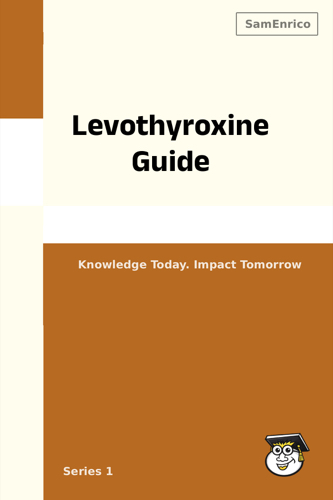
Free sample
Chapter 1: The Burnt Sponge--–- In the dimly lit infirmaries of medieval Europe, patients suffering from a peculiar affliction—swollen necks, puffy faces, lethargic bodies, and minds wrapped in fog—received a treatment that seems barbaric by modern standards. Physicians would take a common kitchen sponge, burn it until it became a charcoal-like powder, and then mix that ash into wine or water for the patient to drink. Remarkably, some of these patients improved. They regained energy. Their faces became less swollen.
Their minds cleared. No one understood why. The "burnt sponge cure" was pure trial and error, a desperate attempt by healers who could see the syndrome but could not name it, let alone explain its mechanism. Yet those burnt sponges contained something essential: iodine, absorbed from seawater into the sponge's porous body, concentrated by the heat of the flame into a form the human body could use. That iodine, unknown to the medieval physicians, was the very element that a failing thyroid gland desperately needed to produce the hormones that regulate life itself.
This is where the story of levothyroxine begins—not in a modern laboratory with gleaming glassware and precision instruments, but in the ashes of a kitchen sponge and the quiet desperation of patients who had no other hope.The history of thyroid hormone replacement is a story of slow, painstaking discovery spanning thousands of years, involving ancient healers, Renaissance anatomists, nineteenth-century chemists, and twentieth-century pharmaceutical innovators. It is a story of mistaken assumptions, dangerous treatments, and eventually, a triumph of scientific precision that would transform a fatal disease into a manageable chronic condition. To understand why levothyroxine is one of the most prescribed medications in the world—with over 120 million prescriptions written annually in the United States alone—one must first understand the long, winding road that led to its creation. This chapter traces that journey from ancient remedies to the synthesis of pure, stable, life-saving levothyroxine in 1949, and explains why understanding this history matters for every patient who takes a small white pill each morning.The Ancient Recognition: Goiter and Myxedema Long before there was a name for hypothyroidism, there was a visual marker: the goiter. Ancient physicians in China, Greece, India, and Rome all described the phenomenon of thyroid gland enlargement—a swelling in the anterior neck that could range from barely noticeable to grotesque, sometimes growing larger than a human head.
The Roman writer Pliny the Elder (23–79 AD) noted that people living in the Alpine regions of Europe frequently developed these neck swellings, and he observed that consuming burnt seaweed or sponge seemed to provide relief. He did not know that both seaweed and sponge are rich in iodine. He simply recorded an observation: eat this, and the swelling sometimes goes down.In the second century AD, the Greek physician Galen—whose writings would dominate Western medicine for over a thousand years—described a condition he called "morbus strumosus," or the struma disease, referring to the goitrous neck. He theorized that the swelling resulted from an accumulation of "phlegm" in the neck, a hypothesis consistent with the humoral theory of disease that dominated medical thinking for centuries. Treatment focused on reducing this imagined phlegm through bloodletting, purging, and various herbal preparations—none of which worked consistently.It was not until the Renaissance that anatomists began to dissect the human body systematically, and the thyroid gland received its first accurate description.
In 1543, Andreas Vesalius, the Flemish anatomist often called the father of modern anatomy, published his masterpiece De Humani Corporis Fabrica (On the Fabric of the Human Body), which included detailed drawings of the thyroid gland—though Vesalius still did not understand its function. He named it the "glandulae laryngis" (glands of the larynx), believing it served to lubricate the voice box. Other Renaissance anatomists suggested equally fanciful functions: that the thyroid cooled the blood, or that it served as a cushion to protect the trachea, or that it was a vestigial organ with no real purpose at all.The first clear clinical description of what we now recognize as hypothyroidism—not just goiter but the full syndrome of metabolic slowing—came in the 17th century. In 1657, the English physician Thomas Wharton published Adenographia, in which he described patients with "strumous cachexia": a combination of neck swelling, fatigue, sluggishness, and cold intolerance. Wharton noted that these patients seemed to age prematurely and often died young, though he had no explanation for why.
He did, however, give the thyroid its modern name, deriving it from the Greek word thyreos, meaning "shield" (referring to the shape of the cartilage that covers the windpipe), combined with eidos, meaning "form." The shield-shaped gland finally had a name.The Nineteenth Century: Iodine, Extracts, and the First Effective Treatments The nineteenth century brought two revolutionary developments that would transform thyroid medicine: the discovery of iodine as an element, and the first experiments with thyroid tissue transplantation and extracts.In 1811, the French chemist Bernard Courtois was extracting saltpeter (potassium nitrate) from seaweed ash when he accidentally added too much sulfuric acid. A striking violet vapor rose from the mixture, condensing into dark, crystalline flakes. Courtois had discovered a new element, which he initially called "substance X." Two years later, the French chemists Joseph Louis Gay-Lussac and André-Marie Ampère independently identified the new element and named it iode, from the Greek iodes meaning "violet-colored" (referring to the color of its vapor). In English, it became iodine.The medical significance of iodine remained unclear until 1820, when the Swiss physician Jean-François Coindet, practicing in Geneva, observed that goiter was common in his region (the Swiss Alps) and that local folk remedies sometimes included burnt sponge—which he knew contained iodine. Reasoning by analogy, Coindet began treating goiter patients with tincture of iodine (iodine dissolved in alcohol).
The results were dramatic: many goiters shrank significantly. Coindet published his findings in 1820, and within a decade, iodine became the standard treatment for goiter throughout Europe. No one understood why iodine worked, only that it did.The next major breakthrough came from an unexpected direction: the study of myxedema, the severe form of hypothyroidism. In 1873, the English physician Sir William Gull presented a paper to the Clinical Society of London describing a condition he called "cretinoid state" in adults—not to be confused with congenital cretinism in children. Gull's patients, mostly middle-aged women, presented with a characteristic syndrome: puffy, swollen faces; slow speech; thickened skin; hair loss; cognitive slowing; and a tendency toward obesity.
Gull noted that the thyroid gland in these patients was often atrophied or absent, and he speculated—correctly—that the syndrome resulted from "loss of the function of the thyroid body."In 1878, the Swiss surgeon Theodor Kocher made a crucial observation. Kocher was performing total thyroidectomies (complete removal of the thyroid gland) to treat goiter, a common procedure at the time. He noticed that many of his patients developed a peculiar postoperative syndrome: they became lethargic, their skin thickened, their hair fell out, their speech slowed, and they seemed to lose intelligence. Some died. Kocher initially attributed this to damage to the recurrent laryngeal nerve or to infection, but over time, he realized that patients who retained even a small portion of…
This is the end of the free sample. Get the eBook to keep going. Buy now
About this book
Details
- Author
- Burdette Vella
- Publisher
- SamEnrico
- Language
- English
- Genre
- Non-Fiction, Health & Wellness / Medication
- Released
- 2026-06-07
- Pages (approx.)
- 156
- Available as
- eBook, Audiobook

Read better in the ZLOADR app
Your eBooks on your phone or tablet. Sign in with your SamEnrico account and start reading.
More by Burdette Vella
 Parental OCD Intrusive Thoughts GuideBurdette Vella$11.99
 Governor's Opioid Crisis DiaryBurdette Vella$11.99
 Empathy For Trauma TriggersBurdette Vella$11.99
 Coffee Nap Technique GuideBurdette Vella$11.99
 The Money Panic Attack GuideBurdette Vella$11.99
 Dientamoeba FragilisBurdette Vella$11.99
 Leading Through Uncertainty CourseBurdette Vella$11.99
 The Last Broadcast: How a Radio Show Uncovered a Global ConspiracyBurdette Vella$11.99
 The Scribe of the Stars: The Mathematical Genius of the Kushite AstronomersBurdette Vella$11.99
 The Lion's Heirs: Antigonus the One-Eyed and the Rise of a WarlordBurdette Vella$11.99
 The Mineral Guide to GlauconiteBurdette Vella$11.99
 Growing FrankliniaBurdette Vella$11.99
You may also like
 Fibrates for TriglyceridesDevine Meta$11.99
 Bempedoic Acid GuideLeone Armida$11.99
 ARB Medications GuideKowalski Daphne$11.99
 Central Agonists GuideGranados Elisha$11.99
 Phentermine Weight LossTan Albina$11.99
 Cannabis Use Disorder MedicationsParis Jonie$11.99
 Bipolar Mood StabilizersPope Kim$11.99
 Statins Explained GuideFranks Nichol$11.99
 PTU Propylthiouracil GuideSkaggs Rupert$11.99
 Alpha Blockers GuideHeath Eneida$11.99
 ACE Inhibitors GuideBernal Anisa$11.99
 Calcium Channel BlockersScott Minnie$11.99