
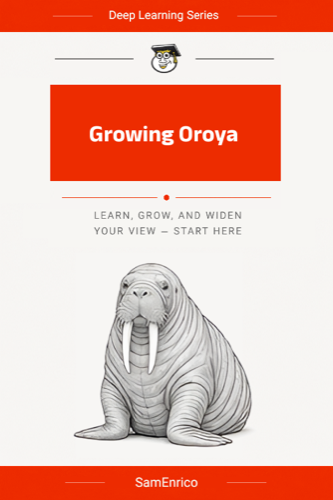
Non-FictionInformativeEducational
Growing Oroya
This publication, published by SamEnrico, covers G
This publication, published by SamEnrico, covers Growing Oroya
Formats
About this book
Free sample
Chapter 1: The Silver Coffin--– In the summer of 2014, I killed my first Oroya. I did everything the internet told me to do. I placed it on a south-facing windowsill. I watered it once a week. I used cactus potting soil from a big box store.
The plant turned a beautiful shade of reddish-purple, which I mistook for health. Then it turned translucent. Then it collapsed into a mushy, foul-smelling heap that I buried in the backyard under a rock that said "RIP Spike." I was devastated. But I was also confused. How could a plant that survives the ruthless, frozen, sun-blasted slopes of the Andes die so easily in a climate-controlled apartment?The answer, I would learn over the next three years, is that everything the internet knows about growing cacti is wrong for Oroya.
The conventional wisdom that works for golden barrels and prickly pears is, for this specific genus, a recipe for slow death. This chapter is not an introduction. It is a confession and a challenge. It is the story of what happens when a plant refuses to cooperate with our assumptions, and why that makes it the most rewarding living thing you will ever bring into your home.The Myth of the Invincible Cactus Walk into any home improvement store in America, and you will find a shelf of cacti labeled "assorted succulents – easy care – thrives on neglect." These plants are almost always Echinocactus grusonii (the golden barrel), Mammillaria species, or various columnar cacti from the deserts of Arizona and Mexico. They are indeed forgiving.
They can survive months without water. They can tolerate the dry, stuffy air of a heated living room. They can sit in a plastic pot with drainage holes that are more of a suggestion than a feature.Oroya is none of those things.The Oroya genus - named after the Peruvian mining town of La Oroya, which sits at a lung-straining 3,700 meters (12,150 feet) above sea level - comes from a world that most desert cacti would find uninhabitable. This is not a desert. This is the high-altitude Andes, a place where…
This is the end of the free sample. Get the eBook to keep going. Buy now
Contents
- Chapter 1
- Chapter 2
- Chapter 3
- Chapter 4
- Chapter 5
- Chapter 6
- Chapter 7
- Chapter 8
- Chapter 9
- Chapter 10
- Chapter 11
- Chapter 12
Details
- Author
- Fullerton Cristobal
- Publisher
- SamEnrico
- Language
- English
- Genre
- Non-Fiction, Informative, Educational
- Released
- 2026-05-08
- Pages (approx.)
- 124
- Available as
- eBook, Audiobook

Read better in the ZLOADR app
Your eBooks on your phone or tablet. Sign in with your SamEnrico account and start reading.
More by Fullerton Cristobal
 NVC For Depression GuideFullerton Cristobal$11.99
 Cleopatra's Strategic Alliances GuideFullerton Cristobal$11.99
 Cash Flow for WholesalersFullerton Cristobal$11.99
 Restless Leg Syndrome Cognitive Behavioral TherapyFullerton Cristobal$11.99
 Messner Gobi Desert CrossingFullerton Cristobal$11.99
 The Ecommerce Enablement OutlookFullerton Cristobal$11.99
 Anger Log and Pattern TrackingFullerton Cristobal$11.99
 Work Life Harmony GuideFullerton Cristobal$11.99
 Cost Benefit Anger AnalysisFullerton Cristobal$11.99
 The Divine Symphony: How Bach, Mozart, and Beethoven Transcended TimeFullerton Cristobal$11.99
 The Frozen Pioneers: Peru’s Robotic Quest for Antarctic SecretsFullerton Cristobal$11.99
 The Last Stand of the Black Prince: A Knight’s Gambit at PoitiersFullerton Cristobal$11.99
You may also like
 Hong Kong Handover 1997Dunn Johnnie$11.99
 Zumba For Postnatal Recovery CourseNeal Christian$11.99
 Zumba for BeginnersLadner Nikia$11.99
 YouTube Comment Mining GuideHumes Pandora$12.99
 Worry Box MeditationCarlin Rudy$11.99
 Workplace Stress MeditationNguyen Lynn$11.99
 Workplace Stress and Sleep RepairHawley Ivory$11.99
 Workplace Perfectionism CureDelaney Jeffry$11.99
 Workplace Injustice Anger GuideWallen Isabelle$11.99
 Work Addiction and Burnout LinkGreenwood Ester$11.99
 Women in Yoga and WellnessBeattie Galina$11.99
 Women in Stand Up ComedyChun Evangeline$11.99