
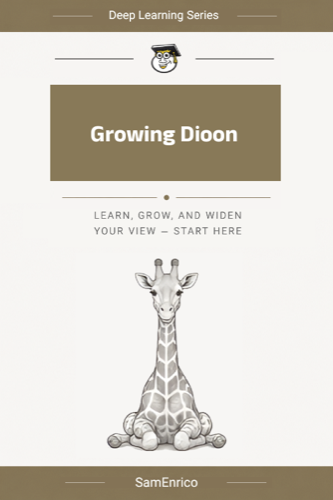
Non-FictionInformativeEducational
Growing Dioon
This publication, published by SamEnrico, covers G
This publication, published by SamEnrico, covers Growing Dioon
Formats
About this book
Free sample
Chapter 1: The Living Fossil--When you hold a Dioon seed in your palm, you are holding a piece of the Mesozoic Era. The weight of it—dense, smooth, oddly warm—is not merely the weight of organic matter but the weight of 200 million years of uninterrupted evolution. Dinosaurs that no human has ever seen browsed on the ancestors of this plant. Continents have drifted, ice ages have come and gone, mountain ranges have risen and eroded to dust, and through it all, the lineage of Dioon has persisted. To grow Dioon is not simply to cultivate a plant; it is to participate in a biological continuity that makes most other gardening endeavors look like the brief flicker of a mayfly.Yet for all their ancient pedigree, Dioon remain surprisingly underappreciated and misunderstood.
Walk into any nursery, and you will find Cycas revoluta—the ubiquitous sago palm—stacked in rows, marketed as a low-maintenance novelty. But Dioon? They are the hidden gems of the cycad world, the secret handshake of collectors who know that true botanical distinction lies not in what is common but in what is rare, resilient, and rewarding. This chapter opens the door to that world. Before you can grow Dioon successfully, you must understand what they are, where they come from, and why their evolutionary strategy dictates every decision you will make as their caretaker.The Family Tree: Zamiaceae and the Cycad Clan To understand Dioon, one must first understand the larger family to which it belongs.
Cycads are an ancient lineage of seed plants that predate flowering plants by hundreds of millions of years. They are gymnosperms—"naked seeds"—related to conifers, ginkgos, and cycads. The cycad lineage diverged from other seed plants approximately 300 million years ago, during the Carboniferous period, and reached its peak diversity during the Mesozoic Era, the age of dinosaurs. Today, only three families survive: Cycadaceae (containing the single genus Cycas), Stangeriaceae (containing the single genus Stangeria), and Zamiaceae, the largest and most diverse family, containing eight genera including Dioon, Zamia, Encephalartos, and Macrozamia.Dioon occupies a special place within Zamiaceae. The genus name comes…
This is the end of the free sample. Get the eBook to keep going. Buy now
Contents
- Chapter 1
- Chapter 2
- Chapter 3
- Chapter 4
- Chapter 5
- Chapter 6
- Chapter 7
- Chapter 8
- Chapter 9
- Chapter 10
- Chapter 11
- Chapter 12
Details
- Author
- Cameron Omega
- Publisher
- SamEnrico
- Language
- English
- Genre
- Non-Fiction, Informative, Educational
- Released
- 2026-06-02
- Pages (approx.)
- 137
- Available as
- eBook, Audiobook

Read better in the ZLOADR app
Your eBooks on your phone or tablet. Sign in with your SamEnrico account and start reading.
More by Cameron Omega
 Research Proposal Mixed Methods DesignCameron Omega$11.99
 MRI Claustrophobia MockCameron Omega$11.99
 Joshua Tree Lost CasesCameron Omega$11.99
 The Medicare and Self Esteem GuideCameron Omega$11.99
 Sector for VeteransCameron Omega$11.99
 Cross Elasticity ApplicationsCameron Omega$11.99
 Wrestling Weight Cut HypnosisCameron Omega$11.99
 Deepening Script TechniquesCameron Omega$11.99
 Anansi Weaves the World: The Spider’s Cosmic TrickeryCameron Omega$11.99
 Tracy Chapman: Fast Car, Far HorizonsCameron Omega$11.99
 The Sword and the Scroll: Charlemagne's Carolingian GambitCameron Omega$11.99
 How to Become a Buckle-wire InserterCameron Omega$11.99
You may also like
 Hong Kong Handover 1997Dunn Johnnie$11.99
 Zumba For Postnatal Recovery CourseNeal Christian$11.99
 Zumba for BeginnersLadner Nikia$11.99
 YouTube Comment Mining GuideHumes Pandora$12.99
 Worry Box MeditationCarlin Rudy$11.99
 Workplace Stress MeditationNguyen Lynn$11.99
 Workplace Stress and Sleep RepairHawley Ivory$11.99
 Workplace Perfectionism CureDelaney Jeffry$11.99
 Workplace Injustice Anger GuideWallen Isabelle$11.99
 Work Addiction and Burnout LinkGreenwood Ester$11.99
 Women in Yoga and WellnessBeattie Galina$11.99
 Women in Stand Up ComedyChun Evangeline$11.99