
Non-FictionInformativeEducational
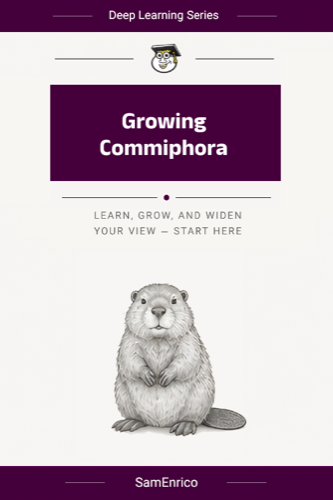
Growing Commiphora eBook
This publication, published by SamEnrico, covers G
This publication, published by SamEnrico, covers Growing Commiphora
Formats
Free sample
Chapter 1: The Bleeding Trees...–- Before the first resin drop, before the first incision, before any profit can be counted or any market analyzed, there is a single question every aspiring grower must answer honestly: Why this genus? The answer is not found in spreadsheets or crop projections, though those will come. It is found in the oldest trade routes known to humanity, in the sweat of Somali harvesters who climb cliffs for myrrh, in the Ayurvedic texts that named Guggul a "destroyer of fat" three thousand years before statin drugs. This chapter is not an introduction. It is an argument.
An argument that Commiphora – this strange, thorny, resin-bleeding genus – deserves your land, your patience, and your five-year wait. Because what these trees offer cannot be replicated in a laboratory, cannot be imported cheaply from monocultures, and cannot be grown anywhere else on earth without understanding exactly what makes them bleed.The Resin That Built Empires Long before crude oil, there was tree oil. Before petrochemicals fixed perfumes, myrrh fixed souls. The ancient Egyptians used Commiphora myrrha in embalming – not as decoration, but as a functional preservative. The resin's antimicrobial compounds (sesquiterpenes, curzerene, and furanoeudesma-1,3-diene, for the chemists in the room) slow bacterial decomposition.
When a pharaoh was wrapped, myrrh was medicine for the journey, not just incense for the ceremony.The Queen of Sheba, according to both Biblical and Quranic traditions, brought spices, gold, and "precious stones" to Solomon. Among those spices, scholars now agree, was myrrh from the southern Arabian coast and what is now Somalia. The Incense Road – a network of trading routes connecting the Horn of Africa and Arabia to the Mediterranean – was not a minor trade. It was the economic spine of the ancient world. At its peak, Rome consumed 2,800 tons of frankincense and 550 tons of myrrh annually.
The price of myrrh was fixed at twice that of gold by weight under Emperor Augustus.Meanwhile, on the other side of the ancient world, India had discovered its own Commiphora. Commiphora wightii – known locally as Guggul – became a cornerstone of Ayurveda. The Sushruta Samhita, written sometime between 600 BCE and 200 BCE, describes Guggul as Snigdha (unctuous), Tikshna (sharp/penetrating), Sukshma (subtle), and Vyavayi (rapidly spreading). In practical terms: the resin was used to scrape excess fat from the body, to heal ulcers, to treat rheumatoid arthritis, and to clean wounds. Modern pharmacology has confirmed that guggulsterones (E and Z isomers) act as antagonist ligands for the farnesoid X receptor, which regulates cholesterol metabolism.
The ancient doctors did not know the molecular mechanism. They knew the tree worked.This history matters for one reason that every grower must internalize: Commiphora has never been a subsistence crop. It has always been a trade crop. It has always traveled. It has always commanded prices far above food staples because it serves purposes that food cannot.
That economic reality remains true today, but with a critical difference. Ancient myrrh was wild-harvested, often destructively. Entire populations of C. myrrha in northern Somalia were tapped to death in the first century CE. The Roman demand created a bust cycle that the Incense Road never fully recovered from.
Modern growers, by contrast, have the opportunity to cultivate sustainably – and that sustainability is the only thing that will make your plantation profitable in the long term. More on that in Chapter 12.The Ten Faces of Commiphora Globally, the genus Commiphora includes approximately 190 species, ranging from shrubs no taller than your knee to trees reaching 15 meters. Most produce resin. Not all produce resin worth harvesting. This book focuses on the ten species with documented commercial or medicinal value, with special attention to the three that are practical for cultivation outside their native ranges.The Big Three for Commercial Growers Commiphora wightii (Indian Guggul) is the most studied and, for South Asian growers, the most practical.
Native to the arid and semi-arid regions of India (Rajasthan, Gujarat, Madhya Pradesh) and Pakistan (Sindh, Balochistan), this species produces the oleo-gum-resin known as Guggul. Its guggulsterone content (typically 0.5-2.5% by dry weight) drives pharmaceutical demand. The plant is a shrub or small tree, rarely exceeding 4 meters in cultivation, with thorny branches and papery bark that peels in strips. It is also the fastest to reach tapping maturity – often by year 5 or 6. The trade-off: C.
wightii is also the most susceptible to fungal root rot in poorly drained soils. If you cannot guarantee drainage, choose another species.Commiphora myrrha (true myrrh) is the biblical species, native to Somalia, Ethiopia, Kenya, and the Arabian Peninsula. It is a larger tree (up to 9 meters) with a thicker, more rugose bark that produces a darker, more aromatic resin than C. wightii. The resin contains higher concentrations of essential oils (up to 12% versus Guggul's 3-7%), which command premium prices in perfumery and aromatherapy.
However, C. myrrha is slower to mature (typically 7-8 years to first tap) and less tolerant of alkaline soils than C. wightii. It also requires hotter temperatures year-round; it will not thrive in regions with winter frosts.Commiphora gileadensis (balm of Gilead, also known as Commiphora opobalsamum) is the rarest and most historically layered of the three. This is the "balm of Gilead" referenced in Jeremiah, the resinous salve traded from the ancient region of Gilead (modern-day Jordan).
Today, C. gileadensis persists in small, fragmented populations in Saudi Arabia, Oman, Yemen, and Israel. Its resin has been used for wound healing, anti-inflammatory preparations, and as a fixative in high-end perfumery. The plant is a shrub to small tree (2-5 meters) with distinctive trifoliate leaves and a more delicate growth habit than either C. wightii or C.
myrrha. Its commercial market is smaller but higher-priced (up to $150/kg for Grade A). However, seed availability is extremely limited, and propagation via cuttings has a lower success rate (about 40% versus 70% for C. wightii). This species is recommended only for experienced growers or those with access to specialized germplasm.The Other Seven Species (At a Glance)Commiphora africana (African myrrh) – Widespread across sub-Saharan Africa.
Lower resin quality than C. myrrha but extremely drought-tolerant. Often used as a rootstock for grafting higher-value species.Commiphora mukul (often taxonomically folded into C. wightii but considered distinct by some sources) – Produces a lower-guggulsterone resin used primarily in incense.Commiphora erythraea (Eritrean myrrh) – High essential oil content but challenging to cultivate outside its narrow native range.Commiphora habessinica (Abyssinian myrrh) – Resembles C. myrrha but with a more spreading growth habit.
Good for windbreaks.Commiphora kataf (Kataf myrrh) – Resin used in traditional Yemeni medicine. Little studied commercially.Commiphora schimperi (Glossy-leaved commiphora) – Ornamental value due to its attractive bark, but resin yield is low.Commiphora caudata (Hill mango or green commiphora) – Native to India's dry deciduous forests. Resin is harvested locally but not widely traded.For the remainder of this book, unless otherwise specified, advice applies to all three "Big Three" species. Where species differ significantly (in tapping maturity, cold tolerance, or disease susceptibility), those differences will be noted explicitly.The Biology of Bleeding: Understanding Oleo-Gum-Resin You cannot grow Commiphora profitably without understanding why it bleeds. This is not poetic metaphor.
The resin is a wound response. When a herbivore bites a branch, when a beetle bores into the bark, when a…
This is the end of the free sample. Get the eBook to keep going. Buy now
About this book
Details
- Author
- Collins Elaine
- Publisher
- SamEnrico
- Language
- English
- Genre
- Non-Fiction, Informative, Educational
- Released
- 2026-05-11
- Pages (approx.)
- 134
- Available as
- eBook, Audiobook

Read better in the ZLOADR app
Your eBooks on your phone or tablet. Sign in with your SamEnrico account and start reading.
More by Collins Elaine
 Loving Kindness for ClaustrophobiaCollins Elaine$11.99
 Nasal Wing Dilation GuideCollins Elaine$11.99
 Drug Dependency and AdolescentsCollins Elaine$11.99
 Self Talk for Financial SuccessCollins Elaine$11.99
 Laotian Hmong RefugeeCollins Elaine$11.99
 The Golgi Cajal Neuron DuelCollins Elaine$11.99
 Chase Coleman TigerCollins Elaine$11.99
 Anapanasati for CyclingCollins Elaine$11.99
 The Manchurian Candidate: CIA's Secret Brainwashing ExperimentsCollins Elaine$11.99
 Love in the Fast Lane: The Forbidden Romance of Ana and CarlosCollins Elaine$11.99
 Barking at the Moon: The Hound of BabylonCollins Elaine$11.99
 How to Produce a Boat TrailerCollins Elaine$11.99
You may also like
 Hong Kong Handover 1997Dunn Johnnie$11.99
 Zumba For Postnatal Recovery CourseNeal Christian$11.99
 Zumba for BeginnersLadner Nikia$11.99
 YouTube Comment Mining GuideHumes Pandora$12.99
 Worry Box MeditationCarlin Rudy$11.99
 Workplace Stress MeditationNguyen Lynn$11.99
 Workplace Stress and Sleep RepairHawley Ivory$11.99
 Workplace Perfectionism CureDelaney Jeffry$11.99
 Workplace Injustice Anger GuideWallen Isabelle$11.99
 Work Addiction and Burnout LinkGreenwood Ester$11.99
 Women in Yoga and WellnessBeattie Galina$11.99
 Women in Stand Up ComedyChun Evangeline$11.99