
Non-FictionInformativeEducational
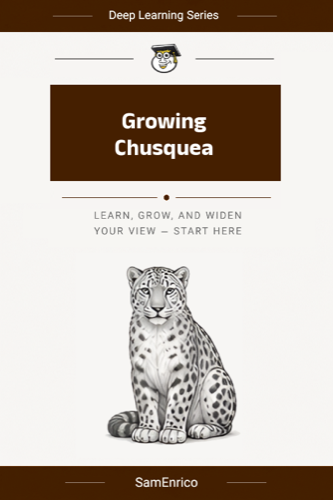
Growing Chusquea eBook
This publication, published by SamEnrico, covers G
This publication, published by SamEnrico, covers Growing Chusquea
Formats
Free sample
Chapter 1: The Solid Secret--–- Every bamboo you have ever seen is probably hollow. That single fact—the hollow stem, or culm—has defined the global bamboo industry, garden design, and even cultural symbolism for centuries. Hollow bamboos are light, flexible, and famously strong for their weight. They build furniture, scaffolding, musical instruments, and privacy screens. They run through suburban yards, punch through concrete, and drive gardeners to despair.
But there is another bamboo—one that breaks every rule you thought you knew. Its canes are solid. Not hollow with thick walls. Solid, like a tree trunk, but composed entirely of bamboo fiber and parenchyma tissue. This is Chusquea, and the solid secret hidden inside its stems changes everything about how we grow, control, and appreciate bamboo.If you are reading this book, you have likely encountered the dark side of running bamboos.
Perhaps you inherited a stand of Phyllostachys aurea from a previous homeowner, a planting that has since migrated twenty feet into your vegetable garden, tunneled under the driveway, and emerged triumphantly on the neighbor’s side of the fence. Maybe you planted a small pot of what the nursery labeled “clumping bamboo,” only to discover two years later that it was, in fact, a running bamboo in disguise—a common bait-and-switch in the horticultural trade. Or perhaps you have simply admired photographs of the great Andean bamboos from afar, intrigued by their elegant, upright growth and their reputation for civilized behavior, but uncertain whether they would survive your winters or fit your garden.The answer is almost certainly yes, provided you understand what Chusquea truly is, where it comes from, and what it demands. This chapter unveils the solid secret: the anatomical, geographical, and horticultural reality of the most misunderstood genus of temperate bamboos. By the time you finish reading, you will understand why Chusquea is not merely another bamboo but an entirely different category of plant—one that belongs in every serious collector’s garden, from the cramped urban courtyard to the sprawling country estate.The Hollow World You Thought You Knew Before we appreciate the exception, we must understand the rule.
The bamboo subfamily (Bambusoideae) contains over 1,600 species spread across more than 100 genera. The vast majority share a defining characteristic: hollow internodes. Between each node—those slightly swollen rings you see along a bamboo cane—lies a hollow tube. This hollow space, known as the culm cavity, is what makes bamboo so extraordinarily lightweight relative to its strength. Engineers have long admired this natural tube design, which maximizes bending strength while minimizing material use.The hollow structure works brilliantly for the plant, too.
It allows rapid vertical growth—some running bamboos can shoot up a meter a day—with minimal metabolic investment. The plant does not need to fill that central space with living tissue; it simply deposits cellulose and lignin in a ring around the outside, leaving air inside. This is efficient, fast, and cheap for the plant. It is also the reason running bamboos are so aggressive. Their hollow, lightweight canes shoot high into the air quickly, capturing sunlight before neighboring plants can compete, while their leptomorph (running) rhizomes race horizontally through the soil, sending up new shoots at every node.But hollow architecture comes with costs.
Hollow canes are more susceptible to cold cracking, especially when water trapped inside the cavity freezes and expands. They are also more brittle under certain loading conditions, particularly torsion. And from a gardener’s perspective, the hollow structure is inextricably linked to the running habit—almost all hollow bamboos with temperate hardiness are runners. The exceptions are rare and finicky.This is where Chusquea enters, not as a marginal oddity but as a deliberate evolutionary departure.The Solid Secret: Anatomy of a Different Bamboo Pick up a mature cane of Chusquea culeou and cut through it crosswise. You will not see the familiar hollow cylinder.
Instead, you will find a solid column of tissue, interrupted only by the occasional small, irregular air space. The cane is pith-filled from one side to the other. This solid structure is not a defect or a juvenile trait—it is the defining characteristic of the entire Chusquea genus, which contains roughly 150 to 200 species (taxonomists continue to debate the exact number).The solid cane is composed primarily of ground tissue—parenchyma cells—interspersed with vascular bundles that carry water and nutrients. Under a microscope, the arrangement resembles a dense foam rather than the ringed structure of hollow bamboos. This solid construction has profound implications for the plant’s growth, strength, and cold tolerance.First, solid canes are heavier per unit length than hollow canes of the same diameter.
You will notice this immediately when handling a mature Chusquea cane; it feels substantial, almost woody, in a way that running bamboo does not. This weight contributes to the plant’s self-supporting architecture. Many Chusquea species, particularly C. gigantea and C. culeou, grow in dense, columnar clumps where the canes stand nearly vertical, relying on their own stiffness rather than leaning on neighbors.Second, solid canes are more resistant to cold cracking.
In hollow bamboos, winter damage often begins when water vapor inside the culm cavity condenses and freezes. The expanding ice cracks the cane from the inside out, a failure mode invisible until the cane suddenly collapses in spring. Solid canes contain no large internal cavity, so this freezing mechanism simply does not occur. This gives Chusquea a significant advantage in temperate climates with freeze-thaw cycles, even when absolute minimum temperatures are similar to those tolerated by hollow species.Third, solid canes respond differently to wounding, pruning, and physical damage. Because the entire cross-section is living tissue (at least in younger canes), a cut or crack exposes far more surface area than a hollow cane.
This means proper pruning technique—clean, sharp tools and careful timing—matters more for Chusquea than for running bamboos. We will cover pruning in detail in Chapter 6, but for now, understand that the solid secret requires solid respect. You cannot treat Chusquea like Phyllostachys and expect the same results.The Clumping Imperative: Pachymorph Rhizomes The solid cane is not the only secret Chusquea keeps. Below ground, the genus operates on an entirely different rhizome system, one that should make every gardener wary of invasive bamboo breathe a sigh of relief.Chusquea species are pachymorph rhizome clumpers. The word pachymorph means “thick form,” and it describes a rhizome that grows upward and outward in a tight, sympodial pattern.
Each new rhizome emerges from an existing one, turns upward to become a cane, and then produces a few short roots before the next rhizome forms alongside it. The result is a dense, slowly expanding clump that remains centered around the original planting location.Compare this to leptomorph (“slender form”) rhizomes found in running bamboos. Leptomorph rhizomes travel horizontally for meters before sending up a cane. They branch freely underground, creating a network that can colonize an entire garden bed in a few seasons. A single running bamboo, left unchecked, can spread twenty feet or more in a year.
A Chusquea clump might expand six inches to a foot annually.This difference is not merely quantitative; it is qualitative. With running…
This is the end of the free sample. Get the eBook to keep going. Buy now
About this book
Details
- Author
- Branham Isaura
- Publisher
- SamEnrico
- Language
- English
- Genre
- Non-Fiction, Informative, Educational
- Released
- 2026-06-02
- Pages (approx.)
- 151
- Available as
- eBook, Audiobook

Read better in the ZLOADR app
Your eBooks on your phone or tablet. Sign in with your SamEnrico account and start reading.
More by Branham Isaura
 Golf Putting Self Hypnosis GuideBranham Isaura$11.99
 Elbow Pain Meditation GuideBranham Isaura$11.99
 Dual Diagnosis Dependency and Mental HealthBranham Isaura$11.99
 Broke But BreathingBranham Isaura$11.99
 Improv for Anxiety ReliefBranham Isaura$11.99
 Press Release For SurveysBranham Isaura$11.99
 Networking Through VolunteeringBranham Isaura$11.99
 Somali Refugee Family PathBranham Isaura$11.99
 Humming Vagus Nerve TuneBranham Isaura$11.99
 The Battle of Boju: Sun Tzu’s First Test (512 BC)Branham Isaura$11.99
 Windigo Moon: The Hunger of the Northern WildernessBranham Isaura$11.99
 AI Masters in Germany GuideBranham Isaura$12.99
You may also like
 Hong Kong Handover 1997Dunn Johnnie$11.99
 Zumba For Postnatal Recovery CourseNeal Christian$11.99
 Zumba for BeginnersLadner Nikia$11.99
 YouTube Comment Mining GuideHumes Pandora$12.99
 Worry Box MeditationCarlin Rudy$11.99
 Workplace Stress MeditationNguyen Lynn$11.99
 Workplace Stress and Sleep RepairHawley Ivory$11.99
 Workplace Perfectionism CureDelaney Jeffry$11.99
 Workplace Injustice Anger GuideWallen Isabelle$11.99
 Work Addiction and Burnout LinkGreenwood Ester$11.99
 Women in Yoga and WellnessBeattie Galina$11.99
 Women in Stand Up ComedyChun Evangeline$11.99