
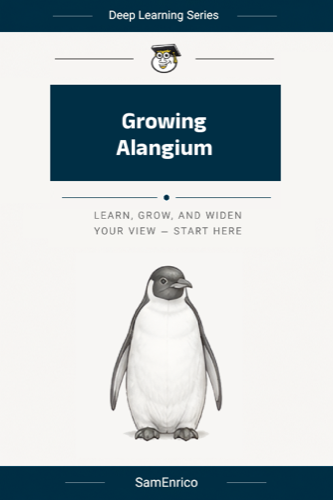
Non-FictionInformativeEducational
Growing Alangium
This publication, published by SamEnrico, covers G
by Pence Sol
This publication, published by SamEnrico, covers Growing Alangium
Formats
About this book
Free sample
Chapter 1: The Survivor’s Secret--– Every great tree begins with a secret. The oak hides its mastery of slow time. The maple conceals its hunger for cold winters. But Alangium — this forgotten gem from the forests of East Asia, the slopes of the Himalayas, and the dry scrubs of tropical Africa — hides something rarer: the ability to thrive where others merely survive. In overgrown botanical gardens, in abandoned homesteads, along roadsides in rural China and India, Alangium chinense and its cousins flower and fruit for decades with no care at all.
No fertilizer. No pruning. No irrigation. And yet, when planted with intention, Alangium rewards the attentive gardener with fragrant summer blossoms, brilliant autumn foliage, wildlife-attracting drupes, and a small-tree form that fits perfectly into modern landscapes.This chapter uncovers the botanical identity of Alangium — who it is, where it comes from, and why it has remained hidden in plain sight for so long. You will learn the taxonomy that connects it to dogwoods, the three species worth growing, the growth habits that make it versatile, and — most critically — the truth about its cold hardiness.
By the end, you will know exactly which Alangium belongs in your garden and why this overlooked genus deserves a second look.What Is Alangium, Anyway?The name Alangium sounds ancient because it is. The genus was first described in 1783 by the French botanist Jean-Baptiste de Lamarck, who based it on specimens collected in tropical Asia. Lamarck derived the name from the Malayalam word alangi, a local name for one of the species. For more than two centuries, Alangium has floated at the edges of botanical knowledge — respected by specialists, ignored by everyone else.Taxonomically, Alangium belongs to the family Cornaceae, the dogwood family. This places it in the same clan as the beloved flowering dogwood (Cornus florida), the kousa dogwood (Cornus kousa), and the pagoda dogwood (Cornus alternifolia).
If you have successfully grown a dogwood, you already possess 80% of the skills needed for Alangium. The relationship is visible in the flowers: both genera produce small, clustered blossoms surrounded by showy bracts. However, Alangium…
This is the end of the free sample. Get the eBook to keep going. Buy now
Contents
- Chapter 1
- Chapter 2
- Chapter 3
- Chapter 4
- Chapter 5
- Chapter 6
- Chapter 7
- Chapter 8
- Chapter 9
- Chapter 10
- Chapter 11
- Chapter 12
Details
- Author
- Pence Sol
- Publisher
- SamEnrico
- Language
- English
- Genre
- Non-Fiction, Informative, Educational
- Released
- 2026-05-08
- Pages (approx.)
- 152
- Available as
- eBook, Audiobook

Read better in the ZLOADR app
Your eBooks on your phone or tablet. Sign in with your SamEnrico account and start reading.
More by Pence Sol
 Ketamine for AddictionPence Sol$11.99
 Equifax Settlement Payout FarcePence Sol$11.99
 Listener Responsiveness TrackingPence Sol$11.99
 Growth Hormone in Children vs AdultsPence Sol$11.99
 Step Two Explained Finding Sanity AgainPence Sol$11.99
 Retirement Goal PlanningPence Sol$11.99
 Goal Setting for SeniorsPence Sol$11.99
 Anniversary of Parent DeathPence Sol$11.99
 The Last Letter from HiroshimaPence Sol$11.99
 The Velvet Revolution: How Jazz Legends Redefined Middle Eastern Fashion (1980-2000)Pence Sol$11.99
 How to Produce Medicine BallsPence Sol$11.99
 Post Scholarship Career GuidePence Sol$12.99
You may also like
 Hong Kong Handover 1997Dunn Johnnie$11.99
 Zumba For Postnatal Recovery CourseNeal Christian$11.99
 Zumba for BeginnersLadner Nikia$11.99
 YouTube Comment Mining GuideHumes Pandora$12.99
 Worry Box MeditationCarlin Rudy$11.99
 Workplace Stress MeditationNguyen Lynn$11.99
 Workplace Stress and Sleep RepairHawley Ivory$11.99
 Workplace Perfectionism CureDelaney Jeffry$11.99
 Workplace Injustice Anger GuideWallen Isabelle$11.99
 Work Addiction and Burnout LinkGreenwood Ester$11.99
 Women in Yoga and WellnessBeattie Galina$11.99
 Women in Stand Up ComedyChun Evangeline$11.99