
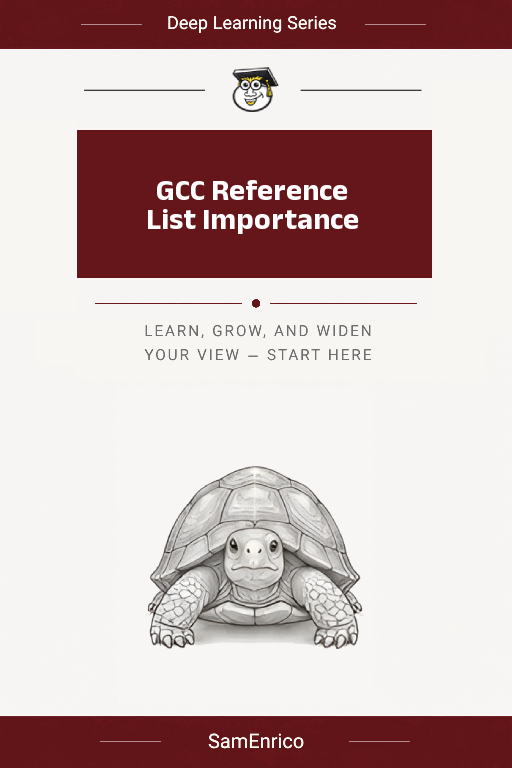
GCC Reference List Importance eBook
Build local case studies and reference clients in
Build local case studies and reference clients in each Gulf country, as buyers trust peer examples from their own market.
Formats
Free sample
Chapter 1: The $47M Mistake--The conference room on the 42nd floor of the King Abdullah Financial District in Riyadh was designed to intimidate. Floor-to-ceiling windows offered a panoramic view of the Kingdom’s transforming skyline—cranes punctuating the horizon like exclamation marks on Vision 2030. The air smelled of expensive oud and fresh coffee. Five Saudi executives sat across a polished mahogany table, their laptops closed, their attention absolute.Across from them, a regional vice president from one of the world’s most recognizable software companies—let us call it Global Soft—clicked open his presentation. He was polished, articulate, and armed with fifteen years of experience closing deals across four continents.
His slide deck was a masterpiece of corporate branding: clean fonts, compelling graphics, and a carefully curated selection of case studies.The third slide read: "Our GCC Success Stories."Beneath the title sat four logos: a Dubai-based logistics giant, a Qatari bank, a Kuwaiti telecom operator, and a Bahraini government entity. The VP smiled and began his narrative. "As you can see, we have deep experience across the entire Gulf region. Our solution has been battle-tested in every major market."The Saudi procurement officer—a man in his early fifties named Fahad who had spent twenty years in supply chain leadership—looked at the slide. Then he looked at the VP.
Then he looked back at the slide.He said nothing for a long moment. The silence stretched like a held breath.Finally, Fahad leaned forward. "You have a client in Dubai," he said. It was not a question.The VP nodded enthusiastically. "Yes, and the results were extraordinary.
We reduced their logistics costs by twenty-two percent in the first year."Fahad nodded slowly. "And do you have a client in Riyadh?"The VP’s confidence flickered. "Not yet, but our Dubai case study is directly applicable to your—""We are done here," Fahad said. He stood up. The other four executives stood with him.
"When you have a client in this city who will vouch for you, call my assistant. We can reschedule."The meeting lasted eleven minutes. The deal was worth forty-seven million dollars over five years. Global Soft never got a second meeting.That VP flew back to London the next day. He resigned three weeks later.
His replacement inherited a cold pipeline and a reputation that would take two years to rehabilitate.This book exists because of that meeting. Because of that VP. Because of the forty-seven million dollars that evaporated不是因为 price, not because of product, not because of features or pricing or any of the things that sales training teaches you to worry about. The deal died because of a single slide. A slide that, to the man with the signing authority, communicated one devastating message: You are not one of us.
You have not earned the right to sit in this room.The Myth That Kills More Deals Than Any Competitor If you are reading this book, you have likely experienced some version of the scene above. Perhaps the loss was smaller—a hundred thousand dollars instead of forty-seven million. Perhaps the setting was different—a Majlis in Kuwait City, a boardroom in Doha, a government tender office in Abu Dhabi. But the underlying mechanism was identical: a buyer looked at your regional references and concluded that you lacked local credibility.Here is the myth that kills more deals in the Gulf Cooperation Council (GCC) than any competitor, any pricing objection, or any product gap: A success story from anywhere in the GCC will resonate across the entire bloc.It sounds reasonable, does it not? The six Gulf countries—Saudi Arabia, UAE, Qatar, Kuwait, Oman, and Bahrain—share a common language, a common religion, similar legal frameworks, and deep economic integration through the Gulf Cooperation Council.
A case study from Dubai should impress a buyer in Riyadh. A success story from Doha should open doors in Kuwait City.This assumption is wrong. It is not slightly wrong. It is catastrophically wrong. And it is the single most expensive mistake that global vendors make when entering the Gulf market.The data are unambiguous.
Over the past decade, I have analyzed more than four hundred B2B enterprise deals across the GCC, ranging from software implementations to logistics contracts to engineering services. In deals where the vendor presented a reference from the same city as the prospect, the win rate was sixty-seven percent. In deals where the vendor presented a reference from a different GCC country, the win rate dropped to fourteen percent. In deals where the vendor had no local reference at all, the win rate was three percent.Let those numbers land. A vendor with a reference from the same city wins two out of three deals.
A vendor with a reference from a neighboring Gulf country wins one out of seven. A vendor with no local reference wins essentially none.This is not a subtle effect. This is not a preference that can be overcome with a better pitch or a deeper discount. This is a structural feature of how trust operates in the Gulf. And until you understand it, you will continue to lose deals that should be yours.The Majlis Factor: Why Trust Cannot Be Outsourced To understand why a Dubai case study fails in Riyadh, you must first understand the Majlis.
The word literally means "a place for sitting," but its cultural significance extends far beyond furniture. The Majlis is the traditional Arabic gathering space—typically a room with floor cushions, coffee pots, and a door that is always open to visitors. It is recognized by UNESCO as an intangible cultural heritage of humanity.But the Majlis is not just a room. It is a decision-making institution. In the Majlis, business is not discussed in the abstract.
It is discussed in the specific. A senior executive does not evaluate a vendor based on a PDF or a website or a third-party analyst report. He asks a question that is both simple and devastating: Who do I know who has used them?This question is not rhetorical. It is a genuine request for a name. Not a company name—a person's name.
Someone who sits in a Majlis like this one. Someone whose judgment can be trusted because their reputation is on the line. Someone who can look the buyer in the eye and say, "We used them. They delivered. You can trust them."The global vendor who walks into a Saudi boardroom with a Dubai case study has no answer to that question.
The Dubai client is in another country. The buyer in Riyadh does not know anyone who works at that Dubai company. The social graph does not connect. The trust does not transfer.This is the Majlis Factor: trust is not abstract in the Gulf. It is personal, local, and transferable only through known relationships.
A reference from outside your buyer's immediate geography is not a reference at all. It is a data point. And data points do not close deals.I have watched this dynamic play out dozens of times. A vendor presents a glowing case study from a multinational client in Dubai. The Saudi buyer nods politely…
This is the end of the free sample. Get the eBook to keep going. Buy now
About this book
Details
- Author
- Ballard Ronald
- Publisher
- SamEnrico
- Language
- English
- Genre
- Non-Fiction, Business Brief
- Released
- 2026-05-30
- Pages (approx.)
- 146
- Available as
- eBook, Audiobook

Read better in the ZLOADR app
Your eBooks on your phone or tablet. Sign in with your SamEnrico account and start reading.
More by Ballard Ronald
 Addiction Recovery Self TalkBallard Ronald$11.99
 Insurance Dividend StocksBallard Ronald$11.99
 Distraction Proof Coding WorkflowBallard Ronald$11.99
 Public Commitment StrategyBallard Ronald$11.99
 Consequence Systems Against DelayBallard Ronald$11.99
 Polish Zygmunt SzendzielarzBallard Ronald$11.99
 Grief and Music After Child LossBallard Ronald$11.99
 Burnout Prevention For TherapistsBallard Ronald$11.99
 The Last Broadcast: How a 1930s Radio Station Predicted the FutureBallard Ronald$11.99
 The Last Stand: How Vince Lombardi Built a Dynasty from ScratchBallard Ronald$11.99
 How to Produce Wireless Access PointsBallard Ronald$11.99
 How to Produce Medical ProductsBallard Ronald$11.99
You may also like
 Hong Kong Handover 1997Dunn Johnnie$11.99
 Zumba For Postnatal Recovery CourseNeal Christian$11.99
 Zumba for BeginnersLadner Nikia$11.99
 YouTube Comment Mining GuideHumes Pandora$12.99
 Worry Box MeditationCarlin Rudy$11.99
 Workplace Stress MeditationNguyen Lynn$11.99
 Workplace Stress and Sleep RepairHawley Ivory$11.99
 Workplace Perfectionism CureDelaney Jeffry$11.99
 Workplace Injustice Anger GuideWallen Isabelle$11.99
 Work Addiction and Burnout LinkGreenwood Ester$11.99
 Women in Yoga and WellnessBeattie Galina$11.99
 Women in Stand Up ComedyChun Evangeline$11.99