
Non-FictionSelf-HelpPeak Performance
Flow State Mastery Guide eBook
Enter optimal performance zones where time disappe
Enter optimal performance zones where time disappears and productivity soars.
Formats
Free sample
Chapter 1: The Happiness Trap--–- The email arrives at 2:17 PM on a sleepy Tuesday. Your boss wants "a creative solution" by morning. Your phone buzzes—a friend's vacation photos. Your Slack pings—someone needs "just a quick yes or no." Your to-do list stares back with seventeen items, none of which you started. You feel the familiar fog descend: the vague anxiety of too much to do and too little desire to do any of it.So you do what most people do.
You open Instagram. Just for a minute.Two hours later, you surface from a scroll through strangers' dinners, celebrity breakups, and a video of a dog riding a skateboard. You feel... worse. More anxious.
More behind. More numb. And deeply, quietly ashamed that you just traded two hours of your life for nothing you can remember.Tomorrow, you promise yourself, will be different. Tomorrow, you'll focus.But tomorrow arrives, and the cycle repeats.If this feels familiar, you are not lazy. You are not broken.
And you are certainly not alone. You are trapped in what this chapter will call the Happiness Trap—the widespread, culturally reinforced belief that comfort and relaxation are the paths to a good life, when in fact they are the very things stealing your energy, your attention, and your shot at genuine fulfillment.The lie is everywhere. Netflix promises that "binge-watching is self-care." Social media algorithms reward passive scrolling with infinite, numbing content. Wellness influencers tell you to "treat yourself" to rest, to comfort, to ease. Advertisements sell happiness as a product you consume while sitting down.
Your friends congratulate you on a "lazy Sunday" as if laziness were an achievement.But what if the opposite were true? What if the moments you felt most alive, most joyful, most fully yourself were not the ones spent on the couch, but the ones where you were pushed to your limits—losing track of time, utterly absorbed in something hard, something challenging, something that demanded everything you had?This chapter will introduce you to a radical idea, backed by decades of psychological research: the pursuit of comfort is a trap, and the path to genuine happiness runs directly through difficult, engaging, challenging work. You will learn the critical difference between pleasure (which fades and often leaves you emptier than before) and enjoyment (which grows you and leaves you expanded). You will confront the uncomfortable data showing that your television is likely making you sadder. And you will receive a crucial distinction that will prevent you from swinging too far in the other direction: strategic rest is essential; passive leisure as a default lifestyle is the enemy.By the end of this chapter, you will understand why choosing meaningful struggle over easy distraction isn't masochism—it is the most direct path to a happy, flowing life.
And you will have the first tool in your Flow State Mastery toolkit: the Happiness Audit, a worksheet that will show you exactly where you are trading genuine enjoyment for counterfeit comfort.The Great Lie of Modern Happiness Let us begin with a simple question: When was the last time you felt truly, completely alive?Not just distracted. Not just entertained. Not just less bored than before. But fully present, fully engaged, fully there—the way you felt as a child building a fort, or as a teenager lost in a sport or an instrument, or as an adult in that rare meeting where everything clicked and you forgot to check your phone for an hour.For most adults, that feeling is rare. So rare that they cannot remember the last time it happened.
And yet, if you ask those same people what they want out of life, they will say "happiness." When you ask what happiness means, they will describe something like: relaxation, comfort, freedom from stress, time to do nothing.This is the great lie. And it has been sold to you by every industry that profits from your passivity.The lie has three parts. First, that happiness is the absence of discomfort. Second, that the best moments of life are those requiring the least effort. Third, that relaxation is the ultimate reward for hard work—so if you can skip the hard work and go straight to the relaxation, you have beaten the system.Each part is demonstrably, scientifically false.Consider the research of Mihaly Csikszentmihalyi, the psychologist who spent decades studying happiness by doing something no one had done before: he interrupted people at random moments throughout their days and asked them to report how they felt.
Not how they remembered feeling. Not how they thought they should feel. But how they felt right now, in the middle of their actual lives.He called this the Experience Sampling Method. And what he found overturned everything psychologists thought they knew about happiness.The data showed that people reported their highest levels of happiness not when they were relaxing on the couch, not when they were eating good food, not when they were receiving massages or watching movies. They reported their highest levels of happiness when they were engaged in challenging activities that required skill—rock climbing, playing music, performing surgery, writing code, playing chess, competing in sports.In those moments, people described feeling "strong, alert, in control, creative, and fully alive." They used words like "effortless" and "natural" and "like I was meant to be doing this."Contrast that with how people described watching television—the single most common leisure activity in the developed world.
Watching TV correlated not with happiness, but with mild depression, lethargy, low energy, and a vague sense of wasted time. People reported feeling "passive, weak, dull, and dissatisfied" after hours of viewing.Think about that. The thing we do most to relax makes us feel worse. The thing we avoid because it seems hard makes us feel best.This is the Happiness Trap in action. We chase comfort because we believe it leads to happiness.
But comfort leads to apathy. And challenge, properly calibrated, leads to joy.Pleasure Versus Enjoyment: A Critical Distinction To understand why this happens, you must learn a distinction that will appear throughout this book: the difference between pleasure and enjoyment.These words are often used interchangeably, but they describe fundamentally different experiences with opposite effects on your well-being.Pleasure is passive. It requires no effort, no skill, no growth. Pleasure is what happens to you. The taste of chocolate melting on your tongue.
The warmth of a blanket on a cold morning. The dopamine hit of a notification, a like, a new episode auto-playing before you even decide to watch it. Pleasure is biologically designed to be短暂 and to leave you wanting more. It is a chemical whisper that says "that was nice, but you could have a little more."Pleasure is not bad. Pleasure is part of being human.
The problem is not pleasure itself; the problem is building a life around pleasure, treating pleasure as the goal, and mistaking the absence of discomfort for the presence of happiness.Enjoyment, by contrast, is active. It requires effort, skill, concentration, and often a stretch beyond your current abilities. Enjoyment is something you do, not something that happens…
This is the end of the free sample. Get the eBook to keep going. Buy now
About this book
Details
- Author
- Langford Mikaela
- Publisher
- SamEnrico
- Language
- English
- Genre
- Non-Fiction, Self-Help, Peak Performance
- Released
- 2026-06-10
- Pages (approx.)
- 135
- Available as
- eBook, Audiobook

Read better in the ZLOADR app
Your eBooks on your phone or tablet. Sign in with your SamEnrico account and start reading.
More by Langford Mikaela
 Meeting Agenda MasteryLangford Mikaela$11.99
 Dopamine Fasting for FoodLangford Mikaela$11.99
 Venture Debt Due DiligenceLangford Mikaela$12.99
 The Interleaving Study GuideLangford Mikaela$11.99
 Contempt Prevention Under StressLangford Mikaela$11.99
 Quantum Echoes: The Lost Symphony of HypatiaLangford Mikaela$11.99
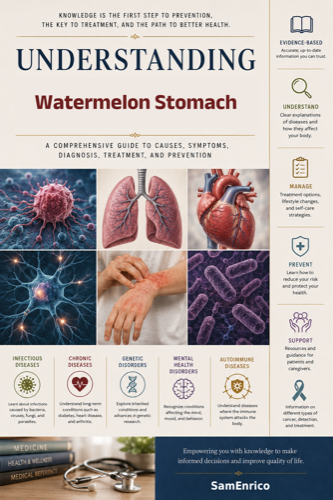 Understanding Watermelon StomachLangford Mikaela$17.99
 Silver MiningLangford Mikaela$11.99Venture Debt Due DiligenceLangford Mikaela$12.99
 UK via Madrid SystemLangford Mikaela$12.99
 How to Start a Bare Printed Circuit Boards Business (Beginners Guide)Langford Mikaela$11.99
You may also like
 Hong Kong Handover 1997Dunn Johnnie$11.99
 Zumba For Postnatal Recovery CourseNeal Christian$11.99
 Zumba for BeginnersLadner Nikia$11.99
 YouTube Comment Mining GuideHumes Pandora$12.99
 Worry Box MeditationCarlin Rudy$11.99
 Workplace Stress MeditationNguyen Lynn$11.99
 Workplace Stress and Sleep RepairHawley Ivory$11.99
 Workplace Perfectionism CureDelaney Jeffry$11.99
 Workplace Injustice Anger GuideWallen Isabelle$11.99
 Work Addiction and Burnout LinkGreenwood Ester$11.99
 Women in Yoga and WellnessBeattie Galina$11.99
 Women in Stand Up ComedyChun Evangeline$11.99