

Non-FictionStudent's ShortcutDebt
Debt Restructuring Gain Formulas
Calculate gain or loss on troubled debt restructur
Calculate gain or loss on troubled debt restructuring using fair value and undiscounted cash flows.
Formats
About this book
Free sample
Chapter 1: The Ten Million Dollar Mistake...–- Janet was a good CFO. She had twenty-three years of experience, a CPA license, and the quiet confidence of someone who had survived three economic downturns. When her company’s lenders agreed to restructure 47millionindebt,shenegotiatedaprincipalreductionof47 million in debt, she negotiated a principal reduction of 47millionindebt,shenegotiatedaprincipalreductionof8 million, a 300-basis-point interest rate cut, and a two-year maturity extension. Her board applauded. Her CEO gave her a bonus.
And then her auditor called. “Janet,” he said, “you recorded the gain incorrectly. You discounted the cash flows.” Janet froze. “Of course I discounted the cash flows,” she said. “That’s what you’re supposed to do.” She was wrong.
That mistake cost her company $1.2 million in overstated earnings and triggered a restatement that wiped out their entire annual profit. Chapter 1 is why Janet cried in the conference room—and how you never will.The Hidden Landmine in Every Debt Restructuring Every year, American companies forgive, restructure, or modify over $100 billion in debt. And every year, CFOs, controllers, and accountants leave millions on the table—or worse, misstate their earnings—because they do not understand a single, counterintuitive, almost absurd rule in US GAAP.The rule says this: when you restructure debt, you do NOT discount future cash flows to determine your gain.You read that correctly. NO DISCOUNTING.Your first reaction is probably the same as every finance professional I have trained: “That makes no sense.” You are right. It does not make sense.
But it is the law. And misunderstanding it has caused more accounting errors, restatements, and auditor disagreements than almost any other provision in the codification.This chapter is your defense against that error. We will establish the foundational definitions that determine whether your restructuring qualifies as “troubled” under US GAAP. We will distinguish between debtor accounting and creditor accounting—a distinction that changed forever in March 2022. And we will introduce the two fundamentally different calculation methods that will determine your gain or loss.By the end of this chapter, you will understand the threshold question that every restructuring faces: Is this a Troubled…
This is the end of the free sample. Get the eBook to keep going. Buy now
Contents
- Chapter 1
- Chapter 2
- Chapter 3
- Chapter 4
- Chapter 5
- Chapter 6
- Chapter 7
- Chapter 8
- Chapter 9
- Chapter 10
- Chapter 11
- Chapter 12
Details
- Author
- Mulligan Ivonne
- Publisher
- SamEnrico
- Language
- English
- Genre
- Non-Fiction, Student's Shortcut, Debt
- Released
- 2026-05-29
- Pages (approx.)
- 135
- Available as
- eBook, Audiobook

Read better in the ZLOADR app
Your eBooks on your phone or tablet. Sign in with your SamEnrico account and start reading.
More by Mulligan Ivonne
 Low Carb International Cuisine GuideMulligan Ivonne$11.99
 Opioid Nausea ReliefMulligan Ivonne$11.99
 Men's Cortisol ManagementMulligan Ivonne$11.99
 Overland Canada Northwest Passage RoadsMulligan Ivonne$11.99
 Charlemagne's Fiery Legacy: The Carolingian Renaissance and the Science of VolcanoesMulligan Ivonne$11.99
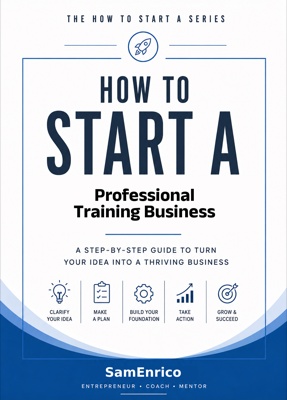 How to Start a Professional Training BusinessMulligan Ivonne$11.99
 How to Produce Can OrganizersMulligan Ivonne$11.99
 ISBN AssignerMulligan Ivonne$11.99
You may also like
 Hong Kong Handover 1997Dunn Johnnie$11.99
 Zumba For Postnatal Recovery CourseNeal Christian$11.99
 Zumba for BeginnersLadner Nikia$11.99
 YouTube Comment Mining GuideHumes Pandora$12.99
 Worry Box MeditationCarlin Rudy$11.99
 Workplace Stress MeditationNguyen Lynn$11.99
 Workplace Stress and Sleep RepairHawley Ivory$11.99
 Workplace Perfectionism CureDelaney Jeffry$11.99
 Workplace Injustice Anger GuideWallen Isabelle$11.99
 Work Addiction and Burnout LinkGreenwood Ester$11.99
 Women in Yoga and WellnessBeattie Galina$11.99
 Women in Stand Up ComedyChun Evangeline$11.99