
Curiosity Driven Collaboration eBook
Ask questions that open creative possibilities.
Ask questions that open creative possibilities.
Formats
Free sample
Chapter 1: The Certainty Trap--–- The meeting had been going for forty-seven minutes, and not a single person had asked a question.Not one.I was sitting in a conference room on the thirty-second floor of a Fortune 500 headquarters, surrounded by sixteen of the smartest people I had ever met. They had Ph Ds from MIT, Stanford, and London Business School. Their collective resume included three billion-dollar product launches, two turnarounds of failing divisions, and enough consulting engagements to fill a small library. The problem they were discussing was genuinely difficult: a 14 percent drop in customer retention over two consecutive quarters, with no obvious cause in the data.And yet, for almost an hour, all I heard were answers."We need to increase our marketing spend in Q3.""Our pricing model is no longer competitive.""The sales team isn't following up on warm leads.""It's the user interface. I've been saying this for months.""We should hire a consulting firm to audit the customer journey."Each person spoke with the confidence of someone who had already solved the puzzle.
Each answer was delivered as a complete package, wrapped in data visualizations and spreadsheets and the subtle performative certainty that corporate life rewards. Each answer was also, as far as I could tell, entirely unconnected to the answers before it.The marketing director had not acknowledged the pricing analyst's point. The pricing analyst had not responded to the sales director's critique. The sales director had not even looked at the head of product when she mentioned the user interface. They were not having a conversation.
They were taking turns delivering monologues.And here is what struck me, sitting in that uncomfortable leather chair, watching sixteen brilliant people talk past each other: not a single person said, "What if we're wrong?"Not one person asked, "What data would change our minds?"Not one person said, "What are we not seeing?"Not one person asked, "What is the question we should be asking instead?"Instead, the meeting ended the way most meetings end—not with resolution, but with exhaustion. The most senior person in the room, the executive vice president, looked at her watch, said, "We'll form a task force to look into these options," and walked out. The sixteen experts packed up their laptops and returned to their offices, each carrying the unspoken certainty that their answer had been the right one, and that the organization was simply too slow or too political to recognize it.That was the moment I first understood the Certainty Trap.The Definition: What Is the Certainty Trap?The Certainty Trap is the organizational condition in which expertise, authority, and past success combine to suppress genuine inquiry. It is not laziness. It is not stupidity.
It is the predictable, almost inevitable result of rewarding answers over questions for long enough that people stop noticing they have stopped asking.In the Certainty Trap, teams do not lack intelligence. They lack curiosity. And they lack curiosity not because they are incurious people, but because the systems around them have trained curiosity out of them, the way a river erodes a canyon—slowly, imperceptibly, until one day the landscape is unrecognizable.Here is the paradox that drives this book: The more you know, the less you question. And the less you question, the more likely you are to be wrong.This is not a moral failing. It is a cognitive and social phenomenon that has been studied extensively across disciplines.
Psychologists call it the "expert blind spot"—the tendency for deep knowledge in a domain to make it harder, not easier, to see novel solutions. Organizational behavior researchers call it the "curse of knowledge"—the inability to imagine what it is like not to know what you know. And in teams, this individual tendency compounds into collective blindness, where the group's shared expertise becomes a shared prison.The Certainty Trap has three distinct stages, each more difficult to escape than the last.Stage One: Individual Certainty You have been right before. Many times. Your successes have been recognized, rewarded, and reinforced.
Your brain has learned a simple equation: answers lead to approval. Questions, on the other hand, are risky. A question can reveal ignorance. A question can slow down a decision. A question can make you look like you don't belong in the room full of people who seem to have it all figured out.So you stop asking.
Not consciously. Not with malice. But gradually, the spontaneous curiosity of your early career—the "why" and "what if" and "I wonder"—gets replaced by the polished certainty of someone who has learned to perform expertise.Stage Two: Collective Reinforcement When everyone in a team is performing certainty, the team becomes a certainty machine. Meetings are dominated by the loudest and most confident voices. Disagreements are framed as debates to be won, not puzzles to be solved.
The first plausible answer is treated as the best answer. And anyone who breaks the pattern—anyone who asks a genuine, open, vulnerable question—is met with polite silence or subtle impatience.The message is clear: questions slow us down. Questions make us look uncertain. Questions are for beginners, not for experts.Stage Three: Systemic Blindness At this stage, the organization has built its processes, incentives, and culture around the assumption that answers are the only thing that matters. Performance reviews ask about results, not about learning.
Strategy offsites reward bold declarations, not humble inquiry. The person who says "I don't know, but let's find out" is seen as weak, not wise.The organization is now trapped. It cannot see what it cannot see. It cannot ask what it has forgotten how to ask. And when the market shifts, when the competition innovates, when the customer's needs change—the organization reacts too slowly, because reacting to the known is easy, but anticipating the unknown requires curiosity.The Certainty Trap is how successful organizations die.
Not with a bang, but with a quiet, confident certainty that they have nothing left to learn.The Curiosity Curve: Why Expertise Eats Inquiry The central metaphor of this book is the Curiosity Curve, a concept developed by Dr. Debra Clary and supported by decades of research on expertise and creativity. The Curiosity Curve describes a predictable pattern in how human beings relate to questions over the course of their development in any domain.At the very beginning of learning something new, curiosity is explosive. Think of a child learning to talk: every word is a discovery, every sentence a miracle. Think of a new hire in their first week: every process is fascinating, every acronym a clue to a hidden world.
In this stage, questions are not just allowed—they are the only tool you have.As you move from novice to competent practitioner, curiosity remains high, but it becomes more focused. You stop asking "What is this?" and start asking "How does this work?" You have enough knowledge to be dangerous, and enough humility to know you don't know everything.Then something changes. As you move from competent to expert, the Curiosity Curve begins to bend downward. You have seen most problems before. You have solutions that have worked in the…
This is the end of the free sample. Get the eBook to keep going. Buy now
About this book
Details
- Author
- Varney Arlyne
- Publisher
- SamEnrico
- Language
- English
- Genre
- Non-Fiction, Self-Help, Curiosity
- Released
- 2026-06-07
- Pages (approx.)
- 141
- Available as
- eBook, Audiobook

Read better in the ZLOADR app
Your eBooks on your phone or tablet. Sign in with your SamEnrico account and start reading.
More by Varney Arlyne
 Morning Body AwarenessVarney Arlyne$11.99
 The Scarcity Persuasion MethodVarney Arlyne$11.99
 Self Hypnosis for Hernia PainVarney Arlyne$11.99
 Design Thinking for LeadershipVarney Arlyne$11.99
 Self Esteem for Public ServantsVarney Arlyne$11.99
 Async Communication Mastery GuideVarney Arlyne$11.99
 Structuring Powerful PresentationsVarney Arlyne$11.99
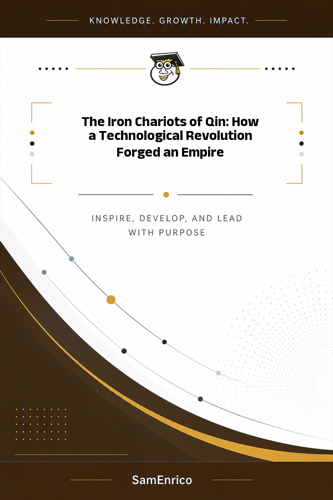 The Iron Chariots of Qin: How a Technological Revolution Forged an EmpireVarney Arlyne$11.99
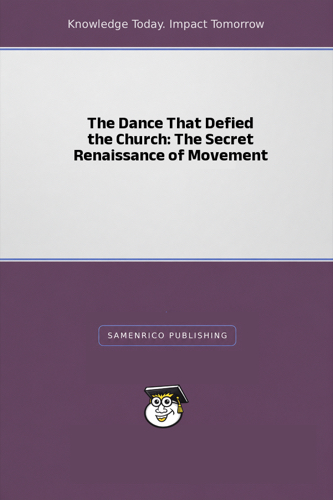 The Dance That Defied the Church: The Secret Renaissance of MovementVarney Arlyne$11.99
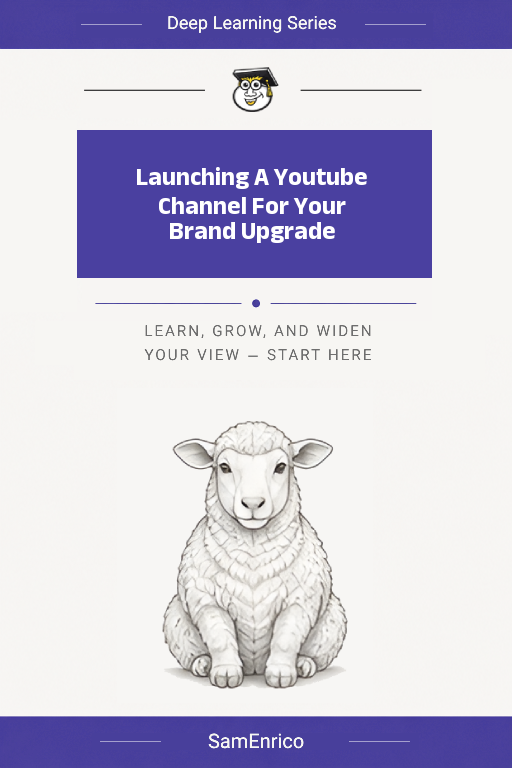 Launching A Youtube Channel For Your Brand UpgradeVarney Arlyne$12.99
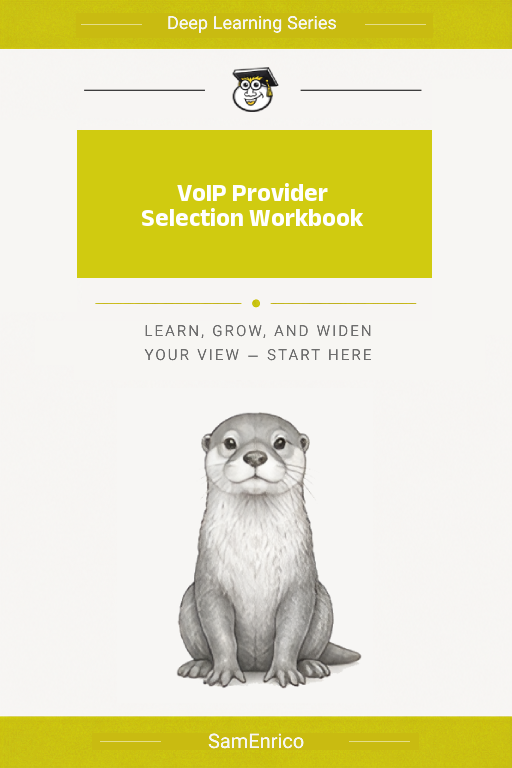 VoIP Provider Selection WorkbookVarney Arlyne$12.99
 How to Produce Collar StaysVarney Arlyne$11.99
You may also like
 Hong Kong Handover 1997Dunn Johnnie$11.99
 Zumba For Postnatal Recovery CourseNeal Christian$11.99
 Zumba for BeginnersLadner Nikia$11.99
 YouTube Comment Mining GuideHumes Pandora$12.99
 Worry Box MeditationCarlin Rudy$11.99
 Workplace Stress MeditationNguyen Lynn$11.99
 Workplace Stress and Sleep RepairHawley Ivory$11.99
 Workplace Perfectionism CureDelaney Jeffry$11.99
 Workplace Injustice Anger GuideWallen Isabelle$11.99
 Work Addiction and Burnout LinkGreenwood Ester$11.99
 Women in Yoga and WellnessBeattie Galina$11.99
 Women in Stand Up ComedyChun Evangeline$11.99