
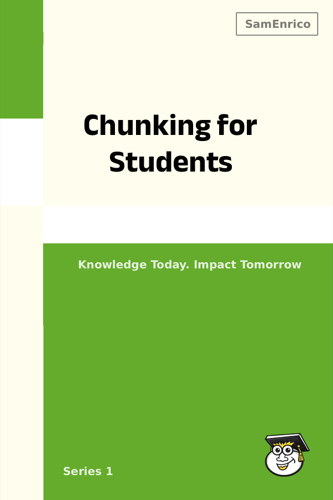
Free sample
Chapter 1: The Seven-Item Limit--Every student has experienced the same quiet panic. You sit down to study a chapter of biology, history, or calculus. You read the first paragraph. You understand it. You read the second paragraph.
You understand that too. By the time you reach the bottom of the third page, something has gone wrong. The earlier information has begun to slip away, like sand through open fingers. You flip back to the first page, re-read a sentence you thought you had mastered, and discover that it now feels unfamiliar, as if you are seeing it for the first time. You close the book, take a breath, and try to recall what you just spent forty-five minutes reading.
Nothing coherent emerges. A few disconnected facts float to the surface, but the logical thread, the argument, the sequence of ideas—all of it has dissolved.This is not a sign that you are lazy, unintelligent, or unsuited for academic work. It is not a character flaw. It is not evidence that you lack discipline or that you secretly do not care about your grades. What you have just experienced is a fundamental constraint of the human brain, a biological limitation that affects every single person on this planet, from Nobel laureates to first-year undergraduates.
Your working memory—the mental workspace where conscious thinking happens—has a maximum capacity. When you exceed that capacity, information simply falls out. There is no amount of willpower that can override this limit, just as there is no amount of determination that can allow you to hold your breath for twenty minutes. The brain has hardware specifications, and those specifications matter.The central argument of this book is that successful students are not the ones with larger working memory capacities. They are the ones who have learned, either through intuition or explicit instruction, to work with their brain's limitations rather than against them.
They have discovered the single most powerful strategy for overcoming the constraints of working memory: chunking. This chapter will explain what chunking is, why it works, why cramming fails despite your best intentions, and how a simple demonstration with twenty letters can change the way you study forever.The Architecture of a Thinking Machine Before we can understand why chunking works, we must understand the basic architecture of human memory. Cognitive psychologists generally divide memory into three systems: sensory memory, working memory, and long-term…
This is the end of the free sample. Get the Audiobook to keep going. Buy now
About this book
Details
- Author
- Fitzsimmons Mirella
- Publisher
- SamEnrico
- Language
- English
- Genre
- Non-Fiction, Self-Help / Student
- Released
- 2026-06-09
- Pages (approx.)
- 144
- Available as
- eBook, Audiobook

Listen in the VoxFlicks app
Audiobooks and audio dramas wherever you go. Sign in with your SamEnrico account and press play.
More by Fitzsimmons Mirella
 Radio Based Therapy For Remote AreasFitzsimmons Mirella$11.99
 CBD Sleep Memory GuideFitzsimmons Mirella$11.99
 The Gacy Property DemolitionFitzsimmons Mirella$11.99
 LTC Insurance For AccountantsFitzsimmons Mirella$11.99
 The Sobriety Values WorkbookFitzsimmons Mirella$11.99
 The Oath of SupremacyFitzsimmons Mirella$11.99
 Self Talk For AbortionFitzsimmons Mirella$11.99
 TM For LongevityFitzsimmons Mirella$11.99
 Lancelot and the Enchanted Mirror: A Knight’s Forbidden ReflectionFitzsimmons Mirella$11.99
 Golden Shadows: The Untold Saga of the Forgotten OlympianFitzsimmons Mirella$11.99
 The Dancer's Guide to GotipuaFitzsimmons Mirella$11.99
 China PIPL FinesFitzsimmons Mirella$12.99
You may also like
 Hong Kong Handover 1997Dunn Johnnie$11.99
 Zumba For Postnatal Recovery CourseNeal Christian$11.99
 Zumba for BeginnersLadner Nikia$11.99
 YouTube Comment Mining GuideHumes Pandora$12.99
 Worry Box MeditationCarlin Rudy$11.99
 Workplace Stress MeditationNguyen Lynn$11.99
 Workplace Stress and Sleep RepairHawley Ivory$11.99
 Workplace Perfectionism CureDelaney Jeffry$11.99
 Workplace Injustice Anger GuideWallen Isabelle$11.99
 Work Addiction and Burnout LinkGreenwood Ester$11.99
 Women in Yoga and WellnessBeattie Galina$11.99
 Women in Stand Up ComedyChun Evangeline$11.99