
Non-FictionSelf-HelpAddiction Recovery
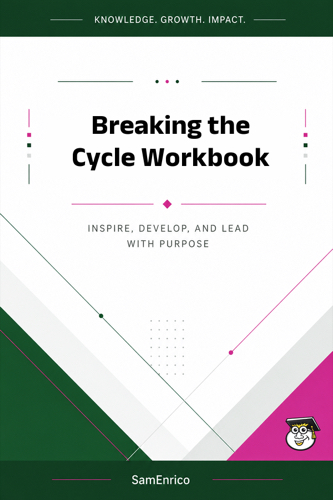
Breaking the Cycle Workbook eBook
Step by step exercises to interrupt compulsive sex
Step by step exercises to interrupt compulsive sexual patterns and regain control.
Formats
Free sample
Chapter 1: The 24-Hour Reset...--–- You are reading this because some part of you is exhausted. Not the kind of tired that a good night’s sleep can fix, but the deeper fatigue that comes from promising yourself you will stop, only to find yourself doing the same thing again a few hours later. That gap between what you want for yourself and what you actually do—that space is where shame lives. And shame has been lying to you. It has told you that you lack willpower, that you are broken, that you don’t deserve to try again.
None of that is true. What is true is that you have been trying to solve a problem using the same brain that created the problem, in the same environment where the problem has always happened, at the same time of night when your defenses are lowest. That is not a character flaw. That is a design flaw. And design flaws can be fixed.This chapter is not about forever.
Forever is a paralyzing concept when you are in crisis. Try to imagine never acting out again for the rest of your life and your brain will immediately rebel, offering you a dozen reasons why that is impossible, why you might as well give up now. So we are not going to do that. We are going to do something much smaller and much more strategic. We are going to build a twenty-four-hour container.
Not because twenty-four hours is magic, but because twenty-four hours is manageable. Anyone can do anything for twenty-four hours. The purpose of this chapter is to give you a set of concrete, physical actions that will change your environment, change your options, and give you one clean day. One day is all you need to prove to yourself that change is possible. Tomorrow, you can worry about tomorrow.
Today, you only have to worry about the next twenty-four hours.The Problem with Willpower Let us be honest about something that most recovery books dance around. Willpower is a terrible long-term strategy. It is not that willpower does not exist—it does. You have used it many times. But willpower is a limited resource that depletes over the course of a day.
Every decision you make, every emotion you suppress, every temptation you resist draws from the same finite pool. By ten o’clock at night, after work, after family obligations, after the thousand small frustrations of daily life, your willpower reserves are empty. And that is exactly when the urges tend to arrive. You are not weak at ten o’clock. You are depleted.
There is a difference.This is why the traditional advice of “just say no” is not only unhelpful but actively harmful. It sets you up to fail by implying that if you cannot simply say no, there is something wrong with you. The truth is that saying no repeatedly, without changing anything else, is like trying to hold a beach ball underwater. You can do it for a while, but eventually your arms get tired and the ball explodes upward. The solution is not stronger arms.
The solution is to let the air out of the ball. In practical terms, that means changing your environment so that the choice to act out is no longer a simple yes-no decision available to you at midnight when you are exhausted. It means building a twenty-four-hour container where the options are limited, the triggers are removed, and the path of least resistance leads toward recovery, not away from it.The Surrender Contract – Revised for Agency Many twelve-step programs use a concept called surrender—the acknowledgment that you are powerless over your addiction and that your life has become unmanageable. That framing works well for many people, but it has a potential downside. If you believe you are completely powerless, you may also believe there is no point in trying to exercise any control at all.
This workbook takes a different position. You are not powerless. You are human. You have a brain that has learned a set of compulsive patterns, and those patterns can be interrupted. But they cannot be interrupted by sheer will alone.
They must be interrupted by strategy.The exercise we are about to do is called the 24-Hour Safety Contract. Unlike a traditional surrender contract that emphasizes powerlessness, this contract emphasizes agency. It says: I cannot control whether an urge arises. But I can control what I do in the thirty seconds after it arrives. I can control whether I reach for my phone, whether I close the blinds, whether I type that first letter.
I am not powerless. I am strategically limiting my options for the next twenty-four hours so that my depleted evening self has fewer bad choices to make.Here is the contract. Write it down on a piece of paper or in a notebook. Sign it. Date it.
If you have an accountability partner (we will talk more about that in Chapter 2), have them witness it. If not, witness it yourself. The act of writing matters. It moves the commitment from the abstract space of thought into the physical world.The 24-Hour Safety Contract I, [your name], agree to abstain from the following bottom-line behaviors for the next twenty-four hours: [list specific behaviors].I acknowledge that urges will arise during this period. I do not need to fight them or suppress them.
I only need to not act on them for twenty-four hours.I have identified the following three actions I will take if an urge feels overwhelming:[e.g., Call my accountability partner][e.g., Leave the room and walk outside for five minutes]*[e.g., Open this workbook and read Chapter 4’s 90-second wave protocol]*I am not powerless. I am making a strategic choice to protect my future self.Signed: _____________ Date: _____________Notice what this contract does not say. It does not say you will never act out again. It does not say you are a bad person if you slip. It does not ask you to white-knuckle through anything.
It simply asks you to do three things: identify the specific behaviors you are pausing, acknowledge that urges will come, and pre-plan three alternative actions. That is it. That is the entire ask. And it is doable.Bottom Lines vs. Soft Lines Before you can sign the contract, you need to know what you are agreeing to stop.
That requires a distinction that will serve you throughout this workbook: the difference between bottom lines and soft lines.Bottom lines are the behaviors that you have decided are non-negotiable. These are the actions that, once you cross them, you consider a lapse. For most people, bottom lines include specific, observable behaviors like viewing pornography, visiting strip clubs, using prostitutes, engaging in anonymous sexual encounters, or any other behavior that violates your personal values. Bottom lines should be specific, observable, and measurable. “I will not look at porn” is a bottom line.
“I will not be a bad person” is not a bottom line because you cannot measure it. Keep your bottom lines concrete.Soft lines are warning sign behaviors. These are actions that are not themselves…
This is the end of the free sample. Get the eBook to keep going. Buy now
About this book
Details
- Author
- Keegan Jospeh
- Publisher
- SamEnrico
- Language
- English
- Genre
- Non-Fiction, Self-Help, Addiction Recovery
- Released
- 2026-06-10
- Pages (approx.)
- 142
- Available as
- eBook, Audiobook

Read better in the ZLOADR app
Your eBooks on your phone or tablet. Sign in with your SamEnrico account and start reading.
More by Keegan Jospeh
 Priority Overload Rescue GuideKeegan Jospeh$11.99
 Night Stalker Forensics ReviewKeegan Jospeh$11.99
 Late Night Snack TrackerKeegan Jospeh$11.99
 Franchising Your Local Brand Across Borders Data PrivacyKeegan Jospeh$11.99
 The Ocean’s Hidden Code: Terence Tao and the Pacific’s Mathematical RevelationsKeegan Jospeh$11.99
 The Night the Sky Blew Orange: The Bhopal Gas Tragedy UncoveredKeegan Jospeh$11.99
 Understanding Cytochrome C Oxidase DeficiencyKeegan Jospeh$17.99
 Q2 Marketing One PagerKeegan Jospeh$12.99
 Green Bond Tax ExemptionKeegan Jospeh$12.99
 How to Become a Chemical CompounderKeegan Jospeh$11.99
 Contact TracerKeegan Jospeh$11.99
You may also like
 Hong Kong Handover 1997Dunn Johnnie$11.99
 Zumba For Postnatal Recovery CourseNeal Christian$11.99
 Zumba for BeginnersLadner Nikia$11.99
 YouTube Comment Mining GuideHumes Pandora$12.99
 Worry Box MeditationCarlin Rudy$11.99
 Workplace Stress MeditationNguyen Lynn$11.99
 Workplace Stress and Sleep RepairHawley Ivory$11.99
 Workplace Perfectionism CureDelaney Jeffry$11.99
 Workplace Injustice Anger GuideWallen Isabelle$11.99
 Work Addiction and Burnout LinkGreenwood Ester$11.99
 Women in Yoga and WellnessBeattie Galina$11.99
 Women in Stand Up ComedyChun Evangeline$11.99