
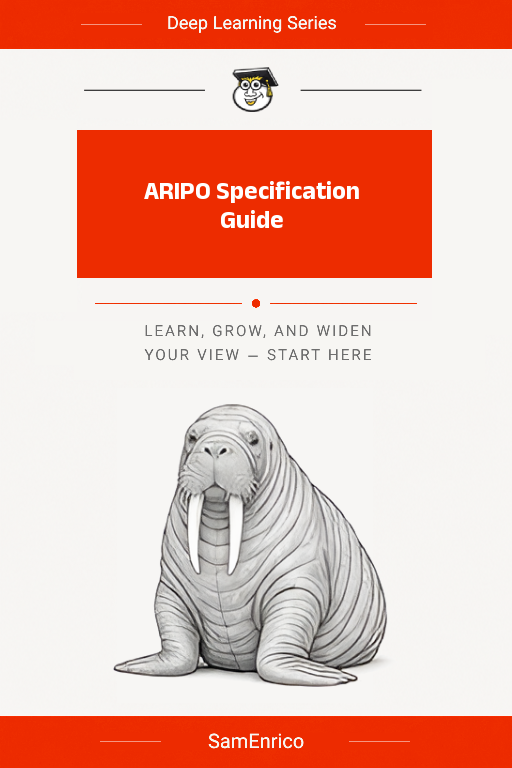
ARIPO Specification Guide eBook
Write clear specifications accepted by ARIPO and a
Write clear specifications accepted by ARIPO and all designated member states consistently.
Formats
Free sample
Chapter 1: The Bundle Illusion...--The most expensive mistake in African intellectual property drafting is not a poorly written claim—it is a false assumption. The assumption sounds harmless, even reassuring: "ARIPO granted my patent, so I am protected in all member states."This sentence has ruined more patent portfolios than any office action, any opposition, or any infringement litigation. And it is wrong.If you take only one lesson from this book, let it be this: An ARIPO patent is not a unitary right. It is a bundle of separate national patents that happen to share a single filing date, a single examination report, and a single renewal fee payment point. The ARIPO Office in Harare is a post office with examining authority—not a supreme court of patent validity.This chapter dismantles the bundle illusion.
By the time you finish reading, you will understand precisely why a "granted" ARIPO patent can be worth nothing in Lusaka, enforceable in Nairobi, and revoked in Harare—all from the same specification. More importantly, you will learn the drafting philosophy that turns this fragmented system from a liability into a strategic advantage.1.1 The Four Agreements You Must Know Before we discuss drafting, we must understand the legal architecture. ARIPO is not a single treaty but a family of agreements, each creating a different legal framework. Confusing them is the first step toward the bundle illusion.The Lusaka Agreement (1976) created ARIPO itself. It is the founding charter, establishing the organization and its secretariat in Harare, Zimbabwe.
The Lusaka Agreement defines membership—currently 22 states—but it creates no substantive patent rights. Think of it as the constitution.The Harare Protocol (1982) is where patents and industrial designs live. This is the agreement you care about. The Harare Protocol established the regional system for filing, examining, and granting patents and designs. When practitioners say "ARIPO patent," they mean a patent granted under the Harare Protocol.The Banjul Protocol (1993) covers trademarks.
It operates on similar principles but has different procedural rules. This book focuses on patents and designs under the Harare Protocol, but we will note where trademark principles differ for context.The Arusha Protocol (2015) covers plant breeders' rights. It is newer and less frequently used, but it follows the same "bundle of national rights" model.The critical insight is this: Each agreement operates independently. A state can join the Lusaka Agreement (becoming an ARIPO member) without joining the Harare Protocol (and therefore not participating in the patent system). Conversely, a state can join the Harare Protocol but fail to domesticate it into national law—creating the "zombie rights" phenomenon we will explore in Chapter 2.1.2 The Core Legal Principle: Art.
2(3) of the Harare Protocol The bundle illusion persists because ARIPO feels like a unitary system. You file one application. You pay one set of fees. You receive one grant certificate. The ARIPO Office even has "examiners" who issue "office actions."But the Harare Protocol itself destroys this illusion in a single sentence.
Article 2(3) states:"A patent granted under this Protocol shall in each of the Contracting States have the effect of, and be subject to, the same conditions as a national patent granted by that State."Read that again. A granted ARIPO patent has the effect of a national patent—meaning it can be enforced like one. But it is also subject to the same conditions as a national patent—meaning it can be revoked, narrowed, or refused based entirely on that State's domestic law.This is fundamentally different from the European Patent Office (EPO), where a granted European patent is a unitary right that can only be revoked centrally under the European Patent Convention. Under ARIPO, the central grant is merely a recommendation. Each designated State has the final say.Consider what this means in practice.
Zimbabwe might have no exclusion for methods of medical treatment. Kenya might exclude them entirely. A single ARIPO application claiming a medical method will be granted by ARIPO (because the Harare Protocol does not prohibit such claims) but then refused by Kenya during the national opt-out window (see Chapter 8). The same grant certificate produces protection in one state and nothing in another.The bundle illusion collapses. You do not have one patent.
You have as many patents as you have designated States—each with its own validity, scope, and enforceability.1.3 The Pragmatic Drafting Philosophy (Resolving the "Strictest Law" Trap)Traditional patent drafting wisdom says: Draft for the strictest jurisdiction. If one State excludes business methods, do not claim business methods. If one State requires absolute novelty, disclose all prior art globally. This conservative approach is safe but wasteful.Here is the problem: The strictest jurisdiction among 22 States is very strict indeed. One State might require best mode disclosure.
Another might exclude software. Another might require deposit of biological materials within its own territory. Drafting for the strictest law across all categories produces a specification so narrow that it protects almost nothing of commercial value.This book adopts a different philosophy: Draft for median stringency, with fall-back positions for strict jurisdictions.Here is how it works.Step One: Identify the patentability standards across your designated States. Use the Appendix tables (A-1 through A-6) to map which States have strict rules on novelty, exclusions, best mode, and deposit requirements.Step Two: Draft your independent claims at the median level of stringency. If most States allow medical method claims, draft a medical method claim.
If most States require absolute novelty, conduct a worldwide prior art search. The median standard becomes your default.Step Three: Build fall-back claims (dependent claims that progressively narrow scope) that satisfy the strictest States. If Kenya excludes medical methods, add a dependent claim that recasts the method as a "pharmaceutical composition for use in..." which is allowable. If Zimbabwe requires best mode, add a separate best mode section that can be deleted for other States.Step Four: Use the national opt-out mechanism (Chapter 8) to handle strict States individually. When a strict State refuses the median claims, you offer the narrower fall-back claims.
You lose scope in that State but preserve broader scope everywhere else.This philosophy resolves the apparent contradiction between Chapter 1 (median stringency) and Chapter 8 (opt-out fallbacks). You are not drafting for the strictest law. You are drafting for the median, then retreating only where necessary.The alternative—drafting for the strictest law from the beginning—is like flying everywhere on a standby ticket because one airport might have weather delays. You arrive safely but never in first class. Median drafting with fallbacks gets you first class to most destinations and coach to the rest.1.4 How the ARIPO Examination System Actually Works To draft effectively, you must understand what ARIPO does—and does not—examine.Formalities Examination (ARIPO Office): When you file an application, ARIPO first checks formal requirements under Rule 28: Does the request form include all mandatory fields?
Are the fees paid? Is the Power of Attorney filed? Is there a description, claims, drawings (if any), and an abstract? This is a yes/no check. If you fail formalities, you get an invitation to correct within one month (Deadlines Chart, Row 11).
If you fail to correct, the application is deemed withdrawn.Substantive Examination (Designated States): The Harare Protocol gives ARIPO two options…
This is the end of the free sample. Get the eBook to keep going. Buy now
About this book
Details
- Author
- Rounds Venita
- Publisher
- SamEnrico
- Language
- English
- Genre
- Non-Fiction, Business Brief
- Released
- 2026-05-29
- Pages (approx.)
- 158
- Available as
- eBook, Audiobook

Read better in the ZLOADR app
Your eBooks on your phone or tablet. Sign in with your SamEnrico account and start reading.
More by Rounds Venita
 Second Generation Friendship Across CulturesRounds Venita$11.99
 Managing Interruption Urgency WorkbookRounds Venita$11.99
 Lead Belly Twelve StringRounds Venita$11.99
 Imposter Syndrome Memory GuideRounds Venita$11.99
 Eye Mask Sleep Memory LinkRounds Venita$11.99
 Keto Alcohol GuideRounds Venita$11.99
 Anger Prevention RoutinesRounds Venita$11.99
 Master Limited PartnershipsRounds Venita$11.99
 The Tokyo Art Heist: A Masterpiece Vanishes in the Shadows of the YakuzaRounds Venita$11.99
 Desert Storm: The 100-Hour War That Redefined Modern WarfareRounds Venita$11.99
 How to Start a Airport Runways Clearing of Snow and Ice Business (Beginners Guide)Rounds Venita$11.99
 How to Produce FruitsRounds Venita$11.99
You may also like
 Hong Kong Handover 1997Dunn Johnnie$11.99
 Zumba For Postnatal Recovery CourseNeal Christian$11.99
 Zumba for BeginnersLadner Nikia$11.99
 YouTube Comment Mining GuideHumes Pandora$12.99
 Worry Box MeditationCarlin Rudy$11.99
 Workplace Stress MeditationNguyen Lynn$11.99
 Workplace Stress and Sleep RepairHawley Ivory$11.99
 Workplace Perfectionism CureDelaney Jeffry$11.99
 Workplace Injustice Anger GuideWallen Isabelle$11.99
 Work Addiction and Burnout LinkGreenwood Ester$11.99
 Women in Yoga and WellnessBeattie Galina$11.99
 Women in Stand Up ComedyChun Evangeline$11.99