
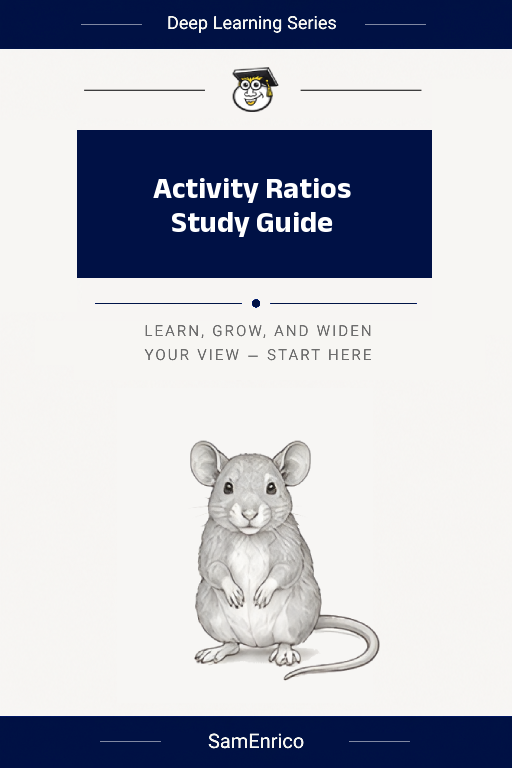
Activity Ratios Study Guide Audiobook
Calculate inventory turnover, accounts receivable
Calculate inventory turnover, accounts receivable turnover, and asset turnover ratios. Apply formulas to measure operational efficiency.
Formats
Free sample
Chapter 1: Beyond The Bottom Line--–- The email arrived at 11:47 on a Tuesday. "Urgent:全体员工会议今天下午3点。" The translation read: "All-hands meeting today at 3 PM." For the 127 employees of Bright Star Manufacturing, a profitable midsized electronics assembler in Shenzhen, this was unusual. Quarterly earnings had just been announced the previous week. Profits were up 8 percent. The CEO had celebrated with a company-wide bonus.
And yet, here was an unscheduled all-hands meeting in the middle of a Tuesday.At 3 PM, the CEO stood before a silent room. His face was gray. "We are shutting down," he said. "Operations cease Friday."The room erupted. Someone shouted: "But we're profitable!" The CEO nodded slowly.
"Profitable, yes. But we have no cash. Our inventory is sitting in a warehouse in Dongguan. Our customers haven't paid us in 90 days. And our suppliers just cut us off this morning.
Profit doesn't pay salaries tomorrow. Cash does."Bright Star Manufacturing was profitable. It had never lost money in any quarter of its five-year existence. And yet, on that Tuesday, it died.Why? Because Bright Star's managers had never looked at a single activity ratio.This chapter is the story of why activity ratios exist, what they reveal that profit never will, and why the smartest financial analysts spend as much time studying turnover as they do studying margins.
By the end of this chapter, you will understand a simple but devastating truth: a company can be profitable and bankrupt on the same day. And you will know exactly which numbers would have saved Bright Star.The Profitability Delusion: How Bright Star Died Rich Let us rewind Bright Star's financial statements for the twelve months before that Tuesday. On paper, the company looked healthy. Net income had grown every year. Gross margins were stable at 34 percent.
The CEO had received performance bonuses tied to profit targets. The board was satisfied. The bank was happy. And then, silently, three numbers were moving in the wrong direction.First, inventory. Bright Star had accumulated $4.2 million in finished goods that had not moved in over 180 days.
A design change in a popular component had rendered thousands of circuit boards obsolete. But because the company used FIFO accounting, those old boards still sat on the balance sheet at full value. The income statement showed no problem. The warehouse told a different story.Second, accounts receivable. Bright Star's largest customer, a European distributor, had stretched payments from 30…
This is the end of the free sample. Get the Audiobook to keep going. Buy now
About this book
Details
- Author
- Spriggs Lynwood
- Publisher
- SamEnrico
- Language
- English
- Genre
- Non-Fiction, Student's Shortcut, Operational Analysis
- Released
- 2026-05-30
- Pages (approx.)
- 155
- Available as
- eBook, Audiobook

Listen in the VoxFlicks app
Audiobooks and audio dramas wherever you go. Sign in with your SamEnrico account and press play.
More by Spriggs Lynwood
 The Freelance Financial CushionSpriggs Lynwood$11.99
 Embedded CommandsSpriggs Lynwood$11.99
 Child Star Family DynamicsSpriggs Lynwood$11.99
 Career Coaching After Layoff GuideSpriggs Lynwood$11.99
 Witness Testimony AnalysisSpriggs Lynwood$11.99
 DoorDash Peak Hour BlueprintSpriggs Lynwood$11.99
 Assertiveness With Wedding PlanningSpriggs Lynwood$11.99
 Walmart Canada FailureSpriggs Lynwood$11.99
 GST Registration for Restaurants and Caterers HandbookSpriggs Lynwood$11.99
 The Billion-Dollar Bet: How One Hedge Fund Short-Sold the 2008 Financial CrisisSpriggs Lynwood$11.99
 The First to the Moon: How a Forgotten Soviet Woman Almost Beat the U.S. to SpaceSpriggs Lynwood$11.99
 Crystal Shadows: The Rise and Fall of the SuperlabsSpriggs Lynwood$11.99