
Non-FictionSelf-HelpAcademic Planning
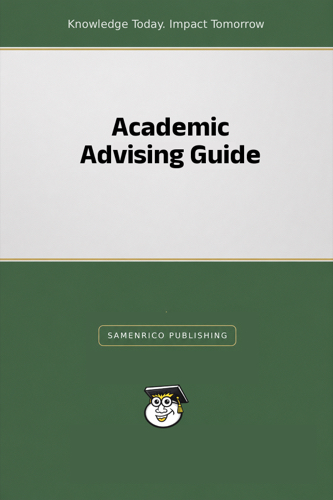
Academic Advising Guide Audiobook
Plan course load to avoid overwhelm.
by Witt Hassan
Plan course load to avoid overwhelm.
Formats
Free sample
Chapter 1: The Overwhelm Algorithm--–- Rachel showed up to my office in October of her sophomore year looking like she hadn't slept since August. She was a straight-A student, double majoring in biology and psychology, vice president of the pre-med club, and she was failing. Not her classes—those she was still miraculously pulling B-minuses in through sheer panic and caffeine. She was failing at being a human. Her hair had thinned.
She'd stopped calling her mom. She couldn't remember the last time she'd eaten a meal that didn't come from a vending machine. And when I asked her how many credits she was taking, she looked at me like I'd asked for her social security number."Seventeen," she said. Then she started crying.Not because seventeen credits is an outrageous number. Plenty of students take seventeen credits.
Some take eighteen, nineteen, even twenty-one. Rachel was crying because she had done everything right. She had followed the formula. She had calculated her credit hours, multiplied by the standard "three hours of study per credit hour" rule that every orientation leader recites, and determined that she had 51 hours of work per week. Fifty-one hours.
That left 117 hours for sleep, eating, socializing, exercising, and being a person. She should have been fine.She was not fine.Here's what the formula didn't account for: the organic chemistry lab that took six hours instead of the scheduled three. The research paper for her psychology seminar that required reading fourteen studies, each denser than a bowl of oatmeal. The constant context switching between her two majors, which used completely different cognitive muscles. The emotional tax of being the person everyone came to for help in the pre-med club.
The two hours every Sunday night she spent just staring at her calendar, trying to figure out where the week had gone.The formula didn't account for any of that. And that's because the formula is a lie.The Great Lie of the Credit Hour Let me tell you where the credit hour comes from. In 1906, the Carnegie Foundation for the Advancement of Teaching wanted a way to standardize something that had never been standardized before: how much work a college course should require. They decided that one credit hour would represent one hour of classroom time per week, plus two hours of outside preparation. That's it.
That's the origin of "12 credits = 36 hours of work per week." A calculation invented over a century ago…
This is the end of the free sample. Get the Audiobook to keep going. Buy now
About this book
Details
- Author
- Witt Hassan
- Publisher
- SamEnrico
- Language
- English
- Genre
- Non-Fiction, Self-Help, Academic Planning
- Released
- 2026-06-09
- Pages (approx.)
- 138
- Available as
- eBook, Audiobook

Listen in the VoxFlicks app
Audiobooks and audio dramas wherever you go. Sign in with your SamEnrico account and press play.
More by Witt Hassan
 Elizabeth I Pardon Politics HandbookWitt Hassan$11.99
 Mindfulness for OCDWitt Hassan$11.99
 Financial Stress and GriefWitt Hassan$11.99
 The Cosmic Duet: How a Jazz Pianist and a Quantum Physicist Redefined TimeWitt Hassan$11.99
 Exhibition DrillWitt Hassan$11.99
 Dynamic Panel Data GMM GuideWitt Hassan$12.99
 How to Produce Auto Racing Autographed ParaphernaliaWitt Hassan$11.99
 How to Start a Ferro Titanium Business (Beginners Guide)Witt Hassan$11.99
You may also like
 Hong Kong Handover 1997Dunn Johnnie$11.99
 Zumba For Postnatal Recovery CourseNeal Christian$11.99
 Zumba for BeginnersLadner Nikia$11.99
 YouTube Comment Mining GuideHumes Pandora$12.99
 Worry Box MeditationCarlin Rudy$11.99
 Workplace Stress MeditationNguyen Lynn$11.99
 Workplace Stress and Sleep RepairHawley Ivory$11.99
 Workplace Perfectionism CureDelaney Jeffry$11.99
 Workplace Injustice Anger GuideWallen Isabelle$11.99
 Work Addiction and Burnout LinkGreenwood Ester$11.99
 Women in Yoga and WellnessBeattie Galina$11.99
 Women in Stand Up ComedyChun Evangeline$11.99