
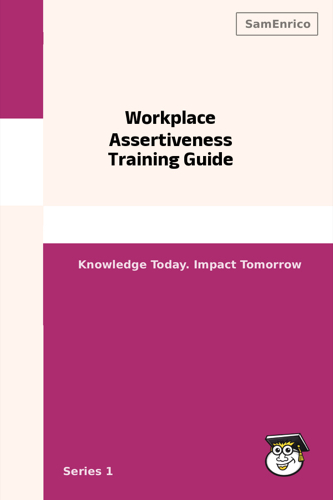
Workplace Assertiveness Training Guide Audiobook
Helps employees speak up in meetings, request rais
Helps employees speak up in meetings, request raises, and set workload boundaries.
Formats
Free sample
Chapter 1: The $47,000 Whisper--–- Anna had been with the company for four years. She arrived early, stayed late, never complained, and consistently exceeded her targets. In her annual reviews, she was called "reliable," "diligent," and "a pleasure to manage." When her colleague Mark—hired the same week, with similar qualifications—was promoted for the second time, Anna smiled, congratulated him, and said nothing. That night, she cried in her car. Then she drove home, made dinner, answered three work emails before bed, and showed up early the next morning.
Anna's silence had cost her exactly $47,000 over four years: the difference between her 2% annual raises and the 8-12% she could have negotiated, compounded with the lost promotional bump. She never asked. So she never received. This chapter dismantles the myth that silent hard work is the surest path to promotion. It introduces assertiveness not as aggression or pushiness, but as the most respectful form of professional communication—because honoring your own time, contributions, and boundaries is not selfish.
It is the foundation of sustainable career growth.The High Cost of Holding Back Let us begin with a number: $500,000. That is the approximate lifetime earnings loss for an employee who remains passive over a thirty-year career, assuming average raises of 2-3% instead of the 8-12% achievable through assertive negotiation. This figure comes from longitudinal salary data analyzed by the National Bureau of Economic Research, which found that employees who never asked for a raise earned 28% less over their careers than identical peers who asked at least once every two years.But the cost of silence is not only financial. Consider the following cascading consequences of chronic workplace passivity:First, there is the burnout tax. When employees cannot say no to additional work, their workload expands until it exceeds their capacity.
The result is not better performance—it is diminished performance across all tasks. Studies in the Journal of Applied Psychology show that employees who report high assertiveness have 40% lower rates of emotional exhaustion than their passive peers, despite working similar hours. The difference is not how much they do, but whether they have agency over what they do.Second, there is the invisibility penalty. In most organizations, visibility is a prerequisite for advancement. Speaking in meetings, volunteering for high-profile projects, and advocating for one's contributions are signals of leadership potential.
Passive employees are not seen as humble; they are seen as lacking confidence. A 2022 study of 5,000 performance reviews…
This is the end of the free sample. Get the Audiobook to keep going. Buy now
About this book
Details
- Author
- Buckley Christena
- Publisher
- SamEnrico
- Language
- English
- Genre
- Non-Fiction, Self-Help, Career Development
- Released
- 2026-06-05
- Pages (approx.)
- 141
- Available as
- eBook, Audiobook

Listen in the VoxFlicks app
Audiobooks and audio dramas wherever you go. Sign in with your SamEnrico account and press play.
More by Buckley Christena
 Pomodoro for Creative WorkBuckley Christena$11.99
 Being Blamed Anger Triggers CourseBuckley Christena$11.99
 Rainy Day Indoor Walking PlanBuckley Christena$11.99
 Cooperative Loan Application ProcessBuckley Christena$11.99
 The Octopus That Outsmarted the Navy: The Untold Story of Clever HansBuckley Christena$11.99
 Understanding Omodysplasia Type 1Buckley Christena$17.99
 Financial Leverage for Creators and FoundersBuckley Christena$11.99
 GitHub Remote Internship GuideBuckley Christena$12.99
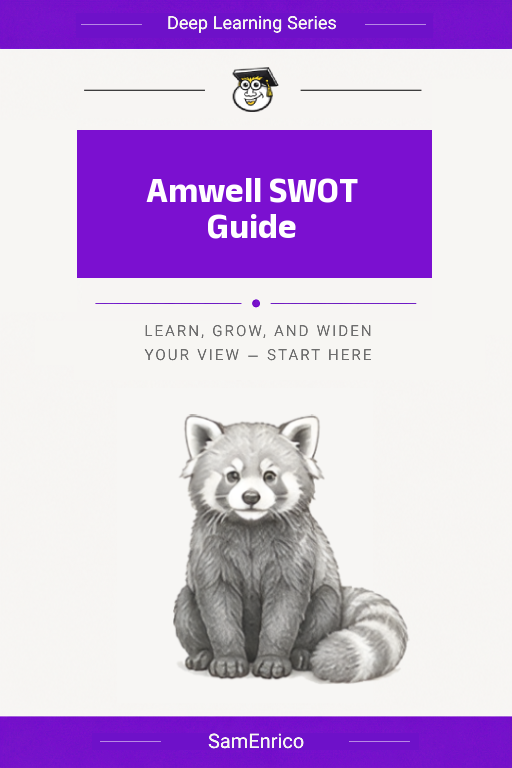 Amwell SWOT GuideBuckley Christena$12.99
 A Beginners Guide to Flight archery (Volume 1)Buckley Christena$11.99
You may also like
 Work Self Esteem HandbookKeener Tristan$11.99
 Self Esteem Building For New HiresGatewood Lynelle$11.99
 Workplace Confidence WorkbookLevy Candie$11.99
 Workplace Confidence Daily GuideValenzuela Elana$11.99
 Chunking for Performance ReviewsCollins Jimmie$11.99
 Imposter Performance Review PrepStory Kanisha$11.99
 Confidence Building at Work GuideNolen Lester$11.99
 Career Goal Action Planning GuideRankin Hyman$11.99
 Affirmations For Career SuccessKetchum Jessenia$11.99
 Workplace Confidence Building GuideDavenport Miquel$11.99
 The Workplace Self Esteem WorkbookHalcomb Pierre$11.99
 Performance Review Anxiety CourseHutchinson Jeanene$11.99