
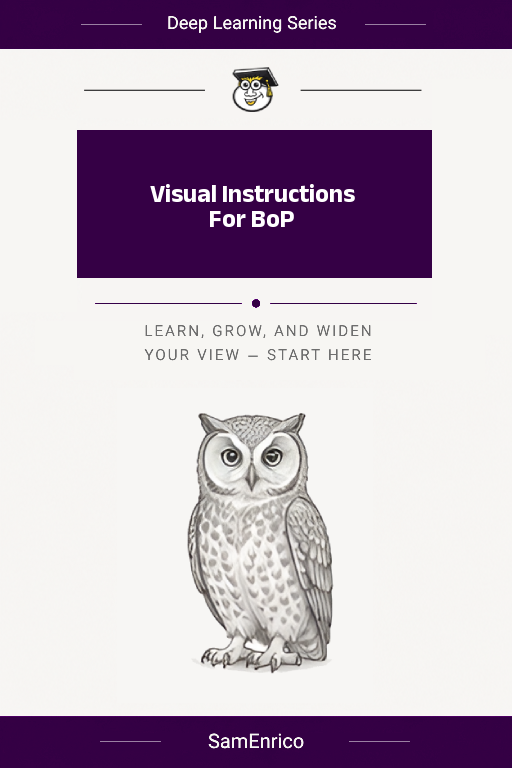
Non-FictionStartup GuideBOP StrategyInstructions
Visual Instructions For BoP eBook
Create visual only instructions for product use se
Create visual only instructions for product use serving low literacy customers in low income markets.
Formats
Free sample
Chapter 1: The $10 Billion Typo--–- The召回 was polite. The email from Legal was not."Forty-seven thousand units. Returned. Not because they failed. Because no one could figure out how to turn them on."The product was a blood glucose monitor, designed for rural clinics across three African countries.
The engineering team had spent eighteen months miniaturizing the circuitry, extending battery life, and making the plastic housing nearly unbreakable. The manual was a triumph of technical writing—seventy-two pages, six languages, seventeen warning symbols, and a fold-out quick-start guide that contained exactly four hundred and thirty-two words.The users couldn't read any of them.Not because they were stupid. Not because they were careless. Because they had never learned to read. And because the designers had never bothered to ask whether the manual would work for people who hadn't.The cost of that oversight: $47 million in returned inventory, plus shipping, plus the reputational damage that would take three years to undo.
The fix, when it finally came, was six pictures. Six black-and-white line drawings showing a hand inserting a battery, pressing a button, pricking a finger, and reading a result. No words. No translations. No seventy-two pages.That is what this book is about: the $10 billion typo that isn't a typo at all.
It is the assumption that words are the natural, neutral, universal way to explain things. They are not. For eight hundred million adults, words are a wall. And most product manuals are built entirely out of walls.This chapter dismantles the most dangerous myth in product design: that any educated adult can follow a standard user manual. It introduces the scale of the problem, the two faces of illiteracy, and the first principle of visual instructions: dignity through clarity.
It ends with a promise that the rest of the book will keep—a practical, field-tested methodology for designing instructions that work for everyone, regardless of whether they can read a single word.The Size of the Silence Let us begin with a number: 800 million.That is the number of adults in the world who cannot read a single sentence. According to UNESCO's Institute for Statistics, global illiteracy has barely budged in a decade. Eight hundred million people—most of them women, most of them in low-income countries, most of them living on less than five dollars a day—cannot read a bus schedule, a medicine label, or a user manual.But that number is a lie. Not because it is wrong, but because it is too small.Functional illiteracy is the hidden iceberg beneath that number. A functionally illiterate person can read isolated words—"stop," "exit," "danger"—but cannot read a full sentence, follow a paragraph, or understand a set of instructions under time pressure.
The World Literacy Foundation estimates that an additional 600 million adults are functionally illiterate. When stressed, tired, or rushed, their reading collapses.Here is what that means for product design: a manual that requires reading more than three consecutive words will fail for over one billion adults. That is not a niche market. That is one out of every seven people on Earth.And yet, most product manuals are written by literate people, for literate people, assuming literate people. The designer sits in a well-lit office in San Francisco, London, or Shanghai, surrounded by colleagues who read for a living.
They write a manual. They test it with other literate colleagues. They declare it "intuitive."The word "intuitive" is the most dangerous word in design.The Two Illiteracies To understand why manuals fail, we must understand what illiteracy actually looks like. It is not a single condition. It is two.Total illiteracy is what most people imagine when they hear the word "illiterate." A totally illiterate person cannot read any text.
They cannot recognize the letter "A," cannot sound out "cat," cannot match a word to its meaning. They navigate the world through symbols, sounds, and memory. They remember that the red can contains beans and the blue can contains tomatoes because they have learned the colors, not because they have read the labels.For a totally illiterate person, a text manual is not merely unhelpful. It is actively hostile. It says, in effect, "You are not welcome here."Functional illiteracy is more common and more insidious.
A functionally illiterate person can read isolated words and very short sentences, but they read slowly, with effort, and with poor comprehension. They can read "Press the button" but not "Depress the activation mechanism for a minimum of three seconds." They can read "Danger" but not "Warning: This device contains small parts that may present a choking hazard to children under three years of age."Under stress—and first-time product use is stressful—functional literacy collapses. A person who can read a newspaper headline in the quiet of their home will freeze when confronted with a seven-step manual and an impatient child and a product that doesn't seem to be working. They will skip steps. They will guess.
They will give up.Here is the cruelest part: functional illiteracy is invisible. A functionally illiterate person has spent their entire life hiding it. They have memorized routes instead of reading street signs. They have asked for help in ways that sound casual. They have nodded when someone handed them a form.
They will not tell you they cannot read your manual. They will simply not buy your product again.And they will return it. Forty-seven thousand units at a time.The Universal Fallacy There is a belief that runs through every product team, every design school, and every technical writing department. It is almost never stated aloud, but it is almost always assumed. Call it the Universal Fallacy:If something is clear to me, it will be clear to everyone.The Universal Fallacy is wrong.
It is wrong for colors. It is wrong for symbols. It is wrong for arrows, icons, and layouts. And it is catastrophically wrong for text.What does "intuitive" actually mean? It means "familiar to the designer." That is all.
A smartphone interface is not intrinsically intuitive. It is familiar to people who have used smartphones before. A door handle is not intrinsically intuitive. It is familiar to people who have lived in cultures with Western-style doors.The Universal Fallacy becomes dangerous when it is applied to people who are not like the designer. A designer in New York City assumes that a trash can icon means "delete." But a farmer in rural Kenya has never seen a municipal waste bin.
To her, the icon is meaningless—a strange cylinder with a lid. A designer in London assumes that a thumbs-up means "good." But a traveler in West Africa learns that the thumbs-up is a vulgar insult. A designer in Tokyo assumes that a checkmark means "correct." But a user in Sweden sees a checkmark and thinks "incorrect."The Universal Fallacy kills products. It kills them slowly, through returns and bad reviews and low adoption rates. And it kills them expensively, through recalls and lawsuits and brand damage that takes years to repair.The antidote to the Universal Fallacy is not a better symbol.
It is humility. It is the assumption that nothing is universal. It is the practice of testing every visual element…
This is the end of the free sample. Get the eBook to keep going. Buy now
About this book
Details
- Author
- Lorenz Raylene
- Publisher
- SamEnrico
- Language
- English
- Genre
- Non-Fiction, Startup Guide, BOP Strategy, Instructions
- Released
- 2026-06-01
- Pages (approx.)
- 148
- Available as
- eBook, Audiobook

Read better in the ZLOADR app
Your eBooks on your phone or tablet. Sign in with your SamEnrico account and start reading.
More by Lorenz Raylene
 Cash Envelope System For Shopaholics HandbookLorenz Raylene$11.99
 Russian Bank Fraud GuideLorenz Raylene$11.99
 Dream Journal AssessmentLorenz Raylene$11.99
 Sugar Addiction Detox Smoothie GuideLorenz Raylene$11.99
 Mindfulness for Trauma SurvivorsLorenz Raylene$11.99
 T-Rex vs. Triceratops: The Ultimate Dino ShowdownLorenz Raylene$11.99
 The Ballad of the Black Arrow: How a 19th-Century Bowmaker Changed the Course of WarLorenz Raylene$11.99
 Understanding Congenital Contractural ArachnodactylyLorenz Raylene$17.99
 Memory Forensics (Ram Analysis)Lorenz Raylene$11.99
 Chinese Banking for StudentsLorenz Raylene$12.99
 How to Become a Die MounterLorenz Raylene$11.99
You may also like
 Hong Kong Handover 1997Dunn Johnnie$11.99
 Zumba For Postnatal Recovery CourseNeal Christian$11.99
 Zumba for BeginnersLadner Nikia$11.99
 YouTube Comment Mining GuideHumes Pandora$12.99
 Worry Box MeditationCarlin Rudy$11.99
 Workplace Stress MeditationNguyen Lynn$11.99
 Workplace Stress and Sleep RepairHawley Ivory$11.99
 Workplace Perfectionism CureDelaney Jeffry$11.99
 Workplace Injustice Anger GuideWallen Isabelle$11.99
 Work Addiction and Burnout LinkGreenwood Ester$11.99
 Women in Yoga and WellnessBeattie Galina$11.99
 Women in Stand Up ComedyChun Evangeline$11.99