
Non-FictionHealth & WellnessGut Health
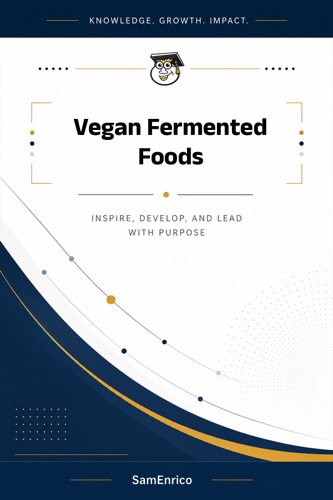
Vegan Fermented Foods Audiobook
Boost gut health with kimchi, sauerkraut, and komb
by Romano Berna
Boost gut health with kimchi, sauerkraut, and kombucha.
Formats
Free sample
Chapter 1: The Microbial Bridge--–- The first time I watched a cabbage transform into sauerkraut, I felt like a witness to magic. I had shredded the vegetable, massaged it with salt, and packed it into a jar. Then, for three weeks, I ignored it on my kitchen counter. When I finally opened the lid, the sharp, tangy aroma hit my nose, and I understood—without fully comprehending the science—that something alive had been at work. That something was a world of microbes, invisible architects that had taken my humble cabbage and turned it into a living food, rich with organisms that would go on to colonize my own gut.This chapter is not about recipes.
You will find those in Part 2. Instead, this is the foundation upon which every successful ferment is built: an understanding of why fermentation matters specifically for vegans, how the gut-brain connection works, and what the latest science reveals about fermented foods as medicine. By the end of this chapter, you will see your kitchen counter as a laboratory of transformation—and your digestive tract as a garden waiting to be cultivated.The Vegan Paradox: Why Plants Alone Are Not Enough For decades, the vegan movement has celebrated the power of whole plant foods: fiber, vitamins, antioxidants, and phytochemicals. And rightly so. A well-planned vegan diet reduces the risk of heart disease, type 2 diabetes, and certain cancers.
But there is a paradox that many long-term vegans quietly struggle with: bloating, gas, fatigue, and stubborn nutrient deficiencies despite eating mountains of kale, quinoa, and chickpeas.The culprit is not the plants themselves, but the way we eat them.Most plant foods are encased in cell walls made of cellulose and hemicellulose, structures that human digestive enzymes cannot fully break down. More critically, plants contain anti-nutrients—evolutionary defense compounds that protect the plant from predators but interfere with human nutrient absorption. The two most significant anti-nutrients for vegans are phytic acid (found in grains, nuts, seeds, and legumes) and oxalates (found in spinach, beets, Swiss chard, almonds, and sweet potatoes).Phytic acid binds to minerals—iron, zinc, calcium, and magnesium—forming insoluble complexes that pass through the digestive tract unabsorbed. This is why a vegan eating iron-rich spinach may still become anemic: the oxalates in the spinach bind to the iron, and the phytic acid from the accompanying whole grains binds to whatever iron remains. The result is a nutritional bottleneck.Oxalates present a…
This is the end of the free sample. Get the Audiobook to keep going. Buy now
About this book
Details
- Author
- Romano Berna
- Publisher
- SamEnrico
- Language
- English
- Genre
- Non-Fiction, Health & Wellness, Gut Health
- Released
- 2026-06-09
- Pages (approx.)
- 139
- Available as
- eBook, Audiobook

Listen in the VoxFlicks app
Audiobooks and audio dramas wherever you go. Sign in with your SamEnrico account and press play.
More by Romano Berna
 Resonant Frequency BreathingRomano Berna$11.99
 SAD And Eating DisordersRomano Berna$11.99
 Virtual Team Asynchronous WorkRomano Berna$11.99
 Anger De escalation in PrisonRomano Berna$11.99
 Nonverbal Cues in Active ListeningRomano Berna$11.99
 The YouTube Car Review ImpactRomano Berna$11.99
 Networking for PilotsRomano Berna$11.99
 The Cosmic Pioneers of Timbuktu: When African Astronomers Charted the StarsRomano Berna$11.99
 The Spice Kings: How Portugal Built a Global EmpireRomano Berna$11.99
 How to Become a Rubber-printing-machine OperatorRomano Berna$11.99
 How to Produce Walk-behind MowersRomano Berna$11.99
 A Collector's Handbook to the Mercedes-benz 250Romano Berna$11.99
You may also like
 Hong Kong Handover 1997Dunn Johnnie$11.99
 Zumba For Postnatal Recovery CourseNeal Christian$11.99
 Zumba for BeginnersLadner Nikia$11.99
 YouTube Comment Mining GuideHumes Pandora$12.99
 Worry Box MeditationCarlin Rudy$11.99
 Workplace Stress MeditationNguyen Lynn$11.99
 Workplace Stress and Sleep RepairHawley Ivory$11.99
 Workplace Perfectionism CureDelaney Jeffry$11.99
 Workplace Injustice Anger GuideWallen Isabelle$11.99
 Work Addiction and Burnout LinkGreenwood Ester$11.99
 Women in Yoga and WellnessBeattie Galina$11.99
 Women in Stand Up ComedyChun Evangeline$11.99