
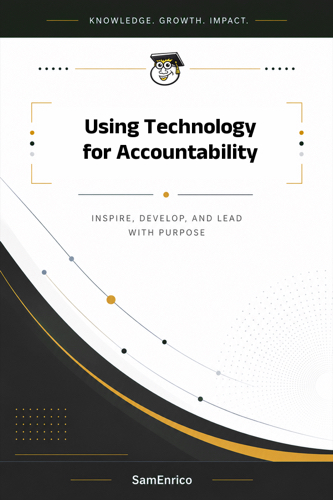
Using Technology for Accountability eBook
Leverage apps and software to block triggers and m
Leverage apps and software to block triggers and monitor behavior.
Formats
Free sample
Chapter 1: The 47-Tap Lie...--–- I once pressed the "Ignore Limit" button forty-seven times in a single morning. Not forty-seven times over a week. Not an exaggerated number for dramatic effect. Forty-seven times between 6:15 AM and 11:30 AM on a Tuesday that I had promised myself would be "productive." Each time, my thumb moved before my brain could object. Each time, a small voice whispered, Just this once.
You need to check that message. It might be important. And each time, the app obeyed. The screen unlocked. The dopamine flowed.
And the cycle continued.That was the day I realized something had gone terribly wrong with the way we design self-control.The "Ignore Limit" button on my i Phone was not a bug. It was not an oversight. It was a feature—a carefully engineered escape hatch designed to look like a tool of empowerment while actually serving as a pressure release valve for the tech industry's guilt. Apple and Google had given us wellness features, yes. But they had also given us the keys to the jail cell.
And they knew, with the precision of A/B tested data, that most of us would use those keys within the first seven days.This book is not about willpower. This book is about why willpower is a trap, how the technology industry exploits your good intentions, and what you can do to build a digital environment where failure is no longer an option.The Great Lie of Digital Wellness Every major technology company now offers some version of "screen time" or "digital wellbeing" tools. Apple introduced Screen Time in 2018 with i OS 12. Google followed with Digital Wellbeing later that year. Facebook, Instagram, and Tik Tok added "take a break" reminders.
You Tube added "remind me to stop watching." On the surface, these seemed like acts of corporate responsibility—a rare moment of Silicon Valley admitting that its products might have downsides.But here is the truth those companies do not want you to examine too closely: these tools are designed to fail.Let me prove it to you. Open your i Phone settings right now. Navigate to Screen Time > App Limits. Add a limit for any app you use compulsively—Instagram, Twitter, You Tube, whatever makes you lose time. Set the limit for one minute per day.
Then close settings. Now open that app and use it for sixty seconds. Watch what happens when the timer expires.A gray overlay appears. A message reads: "Time Limit: You have reached your limit on [App Name]." And then, in a nice, large, easy-to-tap font, there is a button that says "Ignore Limit."One tap. That is all it takes to undo your good intention.
One tap, and the app opens again. One tap, and the limit resets for fifteen more minutes. One tap, and you are back in the dopamine loop, exactly where the company wants you.This is not an accident. This is the Override Economy—a business model built on the predictable failure of human willpower.The Override Economy: How Your Failure Became Their Profit Let us name the villain explicitly, because vague antagonists produce vague solutions. The villain of this book is not your phone, not your lack of discipline, and not some abstract force called "distraction." The villain is a system I call the Override Economy.Here is how it works.
Technology companies face a fundamental contradiction. On one hand, they want to be seen as responsible corporate citizens. Apple wants you to believe it cares about your wellbeing. Meta wants you to think it has your best interests at heart. So they build wellness features—Screen Time, Digital Wellbeing, Take a Break reminders.
These features generate positive press, satisfy regulators, and ease the conscience of consumers.On the other hand, these companies make money when you use their products. More usage equals more ad impressions equals more revenue. Facebook's average revenue per user in North America was over $200 in 2023. You Tube serves over 50 billion ad impressions annually. Every minute you spend scrolling, clicking, and watching is a minute that generates revenue.The solution to this contradiction is the override.
Give the user a tool that looks like self-control but functions as a speed bump rather than a wall. Let them set limits. Let them feel virtuous for setting limits. But always—always—provide an escape hatch. Because if the user actually stopped using the product, the company would lose money.The data on override rates is staggering.
Internal studies from app developers (leaked and aggregated by researchers at NYU and Stanford) suggest that the average user overrides their own screen time limits within 48 hours of setting them. Within two weeks, 80% of users have abandoned their limits entirely. The "Ignore Limit" button is pressed an estimated 200 million times per day across i OS devices alone.Your failure is not a bug. It is the business model.The Neuroscience of the Dopamine Loop To understand why the Override Economy works so effectively, we need to look inside your skull. Dr.
Anna Lembke, a Stanford psychiatrist and author of Dopamine Nation, has spent decades studying the neuroscience of pleasure and pain. Her research reveals a terrifying truth: the same neurological mechanisms that drive cocaine and heroin addiction are activated by your smartphone.Here is the simplified version. Your brain runs on a delicate balance of pleasure (dopamine) and pain (the absence of dopamine). When you experience something pleasurable—a notification, a like, a funny video, a new email—your brain releases a small surge of dopamine. That surge feels good.
But here is the catch: dopamine is not actually about pleasure. It is about anticipation.The famous experiments of Wolfram Schultz in the 1990s demonstrated this brilliantly. Schultz trained monkeys to expect a drop of juice when a light flashed. Initially, the monkeys' dopamine neurons fired when they received the juice. But after repetition, the dopamine neurons shifted.
They began firing at the light, not the juice. The anticipation of reward became more powerful than the reward itself.This is exactly what happens when you pull down to refresh your email or social media feed. You are not seeking the content. You are seeking the possibility of content. The variable reward—maybe a like, maybe a message, maybe nothing—is neurologically identical to pulling the lever on a slot machine.
The house always wins because the anticipation is infinite.Now layer the override button on top of this neuroscience. When you hit "Ignore Limit," you are not just accessing an app. You are reinforcing the dopamine loop. Your brain learns that boundaries are negotiable. The override becomes part of the ritual.
The brief moment of hesitation—should I press it?—actually amplifies the dopamine hit when you do.Dr. Lembke calls this the "dopamine deficit state." When you constantly seek high-dopamine stimuli, your brain adapts by downregulating its dopamine receptors. What used to feel normal now feels boring. What used to feel exciting now feels normal. You need more stimulation to achieve the same effect.
This is tolerance. This is addiction. And the override button is your dealer.The Psychology of the Weak Moment Let me introduce you to two people…
This is the end of the free sample. Get the eBook to keep going. Buy now
About this book
Details
- Author
- Talley Lashon
- Publisher
- SamEnrico
- Language
- English
- Genre
- Non-Fiction, Self-Help, Technology
- Released
- 2026-06-08
- Pages (approx.)
- 157
- Available as
- eBook, Audiobook

Read better in the ZLOADR app
Your eBooks on your phone or tablet. Sign in with your SamEnrico account and start reading.
More by Talley Lashon
 Service Design CreativityTalley Lashon$11.99
 Growth Mindset For CoachingTalley Lashon$11.99
 Yellow Persuasion TechniqueTalley Lashon$11.99
 The Westminster School YearsTalley Lashon$11.99
 The Last Broadcast of the Desert Fox: Rommel’s Secret Radio WarTalley Lashon$11.99
 Director of Finance and AdministrationTalley Lashon$11.99
 Lagos Pre Seed Fundraising GuideTalley Lashon$12.99
 VAT and Non-ProfitsTalley Lashon$12.99
 Understanding Turner-like SyndromeTalley Lashon$17.99
 How to Start a Cigarette Importer (wholesale) Business (Beginners Guide)Talley Lashon$11.99
You may also like
 The Algorithm and YouVanover Sallie$11.99
 The Affirmation App MethodMartindale Letha$11.99
 Tech Confidence For SeniorsGagne Rozanne$11.99
 Collaboration Tools GuideBeebe Chet$11.99
 Caregiver Technology ToolsEddy Cathrine$11.99
 The Caregiver Technology ToolkitMinter Jada$11.99
 Virtual Reality Palace BuildingCervantes Lucie$11.99
 Tech Imposter SyndromePham Hortensia$11.99
 Imposter Syndrome In TechQuick Kimiko$11.99
 Virtual Reality PalaceSewell Judie$11.99
 The Trigger Tracking AppRoark Elroy$11.99
 Morning Tech Stack GuidePaulson Queen$11.99