
Non-FictionInformativeEducational
Understanding Nephrocalcinosis Audiobook
This disease publication, published by SamEnrico,
This disease publication, published by SamEnrico, covers Understanding Nephrocalcinosis
Formats
Free sample
Chapter 1: The Kidney's Calcium Balancing Act...-- The human kidney filters approximately 180 liters of plasma every day. That is enough fluid to fill a standard bathtub. Within that massive volume, the kidney must accomplish a seemingly impossible task: reclaim nearly all of the filtered calcium while allowing waste products to pass into the urine. Every day, roughly 10 grams of calcium pass through the glomerular filter. Of that, 9.9 grams are reabsorbed back into the bloodstream.
Only 100 milligrams—just 1 percent—are lost in the urine. This remarkable efficiency is the result of a finely tuned molecular machinery that operates along the nephron. When this machinery breaks down, or when the calcium load overwhelms its capacity, the result can be devastating: calcium precipitates within the renal parenchyma, forming the microscopic crystals that characterize nephrocalcinosis. This chapter provides the foundational understanding of how a normal kidney maintains calcium balance without precipitating crystals. It is essential reading for every clinician who has ever looked at a renal ultrasound, seen bright pyramids, and wondered, "How did this happen?" By the end of this chapter, you will understand the anatomy of calcium handling, the molecular players that make it possible, and the hormonal regulators that orchestrate the entire performance.The Nephron: A Tour of Calcium's Journey The nephron is the functional unit of the kidney.
Each human kidney contains approximately one million nephrons. While every segment of the nephron plays a role in calcium handling, two segments are critically important for understanding nephrocalcinosis: the distal convoluted tubule (DCT) and the collecting duct. These are the sites where the final, fine-tuned regulation of calcium excretion occurs.The proximal tubule reabsorbs about 60 to 70 percent of filtered calcium passively, driven by sodium and water reabsorption. The thick ascending limb of the loop of Henle reabsorbs another 20 to 25 percent through a combination of passive paracellular transport (driven by the positive lumen potential created by the Na-K-2Cl transporter NKCC2) and active transcellular transport. This is where loop diuretics like furosemide exert their effect.
By inhibiting NKCC2, furosemide reduces the lumen-positive potential, which in turn reduces paracellular calcium reabsorption. The result is increased calcium delivery to the distal nephron.The distal convoluted tubule reabsorbs approximately 10 percent of filtered calcium, but this is the site of active, regulated calcium transport. Unlike the proximal segments, where calcium follows sodium and water, the DCT actively transports calcium against an electrochemical gradient. This is where the…
This is the end of the free sample. Get the Audiobook to keep going. Buy now
About this book
Details
- Author
- Stover Jerrold
- Publisher
- SamEnrico
- Language
- English
- Genre
- Non-Fiction, Informative, Educational
- Released
- 2026-05-07
- Pages (approx.)
- 133
- Available as
- eBook, Audiobook

Listen in the VoxFlicks app
Audiobooks and audio dramas wherever you go. Sign in with your SamEnrico account and press play.
More by Stover Jerrold
 The Pain Acceptance WorkbookStover Jerrold$11.99
 Attempt Survivor Chronic PainStover Jerrold$11.99
 401k Loan Rules ExplainedStover Jerrold$11.99
 Metta for Interstitial CystitisStover Jerrold$11.99
 The Preeclampsia Loss Support GuideStover Jerrold$11.99
 The Fur Trade Barons: Wealth and Wilderness in the New WorldStover Jerrold$11.99
 A Beginners Guide to Freeride mountain biking (Volume 1)Stover Jerrold$11.99
 Excel for Public Economics ExamsStover Jerrold$12.99
 Best Buy SWOT LibraryStover Jerrold$12.99
 Fund AdministrationStover Jerrold$11.99
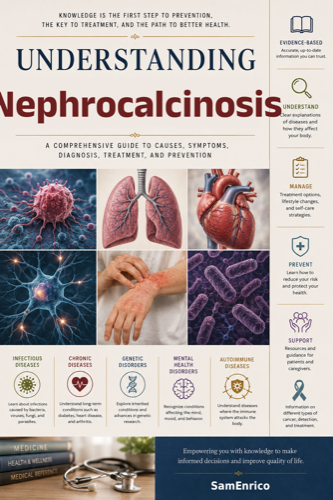 Understanding NephrocalcinosisStover Jerrold$17.99
You may also like
 Hong Kong Handover 1997Dunn Johnnie$11.99
 Zumba For Postnatal Recovery CourseNeal Christian$11.99
 Zumba for BeginnersLadner Nikia$11.99
 YouTube Comment Mining GuideHumes Pandora$12.99
 Worry Box MeditationCarlin Rudy$11.99
 Workplace Stress MeditationNguyen Lynn$11.99
 Workplace Stress and Sleep RepairHawley Ivory$11.99
 Workplace Perfectionism CureDelaney Jeffry$11.99
 Workplace Injustice Anger GuideWallen Isabelle$11.99
 Work Addiction and Burnout LinkGreenwood Ester$11.99
 Women in Yoga and WellnessBeattie Galina$11.99
 Women in Stand Up ComedyChun Evangeline$11.99