
Non-FictionSelf-HelpAchievement Comparison
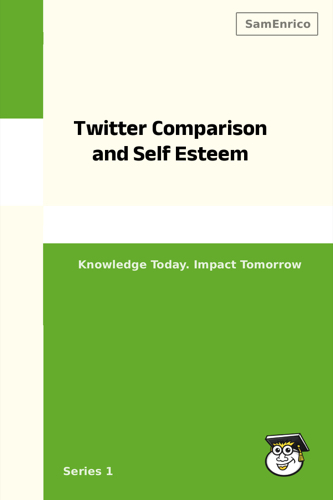
Twitter Comparison and Self Esteem
Stop measuring your success against others' announ
by Fisk Fatimah
Stop measuring your success against others' announcements and achievements online.
Formats
About this book
Free sample
Chapter 1: The Curated Life...--For three years, Sarah woke up and checked Twitter before she checked her own pulse. Her morning ritual was precise: eyes open, phone unlocked, thumb scrolling. She looked for notifications first—the little red badge that told her someone, somewhere, had acknowledged her existence. Then she scanned her timeline for what others had achieved while she slept. A former classmate had sold her startup.
A writer she followed had signed a book deal. A peer in her industry had gone viral with a thread that Sarah herself had thought of writing but never did.By 7:15 AM, before she had brushed her teeth or spoken a single word to her partner, Sarah had already lost.She didn't frame it that way, of course. She told herself she was "staying informed" and "networking" and "building her personal brand." But the data told a different story. Her heart rate increased by twenty beats per minute within ninety seconds of opening the app. Her morning cortisol levels—she actually tested this with a wearable device—spiked higher than they did during her commute through rush hour traffic.
And by the time she finally put the phone down to start her day, she felt a familiar, low-grade sense of inadequacy that she had learned to call "Monday."Sarah is not real. But she is also every person reading this book.The Social Comparison Trap In 1954, a social psychologist named Leon Festinger published a paper that would become one of the most cited theories in the history of psychology. He called it "social comparison theory," and its central claim was simple: human beings have an innate drive to evaluate themselves by comparing themselves to others. When objective measures are unavailable—when you cannot simply look at a ruler to see how tall you are or a scale to see how much you weigh—you look sideways at the people around you.Festinger identified two types of comparison. Downward comparison is when you compare yourself to someone you perceive as worse off.
It feels good, briefly. You see someone struggling and think, "At least I'm not that bad." Upward comparison is when…
This is the end of the free sample. Get the eBook to keep going. Buy now
Contents
- Chapter 1
- Chapter 2
- Chapter 3
- Chapter 4
- Chapter 5
- Chapter 6
- Chapter 7
- Chapter 8
- Chapter 9
- Chapter 10
- Chapter 11
- Chapter 12
Details
- Author
- Fisk Fatimah
- Publisher
- SamEnrico
- Language
- English
- Genre
- Non-Fiction, Self-Help, Achievement Comparison
- Released
- 2026-06-06
- Pages (approx.)
- 132
- Available as
- eBook, Audiobook

Read better in the ZLOADR app
Your eBooks on your phone or tablet. Sign in with your SamEnrico account and start reading.
More by Fisk Fatimah
 Food Addiction Recovery JournalFisk Fatimah$11.99
 Sandbag HIIT TrainingFisk Fatimah$11.99
 Financial Stress and DisabilityFisk Fatimah$11.99
 The Phantom of the Telegraph: A Victorian Witness VanishesFisk Fatimah$11.99
 Learn to Play the Guitar ZitherFisk Fatimah$11.99
 Interview Questions ComparisonFisk Fatimah$12.99
 Photometry (Astronomical)Fisk Fatimah$11.99
You may also like
 Hong Kong Handover 1997Dunn Johnnie$11.99
 Zumba For Postnatal Recovery CourseNeal Christian$11.99
 Zumba for BeginnersLadner Nikia$11.99
 YouTube Comment Mining GuideHumes Pandora$12.99
 Worry Box MeditationCarlin Rudy$11.99
 Workplace Stress MeditationNguyen Lynn$11.99
 Workplace Stress and Sleep RepairHawley Ivory$11.99
 Workplace Perfectionism CureDelaney Jeffry$11.99
 Workplace Injustice Anger GuideWallen Isabelle$11.99
 Work Addiction and Burnout LinkGreenwood Ester$11.99
 Women in Yoga and WellnessBeattie Galina$11.99
 Women in Stand Up ComedyChun Evangeline$11.99