
Non-FictionSelf-HelpLiterary Guide
Twelve Step Literature Explained eBook
Understand the Big Book and other twelve step text
by Stahl Sharee
Understand the Big Book and other twelve step texts using this reader's guide to recovery literature.
Formats
Free sample
Chapter 1: The Allergy Paradox...--The first time a doctor told me I had an allergy to alcohol, I laughed in his face.I was twenty-eight years old, three days removed from a blackout that had ended with my face on a sidewalk, and I was reasonably certain that allergies involved sneezing, not handcuffs. An allergy, I explained to him with the intellectual precision of someone who had just vomited in a hospital trash can, was a reaction to pollen or peanuts. Alcohol was a choice. A bad habit. A moral failing.
But an allergy? That was absurd.He didn't argue with me. He just handed me a copy of a book I had never heard of, opened to a page titled The Doctor's Opinion, and said, "Read this before you leave. If you still think it's absurd, you can walk out and I won't stop you."I read it. I walked out anyway.
And then I spent the next four years proving that he was right and I was wrong, one catastrophic relapse at a time.This chapter is about why that doctor—a man named William Silkworth who died in 1951, decades before I was born—saved my life anyway. It is about the single most important paragraph in all of recovery literature, a paragraph that most newcomers skip because it comes before the spiritual stuff and seems like medical jargon. It is about the Allergy Paradox: the terrifying, liberating truth that addiction is not a choice, not a sin, and not a failure of willpower. It is a physical disease of the body combined with a mental obsession of the mind. And the moment you understand that paradox, you are no longer fighting yourself.
You are fighting something you can actually name.Why This Chapter Comes First (And Why Most People Skip It)Before we dive into the text itself, let me tell you something that will sound like a confession from a writer who should know better: most people never read this chapter.The Big Book of Alcoholics Anonymous—the foundational text of twelve-step recovery—begins with a section called The Doctor's Opinion. It is not written by Bill Wilson, the co-founder of AA. It is written by a medical doctor named William D. Silkworth, who ran a treatment center in New York called Towns Hospital. Bill Wilson was his patient.
Twice. And both times, Silkworth watched him leave the hospital, return to drinking, and come back worse than before.By all rights, Silkworth should have given up on Bill. Instead, he wrote a short, dense, medically precise explanation of why men like Bill could not stop drinking no matter how badly they wanted to. And then he gave that explanation to Bill and said, "If you ever start a fellowship, put this at the front. Not at the back.
Not as an appendix. At the front. Because no one will believe the spiritual part until they understand the medical part."Here is the problem: most newcomers do exactly what I did. They open the Big Book, see a chapter called The Doctor's Opinion, and skip it. They want the stories.
They want the steps. They want the solution. They do not want a lecture from a dead doctor about the physiology of craving. And so they miss the single most important key to the entire program: the reason why willpower fails.If you take nothing else from this chapter, take this:You cannot think your way out of a disease of the mind. And you cannot pray your way out of a disease of the body.You need both.
And Silkworth's genius was proving that the twelve steps are not a replacement for medicine. They are the medicine that medicine cannot provide.The Two-Part Disease: Allergy and Obsession Silkworth's argument is deceptively simple. He claims that the alcoholic suffers from two distinct but interacting problems: a physical allergy and a mental obsession. Neither one alone is fatal. Together, they are a death sentence.The Physical Allergy: What It Is and What It Is Not Let me start with what the word "allergy" does not mean in this context.Silkworth is not saying that alcoholics sneeze when they drink.
He is using the word in its original medical sense, which comes from the Greek allos (other) and ergon (work). An allergy, in this older usage, is an abnormal reaction to a normal stimulus. For most people, alcohol is a depressant. It relaxes the nervous system. It lowers inhibitions.
It makes you sleepy. For the allergic alcoholic, alcohol triggers something completely different: a phenomenon of craving that is not within the control of the will.Here is how Silkworth describes it in the Big Book (page xxviii):"Men and women drink essentially because they like the effect produced by alcohol. The sensation is so elusive that, while they admit it is injurious, they cannot after a time differentiate the true from the false. To them, their alcoholic life seems the only normal one. They are restless, irritable and discontented, unless they can again experience the sense of ease and comfort which comes at once by taking a few drinks."That word "phenomenon" is doing a lot of work here.
A phenomenon is not a choice. It is not a habit. It is an observed fact, like gravity or magnetism. When an alcoholic takes the first drink, something happens in the body that does not happen in the body of a normal drinker. The normal drinker can have one glass of wine with dinner and stop.
The allergic alcoholic cannot. Not because they lack willpower in general—many alcoholics have tremendous willpower in every other area of their lives—but because the first drink triggers a physical demand for more.This is the Allergy Paradox in its simplest form: the very thing that makes the alcoholic want to stop drinking (the pain, the shame, the consequences) is overridden by a physical reaction that makes stopping impossible once the first drink is taken.Let me give you an example that has nothing to do with alcohol.Imagine you are deathly allergic to peanuts. One peanut will send you into anaphylactic shock. You know this. You have known it your whole life.
You carry an Epi Pen. You check labels. You tell every restaurant server. And yet, one day, someone puts a bowl of peanut M&Ms in front of you. You take one.
Within minutes, your throat closes. Your body has had a reaction that you did not choose and cannot control.That is the physical allergy. It is not about morality. It is not about strength. It is about biology.Now imagine that you are not allergic to peanuts.
You can eat them by the handful with no reaction. But you have a different problem: once you eat the first peanut, you cannot stop thinking about the second. You finish the bowl. You open the pantry. You drive to the store at midnight.
You eat until you are sick, and then you promise yourself you will never eat another peanut again. And then, the next day, you eat one more.That is the mental obsession. And for the alcoholic, the two…
This is the end of the free sample. Get the eBook to keep going. Buy now
About this book
Details
- Author
- Stahl Sharee
- Publisher
- SamEnrico
- Language
- English
- Genre
- Non-Fiction, Self-Help, Literary Guide
- Released
- 2026-06-06
- Pages (approx.)
- 137
- Available as
- eBook, Audiobook

Read better in the ZLOADR app
Your eBooks on your phone or tablet. Sign in with your SamEnrico account and start reading.
More by Stahl Sharee
 Pre Talk Anxiety Reset WorkbookStahl Sharee$11.99
 Media Conglomerate MasteryStahl Sharee$11.99
 Opposite Action Skills CourseStahl Sharee$11.99
 Prioritization for Creative WorkStahl Sharee$11.99
 The Last Mile: The Untold Story of the 1983 Boston Marathon HeistStahl Sharee$11.99
 The Fire Below: Polynesian Navigators and the Secrets of the Pacific VolcanoesStahl Sharee$11.99
 Alibaba Gold Supplier TruthsStahl Sharee$12.99
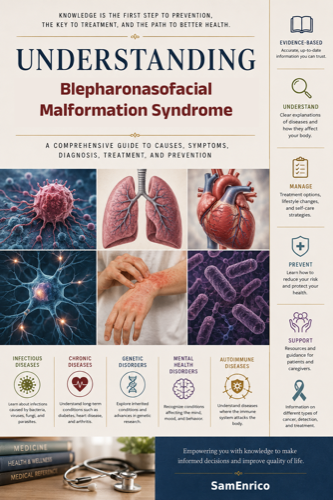 Understanding Blepharonasofacial Malformation SyndromeStahl Sharee$17.99
 Strategic Sourcing LeadStahl Sharee$11.99
 How to Start a Powder Made of Glass Business (Beginners Guide)Stahl Sharee$11.99
You may also like
 Hong Kong Handover 1997Dunn Johnnie$11.99
 Zumba For Postnatal Recovery CourseNeal Christian$11.99
 Zumba for BeginnersLadner Nikia$11.99
 YouTube Comment Mining GuideHumes Pandora$12.99
 Worry Box MeditationCarlin Rudy$11.99
 Workplace Stress MeditationNguyen Lynn$11.99
 Workplace Stress and Sleep RepairHawley Ivory$11.99
 Workplace Perfectionism CureDelaney Jeffry$11.99
 Workplace Injustice Anger GuideWallen Isabelle$11.99
 Work Addiction and Burnout LinkGreenwood Ester$11.99
 Women in Yoga and WellnessBeattie Galina$11.99
 Women in Stand Up ComedyChun Evangeline$11.99