
researchSelf-HelpEvidence Based
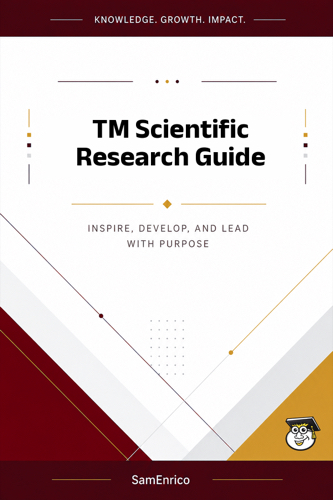
TM Scientific Research Guide
Review studies on TM effects on stress, blood pres
Review studies on TM effects on stress, blood pressure, and brain function.
Formats
About this book
Free sample
Chapter 1: The Taxonomy Trap...–- Meditation is sold as a single, healing commodity. Walk into any wellness center, corporate mindfulness program, or mental health clinic, and you will hear the same refrain: “Meditation reduces stress, lowers blood pressure, and calms the mind.” This statement, while not false, is dangerously incomplete. It is the nutritional equivalent of saying “food provides energy” – true, but utterly useless when deciding between a kale salad and a deep-fried donut. The scientific literature on meditation has spent decades entangled in what this book calls the Taxonomy Trap: the widespread and deeply misleading practice of lumping all meditation techniques into a single category, then comparing “meditation” to “no meditation.” The result is a body of research filled with contradictory findings, null results, and a stunning inability to explain why one person experiences profound relief from post-traumatic stress while another feels worse after sitting still.This chapter dismantles the Taxonomy Trap. It establishes the foundational premise upon which this entire book rests: Transcendental Meditation (TM) is not “just another meditation.” It belongs to a distinct, third category of practice – Automatic Self-Transcending – that is physiologically and phenomenologically different from the more widely studied Focused Attention and Open Monitoring techniques.
To conflate TM with mindfulness is to misunderstand both. Worse, it leads to clinical errors: prescribing effort-based meditation to a trauma survivor whose hyperarousal system is already overloaded can exacerbate symptoms rather than relieve them. By the end of this chapter, the reader will understand why differentiating meditation techniques is not academic pedantry but a matter of clinical necessity and scientific integrity.The Unitary Fallacy: How Meditation Became a Monolith The history of meditation research is, in part, a history of convenience. In the 1970s, when TM first attracted scientific attention at Harvard and UCLA, researchers were intrigued by its measurable effects: reduced oxygen consumption, decreased skin resistance, and a unique EEG pattern of alpha-theta coherence. But as other traditions – Buddhist Vipassanā, Zen, Tibetan mindfulness – entered the laboratory, a pragmatic but flawed assumption took hold.
Researchers assumed that because all meditations required sitting quietly and focusing the mind (however loosely defined), their effects would be…
This is the end of the free sample. Get the eBook to keep going. Buy now
Contents
- Chapter 1
- Chapter 2
- Chapter 3
- Chapter 4
- Chapter 5
- Chapter 6
- Chapter 7
- Chapter 8
- Chapter 9
- Chapter 10
- Chapter 11
- Chapter 12
Details
- Author
- Dahl Mauricio
- Publisher
- SamEnrico
- Language
- English
- Genre
- research, Self-Help, Evidence Based
- Released
- 2026-06-10
- Pages (approx.)
- 156
- Available as
- eBook, Audiobook

Read better in the ZLOADR app
Your eBooks on your phone or tablet. Sign in with your SamEnrico account and start reading.
More by Dahl Mauricio
 The New ProsecutorDahl Mauricio$11.99
 Low Maintenance Landscaping for RetirementDahl Mauricio$11.99
 The Notion Database Memory GuideDahl Mauricio$11.99
 Caregiver Partner Burnout HelpDahl Mauricio$11.99
 The Silent Storm: Trafalgar's Naval GauntletDahl Mauricio$11.99
 Understanding Waardenburg Syndrome Type 1Dahl Mauricio$17.99
 Terms Template CustomizationDahl Mauricio$12.99
 Angel Investors vs VCs GuideDahl Mauricio$12.99
 Regional Account ManagerDahl Mauricio$11.99
 How to Start a Basket Furniture Business (Beginners Guide)Dahl Mauricio$11.99
You may also like
 Scientific Research On TM GuideMartens Nathanial$11.99
 Research Proposal Methodology Section MasteryPauley Debroah$11.99
 Research Proposal Appendix CompilationRaines Tyisha$11.99
 Academic Researcher Distraction GuideFord Virgil$11.99
 TM Research and ScienceCovert Nicki$11.99
 Social Anxiety Research ReviewRoberge Cole$11.99
 Research Proposal Significance Section GuideBock Tory$12.99
 Research Proposal Reviewer PsychologyLugo Tawanda$11.99
 Research Proposal Research Questions DesignLara Robbi$11.99
 Research Proposal References and CitationsPatten Shanice$11.99
 Research Proposal Mixed Methods DesignCameron Omega$11.99
 Research Proposal Data Management PlanAnderson Roberto$12.99