
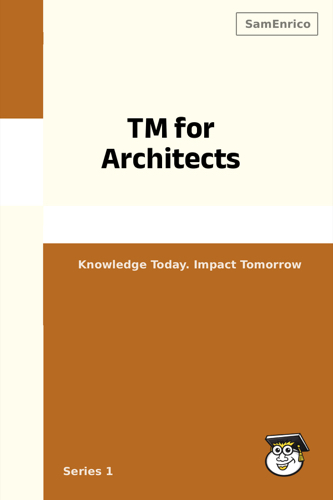
TM for Architects eBook
Accesses creative design solutions.
by Banks Latoya
Accesses creative design solutions.
Formats
Free sample
Chapter 1: The Empty Tracing Paper--–- In the winter of 1972, the architectural theorist John Hejduk stood before a class of graduate students at the Cooper Union and performed an act of quiet rebellion. He walked to the board, picked up a piece of chalk, and drew a single line. Then he stood in silence for a full minute. Finally, he turned to the room and said: "That line took me thirty years to draw. The next one will take thirty more.
If you are in a hurry, you are in the wrong profession."The students laughed nervously. They were young, ambitious, and certain that Hejduk was being dramatic. They had deadlines. They had portfolios to build. They had competitions to win.
They did not have thirty years for a single line.Fifty years later, those students are now the partners, principals, and emeritus professors of architecture. And most of them would tell you that Hejduk was not being dramatic. He was being precise. The line he drew was not a geometric mark on a chalkboard. It was a lifetime of seeing, forgetting, remembering, failing, and finally arriving at a gesture so essential that it could not be reduced by a single millimeter.
That line was not drawn. It was earned.The architects I meet today cannot earn their lines. They do not have the time, the space, or the cognitive conditions required to wait for a gesture to become essential. They are generating instead of earning. They are iterating instead of discovering.
They are producing volume instead of significance. And they are exhausted not because architecture is hard—it has always been hard—but because they have been asked to produce creativity on demand, under conditions that make creativity impossible.This chapter is about that exhaustion. But more importantly, it is about the gap between what architects are capable of and what their daily lives allow them to access. That gap has a name, a mechanism, and a solution. Naming it is the first step toward closing it.The Confession I Hear in Every Studio Over the past five years, I have interviewed more than two hundred architects.
They have come from every context: sole practitioners and global firms, award-winning designers and recent graduates, urban planners and residential specialists. They have been candid about their struggles in ways that surprised even them.Here is what I hear again and again."I used to have ideas. Now I just have deadlines.""I cannot remember the last time a sketch surprised me.""I stayed up until 3 AM last night working on a scheme that I knew at 10 PM was not good. I just did not know how to stop.""I won an award last year. I felt nothing.
I knew the building was competent, but I also knew it was not the building I wanted to make. I just could not find the other building anymore.""I am a very successful fraud."These are not the confessions of failing architects. They are the confessions of architects who have succeeded by every external metric—and who have discovered that external success does not protect you from internal collapse.The problem is not talent. The architects I meet are extraordinarily talented. They have been selected by competitive schools, survived brutal studio cultures, and navigated a profession that rejects far more than it accepts.
They know how to think spatially, how to compose in three dimensions, how to balance program and site and light and material. They have all the tools.What they do not have is access.They cannot access the part of their mind where novel associations are made. They cannot access the state of effortless attention that precedes breakthrough. They cannot access the quiet, patient space where a line becomes essential rather than merely correct. Their minds are not broken.
They are simply not in the right state to do what they were trained to do.And the tragedy is that they blame themselves. They assume that the absence of breakthrough means they have run out of ideas. They do not realize that their brain is working exactly as designed—it is just that their environment has designed it to fail.The Architecture of Interruption To understand why access has become so difficult, you have to understand the structure of the contemporary architecture studio. It is not a neutral container. It is an active agent in the destruction of attention.Consider a typical hour in a typical studio.8:00 AM: Arrive, check email.
Three client messages, two consultant coordination requests, one note from the contractor about a field condition.8:15 AM: Open the CAD file for Project A. Begin revising the third floor plan based on yesterday's redlines.8:22 AM: Slack notification. The structural engineer has a question about a column location. Switch to Slack, answer, attach a sketch.8:28 AM: Back to CAD. Where were you?
It takes a minute to reorient.8:31 AM: Phone buzzes. Your child's school is reminding you about a parent-teacher conference. You make a mental note.8:33 AM: Back to CAD. You have lost your place again.8:40 AM: A colleague stops by your desk. "Do you have five minutes to look at something?" You say yes because collaboration is valued.
You spend fifteen minutes looking at their model.8:55 AM: Back to your desk. You have twenty minutes before a coordination meeting. You try to work but your mind is still half-engaged with your colleague's problem.9:15 AM: Meeting. Ninety minutes of discussion about MEP coordination, budget revisions, and a client who wants to move a staircase.10:45 AM: Back to your desk. You have thirty minutes before lunch.
You open Project B, a competition entry due in two weeks. You stare at a blank screen.11:15 AM: Lunch. You eat at your desk while reviewing a spec section.And so on. By noon, you have switched tasks more than a dozen times. Each switch has left a residue.
You are not lazy. You are drowning in the invisible exhaust of your own schedule.This is not how architects have always worked. The studio of the 1970s was quieter. There were no emails, no Slack notifications, no phones buzzing. There were physical drawings, physical models, and long stretches of uninterrupted time.
The architect worked slowly, and the work rewarded slowness. A single detail might take a week. A section might be redrawn ten times. The pace was not inefficient. It was appropriate to the cognitive demands of the task.The contemporary studio has the same cognitive demands—architecture is still complex, still layered, still requiring the integration of dozens of competing constraints—but it has been compressed into a schedule that treats attention as an infinite resource.
It is not. Attention is the most finite resource you have. And you are spending it on things that do not matter.The Invisible Tax: Attention Residue The phenomenon I have been describing has a name. In 2009, the organizational psychologist Sophie Leroy published a paper called "Why Is It So Hard to Do My Work?" in which she introduced the concept of attention residue.The basic finding is simple and devastating. When you switch from Task A to Task B, your attention does not fully transfer.
A portion of it remains stuck to Task A. This residue degrades your performance on Task B for a period…
This is the end of the free sample. Get the eBook to keep going. Buy now
About this book
Details
- Author
- Banks Latoya
- Publisher
- SamEnrico
- Language
- English
- Genre
- Non-Fiction, Self-Help
- Released
- 2026-06-08
- Pages (approx.)
- 149
- Available as
- eBook, Audiobook

Read better in the ZLOADR app
Your eBooks on your phone or tablet. Sign in with your SamEnrico account and start reading.
More by Banks Latoya
 Dream Journaling for MeditationBanks Latoya$11.99
 Growth Hormone Infancy GuideBanks Latoya$11.99
 Cubicle Farm Stress ReductionBanks Latoya$11.99
 The Teen Self Worth JournalBanks Latoya$11.99
 Talking to Dentist About FearBanks Latoya$11.99
 Nicotine Metabolism Genetic TestBanks Latoya$11.99
 Croatian Green Tax CreditsBanks Latoya$11.99
 HGH And MelatoninBanks Latoya$11.99
 The Golden Hands of the Sahel: The Merchant Princes of TimbuktuBanks Latoya$11.99
 The Last Whisper of the Bison: The Great American Hunt’s Unseen LegacyBanks Latoya$11.99
 The Seer of the Shaking Earth: How an Ancient Indian Ocean Oracle Predicted the Great QuakeBanks Latoya$11.99
 Automated Video Editing Workflow GuideBanks Latoya$12.99
You may also like
 Hong Kong Handover 1997Dunn Johnnie$11.99
 Zumba For Postnatal Recovery CourseNeal Christian$11.99
 Zumba for BeginnersLadner Nikia$11.99
 YouTube Comment Mining GuideHumes Pandora$12.99
 Worry Box MeditationCarlin Rudy$11.99
 Workplace Stress MeditationNguyen Lynn$11.99
 Workplace Stress and Sleep RepairHawley Ivory$11.99
 Workplace Perfectionism CureDelaney Jeffry$11.99
 Workplace Injustice Anger GuideWallen Isabelle$11.99
 Work Addiction and Burnout LinkGreenwood Ester$11.99
 Women in Yoga and WellnessBeattie Galina$11.99
 Women in Stand Up ComedyChun Evangeline$11.99