
TM Emotional Intelligence eBook
Improve self awareness, empathy, and relationship
Improve self awareness, empathy, and relationship skills.
Formats
Free sample
Chapter 1: The $7,000,000 Pause--The email arrived at 9:47 AM on a Tuesday. Within four hours, a forty-three-year-old CEO named Marcus had destroyed seven million dollars in market value, fired his most talented employee in front of the entire company, and texted his wife a message so cruel that she would file for separation by Friday. The trigger? A single sentence in that email: “Your Q3 projections are optimistic given recent attrition.”Marcus had read those words, felt a flash of heat behind his sternum, and then—as he later described it to a therapist—“something just took over.” He didn’t pause. He didn’t breathe.
He typed. He called. He accused. And by the time his prefrontal cortex came back online, the damage was irreversible.Here is the question this book will answer: What if Marcus had paused for five seconds?Not an hour. Not a meditation retreat.
Not years of therapy. Five seconds. Could five seconds have saved seven million dollars, a key employee, and a marriage? The emerging science of emotional intelligence says yes—but only if those five seconds are trained, deliberate, and connected to a larger system of self-awareness, empathy, and relationship skills.This book is that system. It is called TM Emotional Intelligence, and it is built on a simple, provocative claim: In the modern workplace and family, your ability to recognize, understand, and manage emotions—your own and others’—predicts your success more accurately than your IQ, your resume, or your years of experience.
And unlike those fixed traits, emotional intelligence can be taught, practiced, and mastered in twenty-one days.But before we build the system, we must first dismantle the myth that has kept smart people failing in predictable ways for decades. The myth that intelligence is enough. The myth that emotions are a weakness. The myth that you are simply “not a people person” and never will be.Let’s begin with the story of how emotional intelligence became the single most underleveraged asset in human performance.The Day IQ Died (And Nobody Noticed)For most of the twentieth century, psychologists and hiring managers operated on a simple assumption: smart people succeed. Give them an IQ test, rank them by their cognitive horsepower, and place the highest scorers into leadership positions.
This approach produced a generation of brilliant, emotionally tone-deaf executives who could solve complex logistical problems but could not navigate a difficult conversation with their own children.Then, in 1995, a science journalist named Daniel Goleman published a book that disrupted this assumption forever. He reviewed hundreds of studies and found something surprising: IQ accounted for only ten to twenty percent of life outcomes—career success, relationship satisfaction, health, and even life expectancy. The remaining eighty to ninety percent was explained by something else. Goleman called it emotional intelligence.Here is where most people get confused, and where many books have accidentally misled their readers. The statement “IQ accounts for twenty percent of life outcomes” does not mean that EQ accounts for the other eighty percent.
That would sum to one hundred percent, which is mathematically clean but biologically false. The correct interpretation—supported by a 2025 meta-analysis from MIT and Harvard—is this: Once you meet a baseline IQ threshold (roughly 115, or the top third of the population), IQ stops differentiating between high performers and superstars. At that point, EQ explains nearly ninety percent of the variance among high performers.Think of it like basketball height. To play in the NBA, you almost certainly need to be at least six feet two inches tall. That is the baseline.
But among NBA players—all of whom are extremely tall—height no longer predicts who becomes an all-star. Work ethic, court vision, leadership, and emotional regulation under pressure predict that. IQ is the height. EQ is the all-star.So if you are reading this book, you are likely above that IQ baseline. You are smart enough.
The question is not whether you have the horsepower. The question is whether you have the emotional operating system to deploy that horsepower when it matters most—under pressure, in conflict, and with people who do not see the world the way you do.The Four Quadrants of TM Emotional Intelligence Every effective system needs a map. Before you can improve your emotional intelligence, you need to know what you are improving and where you currently stand. The TM Emotional Intelligence model organizes the research into four quadrants. These quadrants will appear in every chapter of this book, and they will form the structure of your twenty-one-day practice plan.Quadrant One: Self-Awareness This is the ability to observe your own emotions in real time, without judgment or suppression.
Self-awareness is not navel-gazing. It is not journaling about your childhood. It is the split-second recognition that “I am feeling angry right now” before you say something you will regret. People with high self-awareness can name their emotions with precision, identify the triggers that set them off, and notice the physical signals (racing heart, clenched jaw, shallow breath) that precede a meltdown. Without self-awareness, the other three quadrants are impossible.
You cannot manage what you cannot see.Quadrant Two: Self-Management If self-awareness is the radar, self-management is the steering wheel. This quadrant governs your ability to choose a response rather than being hijacked by an impulse. Self-management does not mean suppressing emotions or pretending to be calm when you are furious. It means recognizing the emotion and then asking, “What response will serve my long-term goals in this situation?” The answer is rarely to scream, withdraw, or send that 9:47 AM email. Self-management is where the Core Seven strategies live—seven specific, sixty-second tactics that you will learn in Chapter Four and practice for twenty-one days.Quadrant Three: Social Awareness Once you can see and manage your own emotional weather, you can start reading the weather of others.
Social awareness is the ability to accurately detect the emotions of a person or a group. It includes empathy—both cognitive (understanding what someone feels) and emotional (feeling what they feel)—but extends to reading room dynamics, picking up on unspoken power structures, and anticipating the needs of clients, colleagues, and loved ones before they express them. Social awareness transforms you from a person who reacts to others into a person who understands them.Quadrant Four: Relationship Management The final quadrant is where everything comes together. Relationship management is the ability to use your self-awareness, self-management, and social awareness to take effective action with others. This includes giving feedback without triggering defensiveness, resolving conflict without escalation, influencing without manipulating, and setting boundaries without destroying relationships.
People who excel in this quadrant are not the loudest in the room. They are the ones who can walk into a tense meeting and leave with alignment, trust, and a shared path forward.These four quadrants are not sequential in a linear sense. You will work on all of them simultaneously. But they do have a logical dependency: you cannot manage what you do not notice (Self-Awareness before Self-Management). You cannot read others accurately if you are hijacked by your own emotions (Self-Management before Social Awareness).
And you cannot take effective action with others if you misread their emotional state (Social Awareness before Relationship Management). The…
This is the end of the free sample. Get the eBook to keep going. Buy now
About this book
Details
- Author
- Ritchey Loren
- Publisher
- SamEnrico
- Language
- English
- Genre
- Non-Fiction, Self-Help, EQ
- Released
- 2026-06-08
- Pages (approx.)
- 145
- Available as
- eBook, Audiobook

Read better in the ZLOADR app
Your eBooks on your phone or tablet. Sign in with your SamEnrico account and start reading.
More by Ritchey Loren
 Plant Based Omega 3 Fatty Acids ManualRitchey Loren$11.99
 Disappointment Tolerance ManualRitchey Loren$11.99
 Upper Back Mobility WorkRitchey Loren$11.99
 Imposter Syndrome in ConsultingRitchey Loren$11.99
 The Siege of the Grand Hotel: 1975 Sydney's Deadliest StandoffRitchey Loren$11.99
 Echoes of the Forbidden: The Lost Love Letters of Elizabeth and DarcyRitchey Loren$11.99
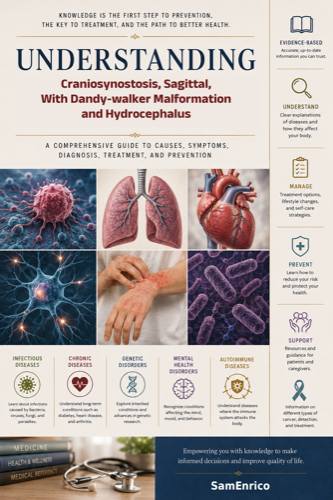 Understanding Craniosynostosis, Sagittal, With Dandy-walker Malformation and HydrocephalusRitchey Loren$17.99
 UN Department of SafetyRitchey Loren$12.99
 Patent Term Adjustment GuideRitchey Loren$12.99
 Oracle Database DeveloperRitchey Loren$11.99
 How to Start a Bread (wholesale) Business (Beginners Guide)Ritchey Loren$11.99
You may also like
 Hong Kong Handover 1997Dunn Johnnie$11.99
 Zumba For Postnatal Recovery CourseNeal Christian$11.99
 Zumba for BeginnersLadner Nikia$11.99
 YouTube Comment Mining GuideHumes Pandora$12.99
 Worry Box MeditationCarlin Rudy$11.99
 Workplace Stress MeditationNguyen Lynn$11.99
 Workplace Stress and Sleep RepairHawley Ivory$11.99
 Workplace Perfectionism CureDelaney Jeffry$11.99
 Workplace Injustice Anger GuideWallen Isabelle$11.99
 Work Addiction and Burnout LinkGreenwood Ester$11.99
 Women in Yoga and WellnessBeattie Galina$11.99
 Women in Stand Up ComedyChun Evangeline$11.99