
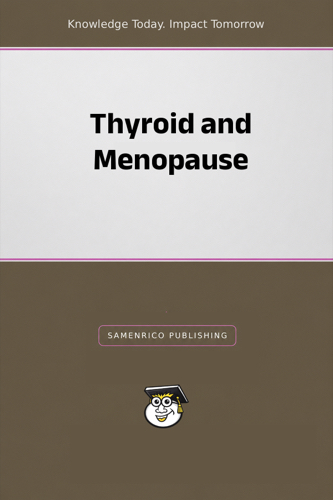
Free sample
Chapter 1: The Thyropause Awakening...--I remember standing in my kitchen at 6:47 on a Tuesday morning, staring at the coffee maker with the same expression a hostage might give their captor. I was thirty-eight years old, dressed in a bathrobe I had been wearing for three consecutive days, and I could not summon the energy to press a single button. The coffee maker required one finger, one ounce of pressure, and approximately half a second of my time. I stood there for what felt like an eternity, tears sliding down my cheeks, because even that small act felt like climbing a mountain in wet cement.My doctor had called me the previous afternoon with what she described as "great news." My lab work had come back, and everything was perfectly normal. My thyroid stimulating hormone, or TSH, was a tidy 3.8 m IU/L, well within the standard reference range of 0.5 to 4.5.
My complete blood count was unremarkable. My metabolic panel showed no red flags. She had used the phrase "you're healthy as a horse," which was an interesting choice of words given that I had just told her I had gained twenty-seven pounds in nine months without changing my diet, that I could not remember the name of my neighbor of seven years, that my husband had started sleeping in the guest room because my night sweats soaked through two sets of sheets, and that I had seriously considered pulling over on the highway the previous week because I was not sure I could keep my eyes open for the remaining six minutes of my commute."You're probably just stressed," she had said. "Try yoga. And maybe cut back on carbs."I did not try yoga.
I did not cut back on carbs. Instead, I went home, crawled into bed at four in the afternoon, and woke up twelve hours later feeling as though I had not slept at all. That was the morning of the coffee maker.I tell you this story not because it is unique, but because it is painfully, heartbreakingly ordinary. Every day, in every city in every developed country, millions of women between the ages of thirty-five and fifty-five have some version of this exact conversation with some version of this well-meaning but dangerously uninformed doctor. They are told their symptoms are normal aging, or stress, or anxiety, or depression, or the natural consequence of having children, or the price of a demanding career.
They are told to exercise more, eat less, sleep better, relax, meditate, drink more water, take a vacation, or simply accept that this is what it feels like to be a woman in midlife.And they are wrong. All of them.The Hidden Epidemic No One Is Talking About What I did not know on that Tuesday morning, what my doctor did not know, what most doctors still do not know, is that I was experiencing a biological phenomenon that has no official name, no diagnostic code, no standard treatment protocol, and no place in medical education. I was experiencing what Dr. Amie Hornaman, one of the few thyroid specialists brave enough to say what needs to be said, has termed thyropause: the natural, predictable, and almost entirely ignored decline in thyroid function that affects the vast majority of women as they enter perimenopause and menopause.Let me be very specific about what I am claiming, because it sounds extreme. And it is extreme, but it is also true.An estimated ninety percent of women over the age of forty have some degree of thyroid dysfunction that is not being adequately identified or treated by conventional medicine.
This is not a typo. Ninety percent. Nine out of every ten women reading this sentence are likely walking around with a thyroid that is working at fifty, sixty, or seventy percent of its optimal capacity, and they have no idea because their doctors have told them their labs are "normal."How can this be? How can a condition affecting ninety percent of an entire demographic go unrecognized? The answer is a perfect storm of outdated medical protocols, misplaced reliance on inadequate laboratory testing, a profound misunderstanding of how the endocrine system actually works, and a persistent cultural habit of dismissing women's physical complaints as psychological.The Estrogen-Thyroid Connection To understand why thyropause happens, we need to understand something that your doctor probably never mentioned: the thyroid does not operate in isolation.
It is part of an exquisitely interconnected system of glands and hormones, all of which talk to each other, depend on each other, and fail together when one part goes wrong.The connection between thyroid function and reproductive hormones is particularly intimate. Estrogen and progesterone, the two primary hormones that govern the menstrual cycle and decline during perimenopause and menopause, are not just reproductive hormones. They are also thyroid stimulants. Estrogen increases the production of thyroid binding globulin, a protein that transports thyroid hormone through the bloodstream. It also increases the sensitivity of thyroid receptors on cells throughout the body, meaning that when estrogen is present, your cells are better able to receive and use thyroid hormone.
Progesterone, meanwhile, supports thyroid function by reducing inflammation and moderating the immune response, which is particularly important for women with autoimmune thyroid conditions.When estrogen and progesterone decline, as they inevitably do in every woman starting in her mid-to-late thirties, the thyroid is effectively left without its support system. The gland itself may still produce adequate amounts of hormone, but the hormone becomes less available to cells, less able to bind to receptors, and less effective at doing its job. This is why so many women enter perimenopause and suddenly feel as though they have aged a decade in six months. They have not aged a decade. Their thyroid has lost its scaffolding.This is thyropause.
Not thyroid disease in the classical sense, not Hashimoto's, not Graves, not goiter, not cancer. Just the natural, expected, predictable decline in thyroid function that occurs when the ovaries begin to wind down. And it is happening to nearly every woman over forty, whether she knows it or not.Two Types, Two Roads Before we go any further, I need to make a critical distinction that will shape everything that follows in this book. Thyropause is not a single condition. It is a spectrum with two distinct subtypes, each requiring a different approach to diagnosis and treatment.Type A Thyropause is what I have just described: the natural, age-related decline in thyroid function that occurs when estrogen and progesterone fall.
Women with Type A thyropause typically have gradual onset of symptoms that worsen slowly over several years. Their thyroid antibody tests are normal, meaning there is no autoimmune component. Their thyroid gland itself is healthy, just understimulated. For these women, the solution often involves supporting thyroid function through nutrition, lifestyle changes, and sometimes low doses of thyroid medication to replace what the declining reproductive hormones can no longer provide.Type B Thyropause is different. This is Hashimoto's thyroiditis, an autoimmune condition in which the body's immune system mistakenly attacks the thyroid gland.
Women with Type B thyropause make up about ten to fifteen percent of the overall thyropause population, but they are…
This is the end of the free sample. Get the eBook to keep going. Buy now
About this book
Details
- Author
- Whitmore Kimberli
- Publisher
- SamEnrico
- Language
- English
- Genre
- Non-Fiction, Health & Wellness / Menopause
- Released
- 2026-06-10
- Pages (approx.)
- 159
- Available as
- eBook, Audiobook

Read better in the ZLOADR app
Your eBooks on your phone or tablet. Sign in with your SamEnrico account and start reading.
More by Whitmore Kimberli
 Parental Boundaries Self Care GuideWhitmore Kimberli$11.99
 Customer Feedback ProxyWhitmore Kimberli$11.99
 Mayor of a SuburbWhitmore Kimberli$11.99
 Small Business Crisis HandbookWhitmore Kimberli$11.99
 Coping With Identity Theft StressWhitmore Kimberli$11.99
 Microbiome Antibiotic RecoveryWhitmore Kimberli$11.99
 Memory Athlete Pre BedWhitmore Kimberli$11.99
 The Last Laugh of Camp Crystal LakeWhitmore Kimberli$11.99
 Galileo's Stargazing Adventure: Unlocking the Secrets of the CosmosWhitmore Kimberli$11.99
 Justinian and Theodora: The Golden Reign of ByzantiumWhitmore Kimberli$11.99
 The Mineral Guide to Varieties That Are Not Valid Species:Whitmore Kimberli$11.99
 Korea University of TechnologyWhitmore Kimberli$12.99
You may also like
 Hong Kong Handover 1997Dunn Johnnie$11.99
 Zumba For Postnatal Recovery CourseNeal Christian$11.99
 Zumba for BeginnersLadner Nikia$11.99
 YouTube Comment Mining GuideHumes Pandora$12.99
 Worry Box MeditationCarlin Rudy$11.99
 Workplace Stress MeditationNguyen Lynn$11.99
 Workplace Stress and Sleep RepairHawley Ivory$11.99
 Workplace Perfectionism CureDelaney Jeffry$11.99
 Workplace Injustice Anger GuideWallen Isabelle$11.99
 Work Addiction and Burnout LinkGreenwood Ester$11.99
 Women in Yoga and WellnessBeattie Galina$11.99
 Women in Stand Up ComedyChun Evangeline$11.99