
Non-FictionSelf-HelpSurgical Psychology
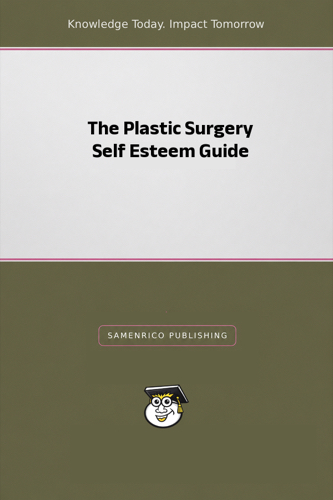
The Plastic Surgery Self Esteem Guide
Helps readers evaluate if surgery will truly impro
by Rector Edda
Helps readers evaluate if surgery will truly improve self esteem or mask deeper issues.
Formats
About this book
Free sample
Chapter 1: The Maltz Mirror--–- Dr. Maxwell Maltz was a master of the knife. In the 1950s, he stood at the pinnacle of plastic surgery, capable of reshaping a nose, lifting a brow, or erasing a scar with precision that seemed almost artistic. His patients traveled from across the country, trusting him to fix what they believed was broken. And for most of them, he succeeded.
They would look in the mirror after healing and weep with joy. But there was a second group that haunted him.These were the patients who returned weeks after a technically perfect surgery, pointing to their new nose or their lifted jaw, insisting that the same "ugly" feature was still there. Some would bring photographs. Others would demand revisions. A few would break down in tears, unable to articulate why they still felt so wrong.
Maltz could measure their new features with calipers. He could show them before-and-after photographs that demonstrated an objective improvement. None of it mattered. They saw something he could not see, and they felt something surgery could not touch.This observation changed Maltz’s life. He eventually stopped performing surgery almost entirely and wrote a book that would sell over thirty million copies: Psycho-Cybernetics.
In it, he proposed a radical idea. The problem was never the nose, the chin, or the wrinkle. The problem was the self-image—the mental blueprint each person carries of what they look like and who they are. Maltz argued that this self-image operates like a thermostat. Set it too low, and no matter how much external success or physical beauty you achieve, you will always drift back to your programmed setting.
The patient who believed she was ugly would continue to act, speak, and avoid eye contact as if she were ugly, even after surgery gave her a different face.This chapter is the foundation of everything that follows. It will introduce you to Maltz’s discovery, explain why surgery alone cannot fix what ails you, and pose the single most important question you will answer in this entire book. By the end of this chapter, you…
This is the end of the free sample. Get the eBook to keep going. Buy now
Contents
- Chapter 1
- Chapter 2
- Chapter 3
- Chapter 4
- Chapter 5
- Chapter 6
- Chapter 7
- Chapter 8
- Chapter 9
- Chapter 10
- Chapter 11
- Chapter 12
Details
- Author
- Rector Edda
- Publisher
- SamEnrico
- Language
- English
- Genre
- Non-Fiction, Self-Help, Surgical Psychology
- Released
- 2026-06-06
- Pages (approx.)
- 152
- Available as
- eBook, Audiobook

Read better in the ZLOADR app
Your eBooks on your phone or tablet. Sign in with your SamEnrico account and start reading.
More by Rector Edda
 Relationship Anger Triggers FixRector Edda$11.99
 Childhood Nightmare Resolution HandbookRector Edda$11.99
 TikTok Niches That PayRector Edda$11.99
 Faith Based OUD SupportRector Edda$11.99
 The Golden Scribes of Timbuktu: Masters of the Written WordRector Edda$11.99
 Courtesy Desk AssociateRector Edda$11.99
 Understanding ProcrastinationRector Edda$17.99
 Zoom Retention PlaybookRector Edda$12.99
 Executive Summary for Product LaunchesRector Edda$12.99
 How to Start a Travel Tour Operator BusinessRector Edda$11.99
You may also like
 Hong Kong Handover 1997Dunn Johnnie$11.99
 Zumba For Postnatal Recovery CourseNeal Christian$11.99
 Zumba for BeginnersLadner Nikia$11.99
 YouTube Comment Mining GuideHumes Pandora$12.99
 Worry Box MeditationCarlin Rudy$11.99
 Workplace Stress MeditationNguyen Lynn$11.99
 Workplace Stress and Sleep RepairHawley Ivory$11.99
 Workplace Perfectionism CureDelaney Jeffry$11.99
 Workplace Injustice Anger GuideWallen Isabelle$11.99
 Work Addiction and Burnout LinkGreenwood Ester$11.99
 Women in Yoga and WellnessBeattie Galina$11.99
 Women in Stand Up ComedyChun Evangeline$11.99