The Memory Chunking Technique Guide
Groups information to fit working memory capacity.
Groups information to fit working memory capacity.
Formats
About this book
Free sample
Chapter 1: The Magical Prison--–- Imagine waking up one morning to find that your desk has shrunk. The surface that once held a computer, a coffee mug, a notebook, and a stack of papers can now barely fit a single pen. You cannot buy a bigger desk. You cannot build an extension. You are stuck with this tiny workspace for the rest of your life.
Most people would panic. But a few would look at that cramped surface and ask a different question: What if I could make my pen hold everything?That is the story of your working memory. And that pen is a chunk.Every second of every waking hour, your brain performs a miracle so ordinary that you never notice it. You walk into a coffee shop, hear a friend say, “Grab a table, I’ll get the usual,” and within three seconds you have parsed the sounds, retrieved the memory of what “the usual” means, scanned the room for an empty table, and initiated a walking sequence toward it. Your working memory—the brain’s real-time scratchpad—orchestrated all of this without a single conscious instruction.
But here is the uncomfortable truth that neuroscientists have known for decades and that most self-help books still get wrong: that scratchpad is shockingly small. Not seven items. Not even five. Under real-world conditions, your working memory can hold exactly three to four meaningful items at once. Everything else is a carefully constructed illusion.This chapter will dismantle the most persistent myth in the history of memory research, show you why the difference between three and seven is the difference between struggling and mastering, and give you a precise measurement of your own raw capacity.
By the time you finish the Span Test at the end of this chapter, you will know exactly where you stand—and exactly what you need to build.The Myth That Refuses to Die In 1956, a Harvard psychologist named George Miller published a paper with a deceptively simple title: “The Magical Number Seven, Plus or Minus Two: Some Limits on Our Capacity for Processing Information.” The…
This is the end of the free sample. Get the eBook to keep going. Buy now
Contents
- Chapter 1
- Chapter 2
- Chapter 3
- Chapter 4
- Chapter 5
- Chapter 6
- Chapter 7
- Chapter 8
- Chapter 9
- Chapter 10
- Chapter 11
- Chapter 12
Details
- Author
- Marrero Jolynn
- Publisher
- SamEnrico
- Language
- English
- Genre
- Non-Fiction, Self-Help, Chunking
- Released
- 2026-06-06
- Pages (approx.)
- 123
- Available as
- eBook, Audiobook

Read better in the ZLOADR app
Your eBooks on your phone or tablet. Sign in with your SamEnrico account and start reading.
More by Marrero Jolynn
 Major Depression Causes GuideMarrero Jolynn$11.99
 ED HandbookMarrero Jolynn$11.99
 The Playful Parent GuideMarrero Jolynn$11.99
 Foster Sibling Bonds BrokenMarrero Jolynn$11.99
 Echoes of the Deep: The Titanic’s Last WhispersMarrero Jolynn$11.99
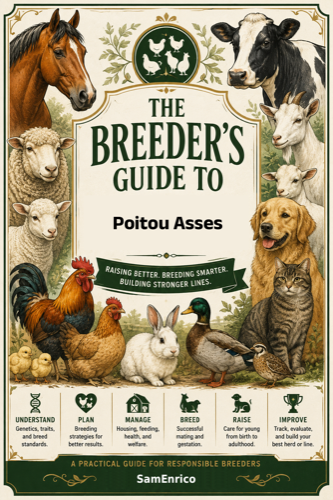 The Breeder's Guide to Poitou AssesMarrero Jolynn$11.99
 Week Three Domain RegistrationMarrero Jolynn$12.99
 PR Failures to AvoidMarrero Jolynn$12.99
 New Business Development ManagerMarrero Jolynn$11.99
 10 Ways to Use French Beans (Recipe Book)Marrero Jolynn$11.99