
Non-FictionConsumer Mind ReportMaintenance
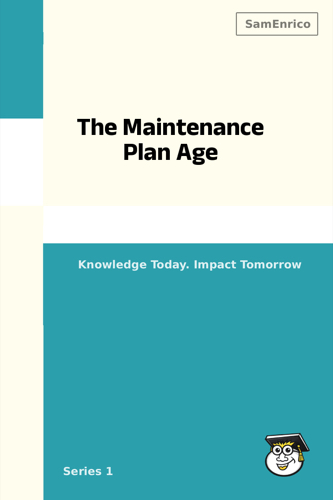
The Maintenance Plan Age eBook
Compare prepaid maintenance plan adoption across g
Compare prepaid maintenance plan adoption across generational lines.
Formats
Free sample
Chapter 1: The Great Flip--The car dealership finance and insurance office has long been considered the most dreaded room in American commerce. It ranks below the dentist's chair, below the airport security line, below the waiting room at the Department of Motor Vehicles. For generations, customers have walked into that cramped space with a mixture of resignation and dread, convinced that whatever happened next would involve upselling, fine print, and a slow erosion of their bank account. The prepaid maintenance plan—that promise to cover oil changes, tire rotations, and scheduled service for a fixed upfront cost—sat at the center of this suspicion. It was the product everyone loved to hate.
The car dealer's version of the extended warranty. The thing your father told you to never, ever buy.That story is over. And almost no one noticed the moment it changed.Sometime in the last three years, without a press release or a grand announcement, the prepaid maintenance plan stopped being a punchline and started being a preferred product. The generation that was supposed to hate dealerships—the digital natives, the skeptics, the anti-institutionalists—didn't just tolerate these plans. They started buying them at rates that should have set off alarm bells across the automotive industry.
Gen Z now purchases prepaid maintenance at 52 percent, ten percentage points higher than the national average of 42 percent. Millennials follow closely at 48 percent. The kids aren't rejecting the F&I office. They're outperforming their parents.This is what I call the Great Flip. It's not a small shift in consumer preference.
It's a complete inversion of every assumption the automotive industry has held for thirty years. And until you understand how it happened—and why it matters—you will miss the largest opportunity in automotive retail since the invention of the lease.The Myth That Refused to Die Let me start with a confession. I believed the myth too. For years, I sat in conference rooms with dealer principals and F&I directors, listening to them lament the "young people problem." Millennials don't want to own cars. Gen Z will just use Uber.
They don't trust dealers. They'd rather pay for repairs out of pocket than talk to a finance manager. The data seemed to support this view. The 2012 DMEautomotive study was the most cited piece of research in the industry, and it painted a grim picture: under-35 consumers were not just avoiding prepaid maintenance; they were actively hostile to the entire F&I product suite. They perceived plans as overpriced, confusing, and designed to benefit the dealer rather than the customer.The problem wasn't the data.
The data was fine. The problem was the expiration date.Consumer behavior changes faster than industry wisdom. By the time a study is published, analyzed, presented at conferences, and translated into sales training, the world has already moved on. The 2012 study captured a real moment in automotive retail. Young buyers in the early 2010s were, in fact, deeply skeptical of dealerships.
They had watched their parents get burned during the 2008 financial crisis. They had grown up with online reviews that exposed every dealer trick. They had access to pricing information that previous generations could only dream of. Of course they didn't trust the F&I office. Trusting would have been irrational.But here's what the industry missed: that skepticism was never about prepaid maintenance as a product category.
It was about the delivery mechanism. Young buyers in 2012 weren't saying "this plan is a bad value." They were saying "I don't trust you to explain it honestly, and I don't trust myself to understand the fine print in the next ten minutes." That's not a product rejection. That's a process rejection. And processes can be fixed.The industry didn't fix them. The industry doubled down on the paper menu, the hard sell, the assumption that customers just needed to be educated about the value proposition.
And then something unexpected happened. The customers changed anyway. Not because dealers got better at selling, but because a new generation entered the market with a completely different relationship to financial products.The Numbers That Changed Everything The 2025 CDK Global study was the first major research to capture the Great Flip in full force. The methodology was rigorous: over 5,000 recent car buyers, representative sampling across age, income, geography, and vehicle segment. The results were unambiguous.
Gen Z's 52 percent attach rate for prepaid maintenance wasn't a statistical anomaly or a regional quirk. It held across every demographic subgroup the researchers tested. Young women bought at slightly higher rates than young men. Urban buyers bought at higher rates than rural buyers. College graduates bought at higher rates than non-graduates.
But the consistent finding was that anyone under thirty-five was significantly more likely to buy a prepaid maintenance plan than anyone over fifty-five.Let me put those numbers in perspective. The automotive industry sells approximately 15 million new cars per year in the United States. A ten-point increase in maintenance plan attach rates across a single generation represents billions of dollars in additional F&I revenue. More importantly, it represents a fundamental shift in how that generation thinks about car ownership. These aren't marginal buyers who need to be convinced.
These are enthusiastic buyers who are already sold on the concept. The only question is whether they buy the plan from you or from someone else.The Protective Asset Protection data from 2025 adds another layer of insight. Their dealer-level transaction data, pulled from over 1,200 franchises, showed that the generational gap wasn't just about purchase rates. It was about purchase behavior. Young buyers were more likely to buy longer-term plans (four to six years versus two to three years).
They were more likely to bundle maintenance with other products like tire and wheel protection. They were more likely to add the plan to their monthly payment rather than paying upfront. In every metric that matters for profitability, Gen Z and Millennials looked less like reluctant customers and more like ideal ones.The Wealth Transfer Nobody Is Talking About To understand why this is happening now, you have to look beyond car dealerships and into the largest demographic shift in American history. The Baby Boomer generation holds more wealth than any generation before or since. They accumulated it through forty years of home equity appreciation, stock market growth, and pension accrual.
And over the next two decades, that wealth will transfer to their children and grandchildren.The numbers are almost incomprehensible. Global intergenerational wealth transfer over the next twenty years is estimated at $84 trillion. The United States share of that is approximately $12 trillion flowing directly into the pockets of Millennials and Gen Z. This is not a prediction about future economic growth. This is a demographic certainty.
The Boomers are aging. Their assets are moving. The only variable is timing.Now, let me be careful here because this is where many analyses go wrong. The wealth transfer is not a flood that will arrive on a single day. It's a steady flow that will accelerate over time.
A twenty-two-year-old today might not see significant inheritance for twenty or thirty years. But the expectation of that wealth, and the financial confidence it creates, is already shaping behavior. Young people…
This is the end of the free sample. Get the eBook to keep going. Buy now
About this book
Details
- Author
- Kunkel Renate
- Publisher
- SamEnrico
- Language
- English
- Genre
- Non-Fiction, Consumer Mind Report, Maintenance
- Released
- 2026-06-07
- Pages (approx.)
- 124
- Available as
- eBook, Audiobook

Read better in the ZLOADR app
Your eBooks on your phone or tablet. Sign in with your SamEnrico account and start reading.
More by Kunkel Renate
 LinkedIn Personal Branding MasteryKunkel Renate$11.99
 CEO Executive Stress ManagementKunkel Renate$11.99
 Startup Equity Explained GuideKunkel Renate$11.99
 Listening Skills for Project ManagersKunkel Renate$11.99
 Teacher Parent Small TalkKunkel Renate$11.99
 Morning Routine ChecklistKunkel Renate$11.99
 Low Carb Hormone BalanceKunkel Renate$11.99
 The Lost Kingdom of Elmet: Celtic Britain's Forgotten ResistanceKunkel Renate$11.99
 The Last Legion of Rome: The Secret Exodus to BritainKunkel Renate$11.99
 How to Start a Coke or Semi-coke of Coal (commission Agent) Business (Beginners Guide)Kunkel Renate$11.99
 WARN Act Compliance PrimerKunkel Renate$12.99
 Forward Fold Release GuideKunkel Renate$12.99
You may also like
 Hong Kong Handover 1997Dunn Johnnie$11.99
 Zumba For Postnatal Recovery CourseNeal Christian$11.99
 Zumba for BeginnersLadner Nikia$11.99
 YouTube Comment Mining GuideHumes Pandora$12.99
 Worry Box MeditationCarlin Rudy$11.99
 Workplace Stress MeditationNguyen Lynn$11.99
 Workplace Stress and Sleep RepairHawley Ivory$11.99
 Workplace Perfectionism CureDelaney Jeffry$11.99
 Workplace Injustice Anger GuideWallen Isabelle$11.99
 Work Addiction and Burnout LinkGreenwood Ester$11.99
 Women in Yoga and WellnessBeattie Galina$11.99
 Women in Stand Up ComedyChun Evangeline$11.99