
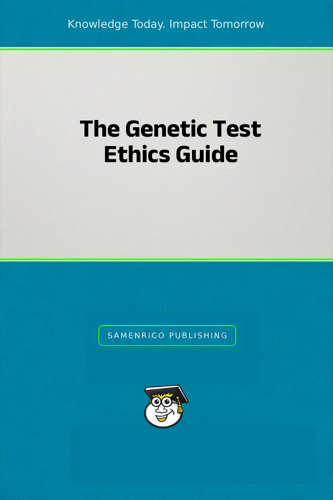
Non-FictionHealth & WellnessBioethics
The Genetic Test Ethics Guide
Discusses informed consent and incidental findings
Discusses informed consent and incidental findings.
Formats
About this book
Free sample
Chapter 1: The Familial Bomb--Every drop of blood you have ever given for a medical test has been treated as yours and yours alone. Your cholesterol level belongs to you. Your blood pressure reading belongs to you. Your complete blood count, your thyroid panel, your glucose tolerance test—these are private facts about a single body, protected by privacy laws that assume the individual is the only person with a stake in the result. This assumption, which works perfectly well for almost every other medical test in existence, collapses entirely when the sample in question contains DNA.Your genome is not yours.
This is not a philosophical statement about the interconnectedness of humanity. It is a biological fact. Half of your DNA came from your father. Half came from your mother. You share approximately fifty percent of your DNA with each full sibling, twenty-five percent with each grandparent, twelve and a half percent with each first cousin.
A genetic finding about you is automatically a genetic finding about your parents, your children, your siblings, and to a lesser degree your extended family. When a laboratory sequences your genome, it is not reading a book that belongs exclusively to you. It is reading a book that your family has been writing for generations, and every page contains information about people who never consented to having their pages turned.This is the first and most fundamental fact that anyone undergoing genetic testing must understand. It is also the fact that consent forms almost never explain.Consider the most common scenario in clinical genetics today. A patient is referred for testing because of a personal or family history of breast cancer.
The patient signs a consent form that discusses risks and benefits, confidentiality and data security, the possibility of incidental findings and the right to decline disclosure. The patient assumes, reasonably, that the information generated will belong to her. She assumes that the decision of what to do with that information is hers alone. She assumes that if she chooses to keep the results private, they will remain private.All of these assumptions are false.The…
This is the end of the free sample. Get the eBook to keep going. Buy now
Contents
- Chapter 1
- Chapter 2
- Chapter 3
- Chapter 4
- Chapter 5
- Chapter 6
- Chapter 7
- Chapter 8
- Chapter 9
- Chapter 10
- Chapter 11
- Chapter 12
Details
- Author
- Redmon Terese
- Publisher
- SamEnrico
- Language
- English
- Genre
- Non-Fiction, Health & Wellness, Bioethics
- Released
- 2026-06-09
- Pages (approx.)
- 148
- Available as
- eBook, Audiobook

Read better in the ZLOADR app
Your eBooks on your phone or tablet. Sign in with your SamEnrico account and start reading.
More by Redmon Terese
 Sugar and Depression LinkRedmon Terese$11.99
 Meiji Political Parties FormationRedmon Terese$11.99
 Women Strength Training GuideRedmon Terese$11.99
 The Floating Mat on LakeRedmon Terese$11.99
 Lysistrata’s War: The Women Who Halted the GodsRedmon Terese$11.99
 The Green Alchemists: Indonesia's Bio-Plastic RevolutionRedmon Terese$11.99
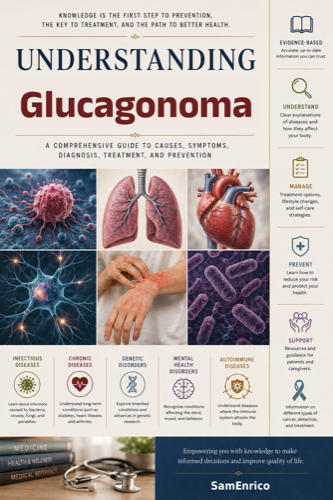 Understanding GlucagonomaRedmon Terese$17.99
 Late Night ManagerRedmon Terese$11.99
 How to Start a Cellulose Business (Beginners Guide)Redmon Terese$11.99
 Macro Problem Set ExcelRedmon Terese$12.99
 Employee Meal Break TrapRedmon Terese$12.99
You may also like
 Hong Kong Handover 1997Dunn Johnnie$11.99
 Zumba For Postnatal Recovery CourseNeal Christian$11.99
 Zumba for BeginnersLadner Nikia$11.99
 YouTube Comment Mining GuideHumes Pandora$12.99
 Worry Box MeditationCarlin Rudy$11.99
 Workplace Stress MeditationNguyen Lynn$11.99
 Workplace Stress and Sleep RepairHawley Ivory$11.99
 Workplace Perfectionism CureDelaney Jeffry$11.99
 Workplace Injustice Anger GuideWallen Isabelle$11.99
 Work Addiction and Burnout LinkGreenwood Ester$11.99
 Women in Yoga and WellnessBeattie Galina$11.99
 Women in Stand Up ComedyChun Evangeline$11.99