
Non-FictionInformativeEducational
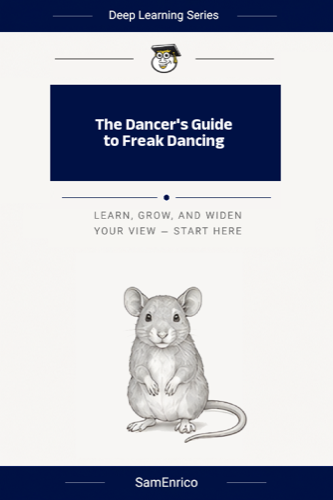
The Dancer's Guide to Freak Dancing
This publication, published by SamEnrico, covers T
by Emery Amada
This publication, published by SamEnrico, covers The Dancer's Guide to Freak Dancing
Formats
About this book
Free sample
Chapter 1: The Panic Paradox...-- Every time a new dance sweeps through youth culture, the adults panic first and ask questions never. The Charleston revealed ankles in 1922 – newspapers called it "obscene gyration." Elvis swiveled his hips in 1956 – clergy demanded television bans. Breakdancing spun onto cardboard in the 1980s – schools outlawed "dangerous headspins." And now, freak dancing and grinding have inherited this century-old tradition of moral outrage. But here is the truth those panics hide: the exact same bodies that convulsed in horror at the Charleston are the ones that eventually taught it in ballrooms. The same parents who banned Elvis bought his records five years later.
The same principals who expelled breakdancers now fund hip-hop dance teams. The cycle never changes – only the names of the dances do.If you picked up this book, you have likely encountered the controversy. Maybe your high school banned grinding at prom. Maybe your parents gave you "the talk" about keeping space on the dance floor. Maybe you have felt the strange whiplash of moving your body in a way that feels natural, rhythmic, and completely human – only to be told you have done something shameful.
This chapter exists to relieve you of that shame. Not by dismissing legitimate concerns about safety or consent – those matter enormously, and we will spend entire chapters on them later – but by showing you that your body's desire to move in response to bass music is not deviant. It is ancient. It is global. And it has been called "obscene" by every generation that came before yours.The Hundred-Year Loop: How Every Dance Becomes "Scandalous" Then "Classic"Let us travel backward.
The year is 1922. A Broadway show called Runnin' Wild introduces the Charleston to white audiences, though Black dancers in South Carolina had been doing versions of it for decades. The dance involves rapid kicking, swinging the arms, and swiveling the hips. Almost immediately, the New York Times publishes a condemnation calling it "the most obscene dance since the waltz was banned from polite society" – though historians have struggled to verify that exact quote, the sentiment…
This is the end of the free sample. Get the eBook to keep going. Buy now
Contents
- Chapter 1
- Chapter 2
- Chapter 3
- Chapter 4
- Chapter 5
- Chapter 6
- Chapter 7
- Chapter 8
- Chapter 9
- Chapter 10
- Chapter 11
- Chapter 12
Details
- Author
- Emery Amada
- Publisher
- SamEnrico
- Language
- English
- Genre
- Non-Fiction, Informative, Educational
- Released
- 2026-05-08
- Pages (approx.)
- 140
- Available as
- eBook, Audiobook

Read better in the ZLOADR app
Your eBooks on your phone or tablet. Sign in with your SamEnrico account and start reading.
More by Emery Amada
 LTC Insurance For Childless PeopleEmery Amada$11.99
 Police Interview with GacyEmery Amada$11.99
 Meth Relapse Emergency KitEmery Amada$11.99
 Insomnia and Recall IssuesEmery Amada$11.99
 Breath Awareness for OCDEmery Amada$11.99
 The Sobriety Pillow MethodEmery Amada$11.99
 Chunking Memory GuideEmery Amada$11.99
 TM For ParentingEmery Amada$11.99
 Rewiring Divorce ShameEmery Amada$11.99
 The Nautical Alchemists: How Western Navigators Brewed the Age of DiscoveryEmery Amada$11.99
 The Pick That Changed the Game: How One Draft Choice Reshaped the NBAEmery Amada$11.99
 The Iron Spires: How Gothic Architects Defied GravityEmery Amada$11.99
You may also like
 Hong Kong Handover 1997Dunn Johnnie$11.99
 Zumba For Postnatal Recovery CourseNeal Christian$11.99
 Zumba for BeginnersLadner Nikia$11.99
 YouTube Comment Mining GuideHumes Pandora$12.99
 Worry Box MeditationCarlin Rudy$11.99
 Workplace Stress MeditationNguyen Lynn$11.99
 Workplace Stress and Sleep RepairHawley Ivory$11.99
 Workplace Perfectionism CureDelaney Jeffry$11.99
 Workplace Injustice Anger GuideWallen Isabelle$11.99
 Work Addiction and Burnout LinkGreenwood Ester$11.99
 Women in Yoga and WellnessBeattie Galina$11.99
 Women in Stand Up ComedyChun Evangeline$11.99