
Non-FictionBiographyTV History
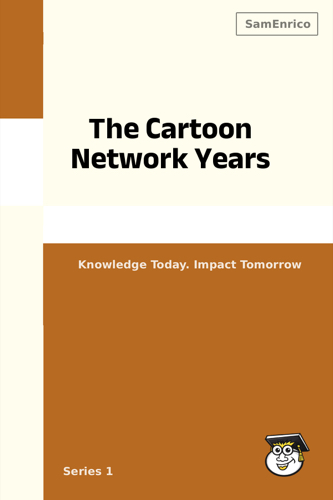
The Cartoon Network Years
Golden era of voice acting at Cartoon Network Stud
by Link Jonelle
Golden era of voice acting at Cartoon Network Studios.
Formats
About this book
Free sample
Chapter 1: The Ghosts of Saturday Morning...--The history of American animation is usually told as a story of triumph—the rise of Disney, the golden age of Looney Tunes, the renaissance of the 1990s. But the story of voice acting at Cartoon Network begins in a graveyard. Not a literal graveyard, but something perhaps more haunting: the corpse of a once-great studio that had forgotten how to make anything new. That studio was Hanna-Barbera, and by the early 1990s, it had become a ghost of itself, churning out formulaic cartoons with interchangeable voices, recycled sound effects, and laugh tracks that told audiences when to laugh because nothing in the performances was actually funny.To understand the revolution that would erupt from Cartoon Network in 1994, you must first understand what it was rebelling against. The enemy was not Disney, with its theatrical ambitions and Broadway-trained singers.
The enemy was not even network television, with its endless restrictions and commercial interruptions. The enemy was something more insidious: a production model that had reduced voice acting from an art form to an assembly line, where performers sat alone in booths, reading lines written by committees, delivering performances designed to offend no one and delight no one. This was the industry that Cartoon Network inherited, and this was the industry it would accidentally destroy.The Dark Age of the Cartoon Voice The 1970s and 1980s are often called the "dark age" of American animation, and for good reason. The theatrical cartoon shorts of the 1940s and 1950s—the golden age of Tex Avery, Chuck Jones, and the Warner Bros. studio—had given way to something cheaper, faster, and infinitely less inspired.
Television had arrived, and television demanded quantity over quality. A single episode of a Saturday morning cartoon could be produced for a fraction of the cost of a theatrical short, but that cost-cutting came with creative consequences that would echo for decades.Hanna-Barbera, once the home of The Flintstones and The Jetsons, had perfected the art of limited animation. Characters moved only when absolutely necessary. Backgrounds were reused endlessly. Stock sound effects—the same door…
This is the end of the free sample. Get the eBook to keep going. Buy now
Contents
- Chapter 1
- Chapter 2
- Chapter 3
- Chapter 4
- Chapter 5
- Chapter 6
- Chapter 7
- Chapter 8
- Chapter 9
- Chapter 10
- Chapter 11
- Chapter 12
Details
- Author
- Link Jonelle
- Publisher
- SamEnrico
- Language
- English
- Genre
- Non-Fiction, Biography, TV History
- Released
- 2026-06-09
- Pages (approx.)
- 119
- Available as
- eBook, Audiobook

Read better in the ZLOADR app
Your eBooks on your phone or tablet. Sign in with your SamEnrico account and start reading.
More by Link Jonelle
 Zinc Immunity Booster GuideLink Jonelle$11.99
 Vitamin D ED Link GuideLink Jonelle$11.99
 Minimum Cash Balance RequirementsLink Jonelle$11.99
 Vocal Variety Presentation GuideLink Jonelle$11.99
 Gen Z Digital NativesLink Jonelle$11.99
 Hypopressive AbdominalLink Jonelle$11.99
 Creative Habits for ManagersLink Jonelle$11.99
 The Bard’s Lost Manuscript: Shakespeare’s Secret PlayLink Jonelle$11.99
 Fenrir's Forbidden Heart: A Wolf and a GoddessLink Jonelle$11.99
 A Collector's Handbook to the Tvr 1600mLink Jonelle$11.99
 Working Capital Formula GuideLink Jonelle$12.99
 How to Produce Paper and Plastic Shopping BagsLink Jonelle$11.99
You may also like
 Hong Kong Handover 1997Dunn Johnnie$11.99
 Zumba For Postnatal Recovery CourseNeal Christian$11.99
 Zumba for BeginnersLadner Nikia$11.99
 YouTube Comment Mining GuideHumes Pandora$12.99
 Worry Box MeditationCarlin Rudy$11.99
 Workplace Stress MeditationNguyen Lynn$11.99
 Workplace Stress and Sleep RepairHawley Ivory$11.99
 Workplace Perfectionism CureDelaney Jeffry$11.99
 Workplace Injustice Anger GuideWallen Isabelle$11.99
 Work Addiction and Burnout LinkGreenwood Ester$11.99
 Women in Yoga and WellnessBeattie Galina$11.99
 Women in Stand Up ComedyChun Evangeline$11.99