
Non-FictionHealth & WellnessBone Health
Testosterone and Bone Density eBook
Prevent osteoporosis and fractures by maintaining
by Yang Sharyl
Prevent osteoporosis and fractures by maintaining adequate androgen levels.
Formats
Free sample
Chapter 1: The Bone That Broke--The curb was only four inches high.Tom Delaney, fifty-eight years old, a retired firefighter with twenty-three years of service, had stepped off thousands of curbs. He had walked across pitched roofs during thunderstorms. He had carried two-hundred-pound victims down smoke-filled stairwells. He had jumped from the back of moving fire trucks. His body had absorbed shocks that would have sent ordinary men to the emergency room.On a Tuesday morning in October, he stepped off a curb outside a coffee shop in suburban Columbus, Ohio.
His left foot landed at a slight angle—no more than ten degrees off center. He did not trip. He did not slip. No one bumped into him. There was no ice, no loose gravel, no uneven pavement.
He simply landed wrong.The sound, he later told the orthopedic surgeon, was exactly like stepping on a dry branch.He went down. His coffee spilled. Strangers rushed to help him. He tried to stand and discovered that his left leg would not bear weight. Not because of pain—though the pain arrived seconds later, a white-hot explosion radiating from his hip down to his knee—but because the mechanical connection between his upper leg and his pelvis had ceased to exist.At the hospital, the emergency physician showed Tom the X-ray.
The femoral neck, the narrow segment of thigh bone just below the ball of the hip joint, had fractured clean through. Not a crack. Not a hairline. A complete, displaced break.The radiologist's note used a word that Tom did not recognize: pathologic.A pathologic fracture is not caused by trauma. It is caused by bone that has become too weak to withstand ordinary forces.
A pathologic fracture is a bone that broke because it was already broken from the inside.Tom's bone mineral density T-score was minus 3.1. That placed him in the osteoporosis range—worse than 99 percent of men his age. His bone had the density of a man in his mid-eighties.When Tom's wife asked how this could have happened—he ate well, he exercised, he had never broken a bone in his life—the emergency physician shrugged and said something that would haunt Tom for the next two years: "Sometimes these things just happen."But they do not just happen. Bones do not crumble like chalk for no reason. There was a cause.
There was a mechanism. There was a failure occurring inside Tom's body long before his foot left that curb. And no one had looked for it.The Invisible Epidemic Tom's story is not rare. It is not unusual. It is not even particularly extreme.
It is, in fact, disturbingly common.One in five men over the age of fifty will suffer an osteoporotic fracture during their remaining lifetime. That statistic comes from the National Osteoporosis Foundation, and it has remained stubbornly stable for the past twenty years, not because treatment has failed but because awareness has not improved.Consider what that number means. If you are a man reading this book, and you are currently fifty years old, you have a twenty percent chance of suffering a fracture caused by weak bones before you die. If you have already fractured once—even a "minor" fracture like a wrist broken in a fall from standing height—your risk of a second fracture more than doubles. And if that second fracture is a hip, your risk of dying within the next twelve months is higher than for many forms of cancer.These are not alarmist claims.
They are drawn from the largest prospective cohort studies ever conducted on male skeletal health, including the Mr OS study (Osteoporotic Fractures in Men), which followed nearly six thousand men for more than a decade, and the UK Biobank study, which has tracked bone outcomes in over five hundred thousand participants.The data tell a consistent and unsettling story: men break bones. Men die from broken bones. And the medical system is failing men at every step of the process.The Mortality Gap Perhaps the most disturbing statistic in all of bone health research is this: men who sustain a hip fracture have a higher short-term mortality rate than women who sustain the same injury.The numbers are stark. Among women who break a hip, approximately 15 to 20 percent die within one year. Among men, that number rises to 25 to 35 percent.
In some studies of men over eighty, one-year mortality after hip fracture approaches 40 percent.Why? The answer is not that male bones are biologically weaker. In fact, the opposite is true. Before menopause, women have lower bone density than men of the same age. The male skeleton has a cortical advantage—larger bones, thicker outer shells, greater cross-sectional area.
Men start with a higher peak bone mass and lose it more slowly.But men are diagnosed later. Men are treated less aggressively. Men are less likely to receive osteoporosis medications after a fracture. Men are less likely to be referred for physical therapy. Men are more likely to be discharged to a skilled nursing facility and less likely to return to independent living.Tom experienced this firsthand.
After his hip was surgically repaired with a metal rod and screws, he was discharged with a walker and a prescription for pain medication. No one ordered a bone density scan before he left the hospital—though the X-ray had already revealed severe osteopenia around the fracture site. No one checked his testosterone. No one referred him to an endocrinologist. No one explained that his bone had broken not because of a curb but because of a metabolic failure that could be identified and, in many cases, reversed.His discharge instructions said, in bold type: "Fall prevention."Not "Find out why your bone crumbled."Not "Test your hormones."Not "Treat the underlying disease."Fall prevention.As if the curb had been the problem.
As if Tom had simply been clumsy.The Female Disease Assumption The reason Tom's doctors missed his osteoporosis is not complicated. It is the same reason most men with weak bones go undiagnosed, untreated, and unprotected.Osteoporosis is widely—and wrongly—assumed to be a woman's disease.This assumption has deep roots. Estrogen withdrawal at menopause accelerates bone loss dramatically, putting women at immediate and obvious risk. The first effective treatments for osteoporosis were developed for women. The major clinical trials excluded men.
The advertising campaigns featured older women. The public health messaging showed grandmothers shrinking and stooping.All of this was necessary and appropriate. Osteoporosis is a serious problem for postmenopausal women, and the attention it received saved countless lives.But the unintended consequence was the erasure of male osteoporosis from the public consciousness. Ask any man over fifty what his bone density is, and he will likely look at you with confusion. Ask him his cholesterol—he will know.
His blood pressure—he will know. His PSA—he may even know that.His T-score? His SHBG? His free androgen index?He will have no idea. Neither will his doctor.A study published in the Journal of Bone and Mineral Research found that among men who sustained a fragility fracture, fewer than ten percent received any evaluation for osteoporosis within the following year.…
This is the end of the free sample. Get the eBook to keep going. Buy now
About this book
Details
- Author
- Yang Sharyl
- Publisher
- SamEnrico
- Language
- English
- Genre
- Non-Fiction, Health & Wellness, Bone Health
- Released
- 2026-06-10
- Pages (approx.)
- 154
- Available as
- eBook, Audiobook

Read better in the ZLOADR app
Your eBooks on your phone or tablet. Sign in with your SamEnrico account and start reading.
More by Yang Sharyl
 Nairobi Logistics Startup ManualYang Sharyl$11.99
 Body Scan for Postnatal RecoveryYang Sharyl$11.99Body Scan for Postnatal RecoveryYang Sharyl$11.99
 Pain Equanimity TrainingYang Sharyl$11.99
 Commute Stress Transformation GuideYang Sharyl$11.99
 The Teenage Time Bomb: How 1960s Students Almost Toppled a DictatorYang Sharyl$11.99
 The Last Spin of the WhipYang Sharyl$11.99
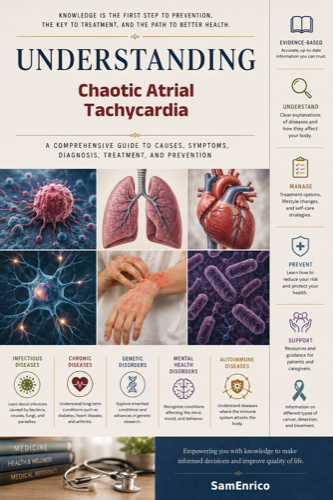 Understanding Chaotic Atrial TachycardiaYang Sharyl$17.99
 Digital DeveloperYang Sharyl$11.99
 Partner Skills PR Points GuideYang Sharyl$12.99
 Proposal for Creative ResearchYang Sharyl$12.99
You may also like
 Hong Kong Handover 1997Dunn Johnnie$11.99
 Zumba For Postnatal Recovery CourseNeal Christian$11.99
 Zumba for BeginnersLadner Nikia$11.99
 YouTube Comment Mining GuideHumes Pandora$12.99
 Worry Box MeditationCarlin Rudy$11.99
 Workplace Stress MeditationNguyen Lynn$11.99
 Workplace Stress and Sleep RepairHawley Ivory$11.99
 Workplace Perfectionism CureDelaney Jeffry$11.99
 Workplace Injustice Anger GuideWallen Isabelle$11.99
 Work Addiction and Burnout LinkGreenwood Ester$11.99
 Women in Yoga and WellnessBeattie Galina$11.99
 Women in Stand Up ComedyChun Evangeline$11.99