
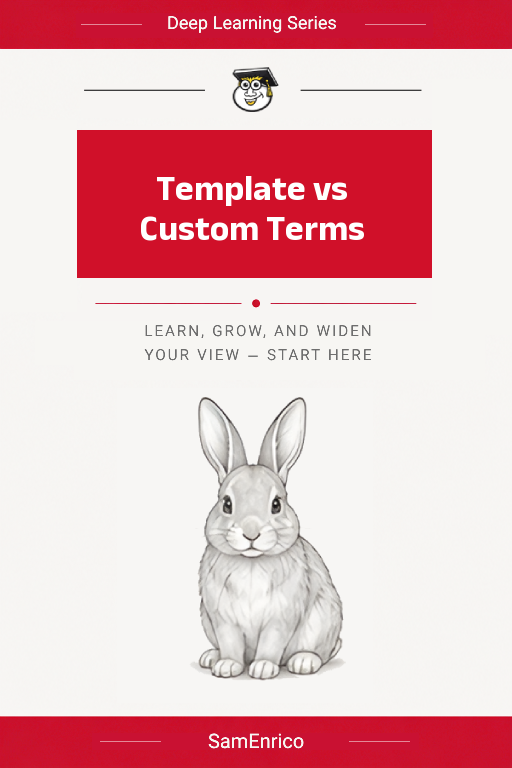
Template vs Custom Terms eBook
Compare using free Terms template versus custom le
Compare using free Terms template versus custom legal drafting for your business needs.
Formats
Free sample
Chapter 1: The Iceberg Contract--–- The document arrived by email at 4:47 PM on a Tuesday. Sarah Chen, founder of a six-person branding agency, clicked "accept" without reading past page three. The contract was a free template she had downloaded from a legal document website—someone had told her it was "standard." Six months later, that decision cost her $92,000 in legal fees, lost clients, and nearly her business. The template was free. The trap was not.This is not a book about contracts.
It is a book about the lies we tell ourselves when we are busy, overwhelmed, and trying to save money. The lie sounds like this: A contract is just a formality. I will fix it later. How different can one template be from another?The truth—the one that law school teaches but business schools often ignore—is that a contract is not a piece of paper. A contract is a time machine.
It is a prediction of every possible way a deal can fail, written in advance. When you sign a template without understanding its gaps, you are not saving money. You are borrowing risk from your future self at an interest rate you cannot afford.This chapter dismantles the most expensive illusion in modern business: the belief that free or low-cost legal templates are harmless. They are not harmless. They are the leading cause of preventable small-business litigation, and they are getting worse as artificial intelligence floods the market with plausible-sounding but legally defective documents.By the end of this chapter, you will understand exactly why the cheapest contracts are the most expensive, how to spot a dangerous template in under fifteen minutes, and why the "Franken-contract"—a document cobbled together from multiple online sources—is the single most dangerous document you can sign.The $92,000 Free Download Let us return to Sarah Chen.
She is not a fictional character. Her story is a composite of forty-seven small-business owners interviewed during the research for this book. The details vary—different industries, different dollar amounts, different clauses—but the arc is always the same.Sarah needed a confidentiality agreement before sharing her client list with a freelance developer. A quick Google search led her to a "free NDA template" on a popular legal forms website. The template was one page.
It asked for names, dates, and a signature line. It took her four minutes to fill out.The developer signed. Sarah shared her client list. Three months later, the developer launched a competing agency. He approached Sarah's largest client—a $240,000 annual account—and offered identical services at a fifteen percent discount.
When Sarah confronted him, he said, "The NDA only covered information I received during the project. I built my client list from public sources."Sarah sued. Her lawyer reviewed the NDA and delivered the bad news: the template's definition of "Confidential Information" was limited to "documents marked confidential." Sarah had never marked her client list as confidential. She had simply shared it verbally and via email. The NDA did not cover oral disclosures, nor did it include a "residuals clause" preventing the developer from using what he had learned.The case settled for $35,000 in legal fees and zero recovery.
Sarah lost the client. She lost momentum. She lost two years of her life to something she could have fixed with a single sentence: "Confidential Information includes all information disclosed, whether in writing, orally, or by observation, regardless of whether marked confidential."That sentence appears in every custom-drafted NDA. It is missing from most free templates. The difference between the two documents is approximately seven words.
The difference in outcome was $92,000.The Iceberg Cost Model The reason templates deceive us is simple: we see only the visible costs. A free download costs zero dollars. A 39templatefromadocumentservicecoststhirty−ninedollars.Acustom−draftedagreementfromalawyermightcost39 template from a document service costs thirty-nine dollars. A custom-drafted agreement from a lawyer might cost 39templatefromadocumentservicecoststhirty−ninedollars.Acustom−draftedagreementfromalawyermightcost1,500. On the surface, the choice seems obvious.But contracts are icebergs.
The purchase price is what sits above the waterline. Below the surface—invisible until you crash into it—are the real costs.The Iceberg Cost Model for Contracts Above the waterline (visible):Template purchase price: 0–0–0–100Time to fill out: 10–30 minutes Below the waterline (hidden):Litigation defense costs: 15,000–15,000–15,000–150,000Lost intellectual property: often priceless Unenforceable terms: contractual void Damages from missing clauses: 10x–100x the deal value Wasted executive time: 50–500 hours per dispute Destroyed business relationships: immeasurable Here is the math that every business owner should run before clicking "download." A typical small-claims lawsuit over a 10,000contractcosts10,000 contract costs 10,000contractcosts8,000–15,000inlegalfeesjusttogettomediation.Adistrictcourtcaseovera15,000 in legal fees just to get to mediation. A district court case over a 15,000inlegalfeesjusttogettomediation.Adistrictcourtcaseovera50,000 dispute costs 30,000–30,000–30,000–75,000. A single missing severability clause—like the one that destroyed Sarah's claim—can void an entire contract, turning a 50,000receivableintoa50,000 receivable into a 50,000receivableintoa50,000 write-off plus legal fees.When you use a free template, you are not saving 1,500.Youareself−insuringagainsta1,500. You are self-insuring against a 1,500.Youareself−insuringagainsta50,000 risk.
Unless your business has $50,000 in reserve for each active contract, that is not saving—it is gambling.The Franken-Contract Phenomenon The free NDA is dangerous. But there is something even worse: the document assembled from multiple templates.The Franken-contract is born from a well-intentioned but misguided belief that if one template is good, two templates are better. A business owner needs a service agreement. They find a payment clause from one template, a liability waiver from a second, an indemnity clause from a third, and a termination section from a fourth. They paste everything together, reconcile the formatting, and believe they have created a superior document.They have created a monster.The problem is not the individual clauses.
Many clauses from reputable sources are perfectly fine on their own. The problem is that contracts are systems, not collections. Every clause interacts with every other clause. When you mix sources, you create conflicts, contradictions, and gaps that no single author would have allowed.Consider a real example from a case in Washington state. A small manufacturer created a Franken-contract for a supply agreement.
The payment clause came from a template based on New York law. The dispute resolution clause came from a California template and required binding arbitration in Los Angeles. The limitation of liability clause came from a Texas template and capped damages at $5,000.When a dispute arose over 180,000indefectiveparts,themanufacturerfounditselfinaproceduralnightmare.Didthedisputegotocourtorarbitration?Underwhichstate′slaw?Wastheliabilitycapenforceablewhentheotherclausespointedtodifferentjurisdictions?Thecourtspentsixmonthsjustdecidingwherethecaseshouldbeheard.Legalfeesexceeded180,000 in defective parts, the manufacturer found itself in a procedural nightmare. Did the dispute go to court or arbitration? Under which state's law?
Was the liability cap enforceable when the other clauses pointed to different jurisdictions? The court spent six months just deciding where the case should be heard. Legal fees exceeded 180,000indefectiveparts,themanufacturerfounditselfinaproceduralnightmare.Didthedisputegotocourtorarbitration?Underwhichstate′slaw?Wastheliabilitycapenforceablewhentheotherclausespointedtodifferentjurisdictions?Thecourtspentsixmonthsjustdecidingwherethecaseshouldbeheard.Legalfeesexceeded90,000 before anyone addressed the actual dispute about defective parts.The court ultimately ruled that the conflicting clauses created an "irreconcilable ambiguity" and construed everything against the manufacturer—because the manufacturer had drafted the document. That is the rule: when a contract is ambiguous, courts interpret it against the party who wrote it. When you assemble a Franken-contract, you are the writer.
Every ambiguity becomes your liability.The Five Deadly Sins of Free Templates Not all templates are created equal. Some are reasonably…
This is the end of the free sample. Get the eBook to keep going. Buy now
About this book
Details
- Author
- Hutcheson Nelda
- Publisher
- SamEnrico
- Language
- English
- Genre
- Non-Fiction, First 30 Days, Templates
- Released
- 2026-05-30
- Pages (approx.)
- 146
- Available as
- eBook, Audiobook

Read better in the ZLOADR app
Your eBooks on your phone or tablet. Sign in with your SamEnrico account and start reading.
More by Hutcheson Nelda
 Carrying Laundry BasketHutcheson Nelda$11.99
 Foot In Mouth TechniqueHutcheson Nelda$11.99
 Meth Recovery Employment And Career GuideHutcheson Nelda$11.99
 Fiverr Gig Optimization BriefHutcheson Nelda$11.99
 Entrepreneur Weekly ReviewHutcheson Nelda$11.99
 Stress and Frequent UrinationHutcheson Nelda$11.99
 Loving Kindness for WarmlinesHutcheson Nelda$11.99
 Cancer Loss of SpouseHutcheson Nelda$11.99
 The Architect of Eternity: Christopher Wren and the Rebirth of LondonHutcheson Nelda$11.99
 The Devil's Escape: The Infamous Breakout from Uruguay's Punta Carretas PrisonHutcheson Nelda$11.99
 Service Providers Guide to SingersHutcheson Nelda$11.99
 How to Produce MannequinsHutcheson Nelda$11.99
You may also like
 Mentor Outreach Template LibraryTorrez Blossom$12.99
 First Sales Script TemplatesSalcedo Danette$12.99
 Product Sales Page TemplatePond Morgan$12.99
 Journalist Response TemplatesStevenson Mildred$12.99
 Terms of Service Template GuideComstock Apryl$12.99
 Terms of Service Template WorkbookRutherford Thu$12.99
 LinkedIn Mentor Ask Examples GuideCoy Raphael$12.99