
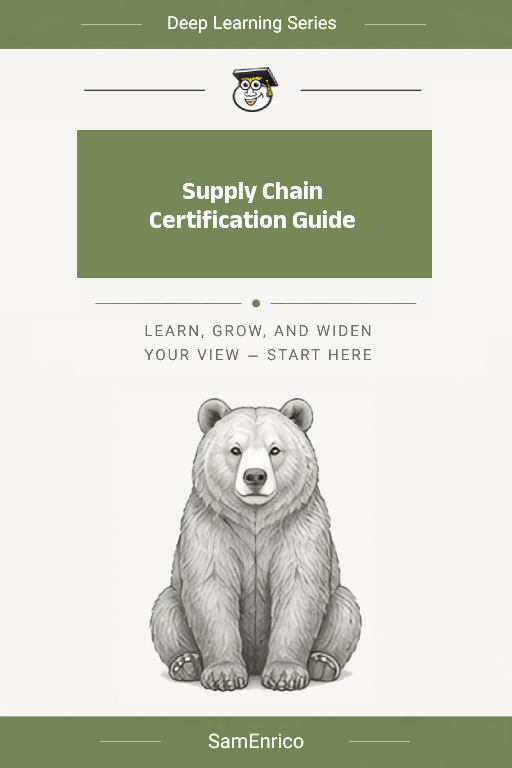
Non-FictionBusiness BriefSupply Chain
Supply Chain Certification Guide Audiobook
Extends sustainability certification requirements
by Handley Rod
Extends sustainability certification requirements to upstream suppliers, including vendor audits, corrective action, and approved lists.
Formats
Free sample
Chapter 1: The Blind Spot–- In 1996, a single photograph changed the global supply chain forever. The image, taken by a journalist in Sialkot, Pakistan, showed a 10-year-old boy hunched over a soccer ball, stitching panels together by hand. That ball bore the logo of a major international brand—one that had certified its Tier 1 assembly factory as compliant with all labor standards. The factory had passed every audit. The paperwork was flawless.
And yet, a child sat 4,000 miles away, working fourteen-hour days for pennies, entirely invisible to the brand’s compliance system. The crisis was not a failure of the factory. It was a failure of imagination: no one had thought to look beyond the direct supplier.This chapter opens with that story not as historical artifact but as a warning. Thirty years later, the same blind spot persists. Most supply chain professionals can tell you exactly what their Tier 1 suppliers are doing—their audit scores, their corrective action plans, their renewal dates.
But ask them about Tier 2 (raw material processors), Tier 3 (component manufacturers), or Tier 4 (extractors and commodity producers), and the answer is often a nervous silence. That silence is increasingly dangerous, expensive, and, under new laws emerging from Berlin to Brussels to Paris, illegal.The Architecture of Invisibility To understand why upstream suppliers remain invisible, we must first understand how supply chains are structured—and how most certification programs are designed to fail.A typical manufacturing supply chain has four tiers, though in complex industries like electronics or automotive, there can be seven or more. Tier 1 suppliers are the final assemblers or direct vendors. They invoice you, ship to you, and sit for your audits. Tier 2 suppliers process raw materials into semi-finished goods: fabric mills, metal stampers, chemical formulators.
Tier 3 suppliers extract or produce basic materials: cotton gins, copper mines, petroleum refineries. Tier 4 and beyond are the commodity producers—the farms, mines, and forests that feed everything upstream.Here is the problem that certification professionals rarely admit aloud: your Tier 1 supplier has every incentive to hide its upstream problems. The factory that assembles your smartphone does not want you to know that its circuit boards come from a Tier 2 supplier that uses forced labor in another country. The garment factory stitching your shirts will not voluntarily disclose that its fabric mill dumps untreated dye wastewater into a river. The automotive parts manufacturer will not mention that…
This is the end of the free sample. Get the Audiobook to keep going. Buy now
About this book
Details
- Author
- Handley Rod
- Publisher
- SamEnrico
- Language
- English
- Genre
- Non-Fiction, Business Brief, Supply Chain
- Released
- 2026-05-30
- Pages (approx.)
- 153
- Available as
- eBook, Audiobook

Listen in the VoxFlicks app
Audiobooks and audio dramas wherever you go. Sign in with your SamEnrico account and press play.
More by Handley Rod
 PCI DSS 4.0 TransitionHandley Rod$11.99
 The Self Esteem After Cancer GuideHandley Rod$11.99
 The Teen Introvert Confidence GuideHandley Rod$11.99
 Creator Content Calendar GuideHandley Rod$11.99
 Postdoc Imposter SyndromeHandley Rod$11.99
 The Silk and Gold Dynasty: The Rise of the African Merchant PrincesHandley Rod$11.99
 CooperHandley Rod$11.99
 Understanding Primary Progressive AphasiaHandley Rod$17.99
 Executive Summary Data Inclusion GuideHandley Rod$12.99
 How to Become a Tunnel-elastic Operator - LockstitchHandley Rod$11.99
You may also like
 Hong Kong Handover 1997Dunn Johnnie$11.99
 Zumba For Postnatal Recovery CourseNeal Christian$11.99
 Zumba for BeginnersLadner Nikia$11.99
 YouTube Comment Mining GuideHumes Pandora$12.99
 Worry Box MeditationCarlin Rudy$11.99
 Workplace Stress MeditationNguyen Lynn$11.99
 Workplace Stress and Sleep RepairHawley Ivory$11.99
 Workplace Perfectionism CureDelaney Jeffry$11.99
 Workplace Injustice Anger GuideWallen Isabelle$11.99
 Work Addiction and Burnout LinkGreenwood Ester$11.99
 Women in Yoga and WellnessBeattie Galina$11.99
 Women in Stand Up ComedyChun Evangeline$11.99