
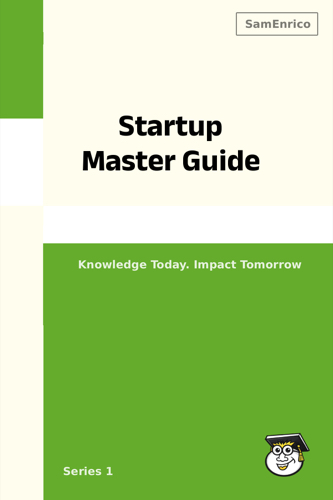
Startup Master Guide eBook
Complete collection of unicorn founders and failur
by Walters Nina
Complete collection of unicorn founders and failures.
Formats
Free sample
Chapter 1: The Valuation Mirage--The first lie you will hear as a founder is the most seductive one: “We’re building a unicorn.”It slips into pitch decks like a prayer. It decorates the walls of co-working spaces. It justifies fourteen-hour days, missed birthdays, and the slow erosion of your health. “Unicorn” has become the default aspiration of an entire generation of entrepreneurs—as if building a billion-dollar company is not a statistical anomaly but a birthright.It is neither.Between 2007 and 2025, over 1,200 startups achieved unicorn status—a private valuation of $1 billion or more. That sounds impressive until you run the denominator.
Over the same period, venture capitalists funded approximately 80,000 startups. That means the probability of a funded startup becoming a unicorn hovers around 1.5 percent. If you include every LLC, every bootstrap, every side project that never took a dollar of outside capital, the probability drops below 0.1 percent.But here is the number that venture capitalists do not put on their websites: of those 1,200 unicorns, nearly 300 have already imploded, been acquired for cents on the dollar, or seen their valuations slashed by more than seventy percent in downstream rounds. The unicorn graveyard is not a small plot. It is a cemetery the size of a small city.This book is the map of that cemetery.The Binary Lens Every chapter in this book will examine its topic through two opposing but equally essential lenses.
The first lens is the Unicorn Blueprint—what billion-dollar founders did right, the decisions that separated them from the 98.5 percent who never made it. The second lens is the Post-Mortem—why similarly situated startups crashed, burned, and became cautionary tales.The goal is not to worship unicorns. The goal is to dissect them.This first chapter focuses on the single most dangerous misconception in entrepreneurship: the belief that valuation equals value. It dismantles the mythology of the overnight success, exposes how “fake it till you make it” metastasizes into fraud, and introduces a diagnostic tool that every founder should apply before taking a single dollar of outside capital.But first, a confession.The Confession In 2017, a founder named Rom sat across from an acquirer holding a term sheet for $10 million. The offer was clean.
No earn-outs. No clawbacks. Just cash in exchange for equity.Rom’s mortgage would have been paid. His children’s college funds would have been full. His parents could have retired.
He could have walked away at thirty-three with more money than most people earn in a lifetime.He said no.Eighteen months later, his company was worth zero. He lost his marriage, his co-founders, and his mind. He spent the next two years in therapy, rebuilding a self-concept that had been entirely fused with a number on a term sheet.Rom Carmeli eventually wrote a book called Confessions of a Unicorn Founder. It is not a victory lap. It is an autopsy.
And his story will appear throughout this book as a warning: the obsession with valuation is not ambition. It is a disease.The Myth of the College Dropout Billionaire Let us begin by naming the cultural script that has done more damage to founders than any single investor or economic downturn.The script goes like this: A brilliant young person drops out of Harvard or Stanford, codes a product in a dorm room or a garage, raises a small amount of money from an angel investor, and within five years becomes a billionaire. The media loves this story because it is simple, heroic, and reinforces the fantasy that genius alone determines outcome.The problem is that it is almost entirely false.Of the 1,200 unicorns founded since 2000, fewer than five percent were founded by college dropouts. The vast majority were founded by people in their thirties and forties who had already worked in the industry they disrupted. The average age of a successful founder at the time of founding is forty-two.
The average age of a unicorn founder is thirty-four—still a decade older than the Mark Zuckerberg myth suggests.More importantly, the “overnight success” narrative erases the decade of failure that preceded almost every unicorn. Before Airbnb became a $100 billion company, Brian Chesky and Joe Gebbia sold overpriced cereal boxes to keep the lights on. Before Slack became a $27 billion communication tool, Stewart Butterfield’s video game Glitch failed so publicly that the tech press wrote obituaries. Before Reid Hoffman sold Linked In to Microsoft for $26 billion, his first startup, Social Net, collapsed so completely that he spent years recovering financially and emotionally.The unicorn is not a sudden explosion. It is a slow, painful, often invisible accumulation of learning—most of it purchased with failure.The Valuation Trap If the college dropout myth is the first lie, the valuation trap is the second.Valuation is a number.
It is an opinion, expressed by a small group of investors, about what your company might be worth under ideal conditions. That number is not cash. It does not pay salaries. It does not acquire customers. It does not survive bankruptcy.Value, by contrast, is real.
Value is revenue. Value is profitability. Value is customer loyalty that survives a price increase. Value is a product so essential that users would switch to a competitor only with great reluctance.The difference between valuation and value is the difference between a photograph of a meal and the meal itself. One looks good on a screen.
The other keeps you alive.Consider We Work. At its peak in 2019, We Work was valued at $47 billion. Adam Neumann, its founder, was celebrated as a visionary who had reimagined the future of work. The company had raised over $12 billion from Soft Bank alone. The valuation number was so large that it became a kind of gravitational force, pulling in more investors, more media coverage, and more tenants who wanted to be associated with a winner.Then someone looked at the actual value.We Work’s business model was simple: lease office space long-term, sublease it short-term.
The company had never been profitable. Its losses were accelerating. Its governance structure gave Neumann near-absolute control, including a $5.9 million private jet and the right to sell his shares while rank-and-file employees could not. When the company filed its S-1 prospectus for an initial public offering, the market saw the gap between valuation and value. The IPO imploded.
The valuation collapsed to $8 billion. Neumann walked away with a $1.7 billion exit package—paid by the very investors who had enabled the fantasy.The founder did fine. The employees did not. The investors did not. The story of We Work is not a cautionary tale about a bad person.
It is a cautionary tale about a bad number—and what happens when everyone agrees to pretend the number is real.FTX is the same story with a different ending. Sam Bankman-Fried raised over $2 billion at a $32 billion valuation. The number was so large, the investors so prestigious (Sequoia, Soft Bank, Tiger Global), that the entire ecosystem suspended disbelief. When the fraud was exposed, the valuation went to zero in forty-eight hours. Bankman-Fried is now serving twenty-five years in federal prison.The pattern is unmistakable: when valuation decouples from value, fraud becomes almost inevitable—not because founders…
This is the end of the free sample. Get the eBook to keep going. Buy now
About this book
Details
- Author
- Walters Nina
- Publisher
- SamEnrico
- Language
- English
- Genre
- Non-Fiction, Biography, Complete
- Released
- 2026-06-06
- Pages (approx.)
- 133
- Available as
- eBook, Audiobook

Read better in the ZLOADR app
Your eBooks on your phone or tablet. Sign in with your SamEnrico account and start reading.
More by Walters Nina
 Organ Donation PlanningWalters Nina$11.99
 Substance Withdrawal AngerWalters Nina$11.99
 Patrol Commander Burma FrontierWalters Nina$11.99
 Anesthesiologist Crisis GuideWalters Nina$11.99
 Self Esteem After Cosmetic Surgery ManualWalters Nina$11.99
 North Cascades MysteriesWalters Nina$11.99
 Beginner Mindful CleaningWalters Nina$11.99
 The Velvet Underground's Exploding Factory: Warhol, Drugs, and the Birth of PunkWalters Nina$11.99
 The Silent Terror: Cornelius Holland and the Birth of Submarine WarfareWalters Nina$11.99
 The Notorious B.I.G.: Dreams Cut ShortWalters Nina$11.99
 Growing Cryptomeria (Sugi, Japanese Cedar)Walters Nina$11.99
 Ultimate Handbook Guide to Lima : (Peru) Travel GuideWalters Nina$11.99
You may also like
 Musician Master GuideHelms Letitia$11.99
 Retail Master GuideCoulter Trang$11.99
 War and Genocide MasterMasterson Ayesha$11.99
 Disaster Survivor Master GuideDenham Larisa$11.99
 Tech Founder Master GuideDooley Adelaida$11.99
 Child Star Complete AnthologyRusso Alane$11.99
 VC Master GuideHoang Jamey$11.99
 Survivor Master GuideHightower Lissa$11.99
 Opposition Master GuidePressley Walton$11.99
 Turnaround Master GuideMusser Paris$11.99
 Pilot Master GuideCrews Robert$11.99
 Influencer Master GuideLott Na$11.99