
Non-FictionSelf-HelpPhone Addiction
Smartphone Screen Time Reduction eBook
Practical settings and habit changes to cut daily
Practical settings and habit changes to cut daily phone use.
Formats
Free sample
Chapter 1: The Billion-Dollar Hijack--–- It begins with a buzz. Not the gentle hum of a honeybee or the soft chime of a distant clock tower. This is a specific, engineered, Pavlovian buzz—the kind that has been tested in thousands of hours of user research to trigger one response and one response only: reach. Your hand moves before your conscious mind can intervene. Your thumb swipes.
Your pupils dilate slightly in anticipation. Your breathing slows as you lean into the glow.What will you find? A like? A comment? A message from someone you haven’t heard from in years?
Or nothing at all—just an algorithmically generated suggestion that a person you vaguely know posted a photograph of their breakfast?You don’t know. That’s the point. The not-knowing is precisely what compels you to look.This is not a failure of character. It is not laziness, weakness, or a lack of self-discipline. It is a billion-dollar exploitation of a perfectly normal neurological process.
Your phone has been designed, by people smarter than you and me, to mimic the most addictive machine ever invented: the slot machine. And you are carrying that slot machine in your pocket, your purse, or your hand, every waking moment of your life.Welcome to the billion-dollar hijack. This chapter is about understanding exactly how it works—not so you can feel guilty, but so you can finally see the cage you’ve been living inside.The Myth of the Weak-Willed User Let me clear something up immediately. If you have ever felt embarrassed about how much time you spend on your phone—if you’ve ever hidden your screen time from a partner or felt a twinge of shame when the weekly report popped up showing four hours per day on social media—you are not alone. And you are not weak.The most common explanation for problematic phone use is also the laziest: people just need more willpower.
They need to put the phone down. They need to be more present. They need to try harder.This explanation is comforting to those who don’t struggle with phone use because it suggests that their own restraint is a product of superior character. It is also completely wrong.Willpower is not a character trait. It is a finite cognitive resource that depletes with use, like a muscle that gets tired after repeated exertion.
Psychologists call this ego depletion. And the people designing your phone know this. They know that you wake up with a limited supply of self-control. They know that every notification, every badge, every pull-to-refresh exploits a tiny bit of that supply. By the end of the day, you have nothing left.
That is not an accident. That is the business model.Consider this: the engineers who build these features do not let their own children use them. In Silicon Valley, many top tech executives send their kids to no-screen schools. They limit their own social media use to a few hours per week. They know exactly how addictive these products are because they built them.
They just don’t expect you to know.So let go of the shame. It is not helping you. What you are dealing with is not a personal failing but a hostile environment. And hostile environments can be redesigned.The Brain’s Reward System: A Quick Tour To understand why your phone feels so compelling, you need to know a little bit about a molecule called dopamine. You have probably heard of it.
Popular culture has labeled it the “pleasure chemical”—the thing that makes you feel good when you eat chocolate, have sex, or win money. But that is not quite right.Dopamine is not about pleasure. It is about anticipation of pleasure. It is the molecule of wanting, not liking.Here is the distinction. When you eat a piece of really good chocolate, the pleasure you feel comes from a different set of chemicals (endorphins and endocannabinoids, if you are curious).
Dopamine spikes before you eat the chocolate, when you see the wrapper, smell the aroma, and anticipate the taste. It is the molecule that says, “Get this. This might be good.”This system evolved over millions of years to keep you alive. Your ancestors needed to feel a powerful urge to check berry bushes, even when most bushes were empty, because occasionally a bush would have food. They needed to scan the horizon for predators, even when most scans revealed nothing, because the one time they did not scan could be fatal.
They needed to check for messages from their tribe, even when most checks revealed nothing, because the one time they missed a warning could mean death.The brain’s reward system is designed to keep you searching, scanning, and seeking—even when the payoff is intermittent and unpredictable. That was adaptive on the savanna. It is catastrophic in the attention economy.Enter the smartphone. Every time you check your phone, you are engaging this ancient system. You do not know what you will find.
Maybe a like. Maybe a message from someone you care about. Maybe nothing. That uncertainty is precisely what makes it so compelling. Your brain releases a small pulse of dopamine the moment you reach for your phone, before you have seen anything at all.
It is not rewarding you for what you find. It is rewarding you for looking.Variable Rewards: The Engine of Compulsion In the 1940s, a psychologist named B.F. Skinner made a discovery that would eventually become the operating system of the attention economy. He placed a hungry pigeon in a box with a button. When the pigeon pecked the button, food was delivered every single time.
The pigeon learned quickly, but it also stopped pecking as soon as the food stopped coming. Predictable rewards produce predictable behavior. They also produce boredom.Then Skinner changed the experiment. This time, when the pigeon pecked the button, food was delivered randomly—sometimes after one peck, sometimes after ten, sometimes after fifty, sometimes never. The pigeons went berserk.
They pecked obsessively. They developed superstitious rituals, spinning in circles or bobbing their heads before pecking, as if their dances could influence the machine. Even when the food stopped entirely, some pigeons continued pecking for hours, unable to give up on the possibility that the next peck might be the lucky one.This is called a variable reward schedule. It is the most powerful behavioral reinforcement mechanism ever discovered. And it is the foundation of every major social media platform, every email client with unread badges, every infinite-scrolling news feed, and every pull-to-refresh gesture on your phone.Think about what happens when you open Instagram.
You pull down to refresh the feed. What comes next? You do not know. Maybe a friend’s vacation photo. Maybe an ad for something you glanced at three days ago.
Maybe a meme that makes you laugh. Maybe nothing you care about at all. That unpredictability keeps you scrolling. If every post were equally interesting, you would habituate quickly and lose interest. But the algorithm has been optimized to space out the rewarding content just enough—one funny video, then…
This is the end of the free sample. Get the eBook to keep going. Buy now
About this book
Details
- Author
- Nunes Camelia
- Publisher
- SamEnrico
- Language
- English
- Genre
- Non-Fiction, Self-Help, Phone Addiction
- Released
- 2026-06-06
- Pages (approx.)
- 126
- Available as
- eBook, Audiobook

Read better in the ZLOADR app
Your eBooks on your phone or tablet. Sign in with your SamEnrico account and start reading.
More by Nunes Camelia
 Preterm Premature Rupture LossNunes Camelia$11.99
 Grandparenting Self EsteemNunes Camelia$11.99
 Body Scan Meditation for ArtistsNunes Camelia$11.99
 The Collapse of the Pyramid: Australia's Great Corporate FraudNunes Camelia$11.99
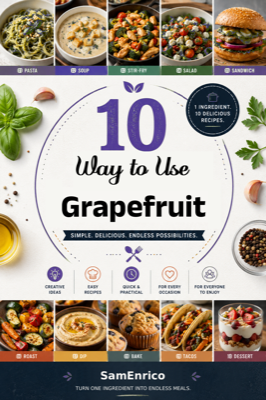 10 Ways to Use Grapefruit (Recipe Book)Nunes Camelia$11.99
 Internet Infrastructure Assessment GuideNunes Camelia$12.99
 How to Produce Adhesive RemoverNunes Camelia$11.99
 Regional Medical AdvisorNunes Camelia$11.99
You may also like
 Hong Kong Handover 1997Dunn Johnnie$11.99
 Zumba For Postnatal Recovery CourseNeal Christian$11.99
 Zumba for BeginnersLadner Nikia$11.99
 YouTube Comment Mining GuideHumes Pandora$12.99
 Worry Box MeditationCarlin Rudy$11.99
 Workplace Stress MeditationNguyen Lynn$11.99
 Workplace Stress and Sleep RepairHawley Ivory$11.99
 Workplace Perfectionism CureDelaney Jeffry$11.99
 Workplace Injustice Anger GuideWallen Isabelle$11.99
 Work Addiction and Burnout LinkGreenwood Ester$11.99
 Women in Yoga and WellnessBeattie Galina$11.99
 Women in Stand Up ComedyChun Evangeline$11.99