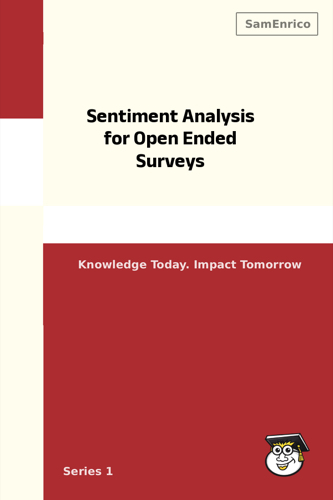
Sentiment Driven Response Guide eBook
Deploy sentiment analysis on incoming messages to
Deploy sentiment analysis on incoming messages to adjust tone, urgency, and suggested resolutions automatically based on customer emotion.
Formats
Free sample
Chapter 1: Ninety Seconds Too Fast--–- The email arrived at 9:42 AM on a Tuesday. By 9:43 AM, an automated system had read it, processed a refund, and sent a reply. Ninety seconds from fury to resolution. The customer service dashboard registered a victory. The customer registered a betrayal.The message had come from a small business owner named Marcus.
He had been a customer for four years. His subscription fee was 499annually,buthislifetimevalue—includingthethreecolleagueshehadreferredandtheadditionalserviceshehadpurchased—exceeded499 annually, but his lifetime value—including the three colleagues he had referred and the additional services he had purchased—exceeded 499annually,buthislifetimevalue—includingthethreecolleagueshehadreferredandtheadditionalserviceshehadpurchased—exceeded12,000. He was exactly the kind of customer every software company claims to treasure.His email was not polite. He had requested cancellation two weeks prior. The company had ignored the request.
The automatic renewal had charged his credit card that morning. He wrote in all-caps. He used words like "theft" and "fraud." He threatened to leave one-star reviews on every platform. He ended with a sentence that should have stopped any reader cold: "I will never trust your company again."The automated response arrived before Marcus could close his email window. It read:*"We're sorry to hear you're unhappy!
We have processed your refund of $499. It will appear in 5-7 business days. Thank you for being a valued customer! 😊"*The exclamation point. The smiley face.
The cheerful dismissal of genuine rage.Marcus did not feel heard. He felt mocked. He copied the response, pasted it into a Linked In post that began, "This is how this company treats a four-year customer," and watched as it was shared ten thousand times. He canceled his account. His three referrals canceled their accounts.
A prospective enterprise deal worth $50,000 fell through when the prospect's procurement team found the Linked In post during due diligence.All of this—the viral post, the lost referrals, the evaporated enterprise deal—traced back to ninety seconds. Not because the refund was wrong. The refund was correct. Not because the response was slow. The response was extraordinarily fast.
The disaster happened because the response was fast and emotionally tone-deaf.This is the speed trap. And almost every organization is caught in it.The False God of Average Handle Time For the past three decades, the customer support industry has worshipped a single metric above all others: Average Handle Time, or AHT. The logic appears unassailable on its surface. Shorter interactions mean more interactions per agent. More interactions per agent means lower labor costs.
Lower costs mean higher margins. Therefore, faster is better.This logic contains a hidden assumption that is almost never true: that all interactions are identical in their emotional weight, and that a faster resolution is always a better resolution.The reality is far messier. When a customer is angry, a fast response that fails to acknowledge their anger is not a good response. It is an accelerant. It pours gasoline on a fire that was already burning.
The customer who receives a cheerful, templated reply to a message filled with fury does not think, "How efficient." They think, "They didn't even read what I wrote."Let us examine the mathematics of this failure.Average Handle Time is a blunt instrument. It measures duration without measuring quality. A two-minute interaction that resolves a simple password reset is excellent. A two-minute interaction that tells an angry customer "we're sorry you feel that way" and ends the chat is disastrous. AHT treats these two outcomes as identical.
Worse, it actively punishes agents who take an extra thirty seconds to read carefully, acknowledge frustration, and offer a genuine apology.Consider the data. A study of over five million support interactions across fifty companies found that tickets resolved in under one minute had a 34 percent higher repeat contact rate than tickets resolved in two to three minutes. The fastest responses were the least effective. Speed predicted failure, not success.Another analysis examined customer lifetime value against response time. The relationship was not linear.
Customers who received very fast responses—under one minute—had lower lifetime value than customers who received responses in two to three minutes. The optimal response time for customer retention was not the fastest possible time. It was the time required to demonstrate understanding.A third study measured sentiment change. Researchers tracked customer sentiment at the beginning of an interaction and at the end. Fast responses improved sentiment only when the initial sentiment was neutral or mildly positive.
When the initial sentiment was angry or anxious, fast responses actually worsened sentiment. Customers became angrier after receiving a fast, tone-deaf response than they had been before receiving any response at all.The conclusion is inescapable: speed is not a universal good. Speed is a tool. Used correctly, it enhances efficiency. Used incorrectly, it destroys relationships.
The organizations that treat speed as the only goal are systematically destroying the relationships that keep them in business.Introducing Emotional Handle Time If Average Handle Time measures the wrong thing, what should we measure instead?This chapter proposes a new metric, one that will serve as the foundation for everything that follows in this book: Emotional Handle Time, or EHT.Emotional Handle Time is the duration required to resolve the feeling behind the issue, not merely the transaction itself. A transaction is a refund, a password reset, a shipping update, a billing correction. A feeling is anger, anxiety, confusion, urgency, loyalty, or neutrality. Resolving the transaction takes seconds. Resolving the feeling takes attention, tone awareness, and emotional accuracy.Here is the critical insight that separates a sentiment-driven organization from a speed-driven organization: A transaction is not resolved until the underlying emotion is resolved.You can issue a perfect refund in ten seconds.
If the customer still feels angry, the transaction is not actually finished. They will tell their friends. They will write that review. They will hesitate to buy from you again. The refund was a necessary condition for resolution, but it was not sufficient.
Emotional closure is the actual finish line.Let us return to Marcus. What would Emotional Handle Time have looked like in his case?His original message contained clear emotional signals: all-caps, accusations, negative absolutes ("never again"), and a threat of public shaming. A sentiment-aware system—of the kind we will build throughout this book—would have flagged this as "Angry" with high confidence. The Anger state, as we will explore in Chapter 2, requires an apologetic and soft tone, a short first-line apology, and a direct offer of action.An emotionally intelligent response—whether from a human agent or a properly designed AI—would have looked very different from the cheerful refund confirmation. It might have read:*"Marcus, I have read your message carefully, and I understand why you are furious.
You are right. This charge should never have happened. I have personally processed your full refund of $499. It will appear in 5-7 business days. I am also adding a permanent note to your account to ensure this never happens again.
Is there anything else I can do to make this right?"*No exclamation points. No smiley faces. No "valued customer" platitudes. Just acknowledgment, apology, action, and an open-ended offer.That response takes longer to write. It might take ninety seconds just to…
This is the end of the free sample. Get the eBook to keep going. Buy now
About this book
Details
- Author
- Mccullough Yetta
- Publisher
- SamEnrico
- Language
- English
- Genre
- Non-Fiction, AI Operator, Sentiment Analysis
- Released
- 2026-06-01
- Pages (approx.)
- 153
- Available as
- eBook, Audiobook

Read better in the ZLOADR app
Your eBooks on your phone or tablet. Sign in with your SamEnrico account and start reading.
More by Mccullough Yetta
 Diamond Vault Legend HistoryMccullough Yetta$11.99
 Imposter Syndrome for Product ManagersMccullough Yetta$11.99
 Contingent Beneficiary GuideMccullough Yetta$11.99
 Sustainable Therapy Training Supervisors GuideMccullough Yetta$11.99
 Learner Driver Patience GuideMccullough Yetta$11.99
 Peg System Memory WorkbookMccullough Yetta$11.99
 Nicotine Depression Link GuideMccullough Yetta$11.99
 Period Flu Remedies GuideMccullough Yetta$11.99
 Vitamin D Deficiency RLSMccullough Yetta$11.99
 The Last Telegram: The Untold Story of the Titanic’s Final HoursMccullough Yetta$11.99
 The Hermit King's Gambit: Yi Sun-sin and the Turtle Ships of MyeongnyangMccullough Yetta$11.99
 The Stone Spies: Gothic Architects of the DivineMccullough Yetta$11.99