Senior Creative Expression eBook
Use art writing or music to reinforce identity and
by Amato Lupe
Use art writing or music to reinforce identity and self worth.
Formats
Free sample
Chapter 1: The Vintage Brain...–- The first myth this book needs to dismantle sits quietly in a rocking chair. It is the belief that your best creative days are behind you. You have heard it whispered in the waiting room of your doctor’s office, implied in the greeting card that jokes about “senior moments,” and shouted silently in your own mind when you forgot a name or struggled to learn a new phone. The myth says this: aging is a slow leak of capacity. Creativity, like memory and quickness, drains out year by year until nothing is left but routine, repetition, and regret.
This chapter is going to prove that myth is not only wrong but backwards. The aging brain, as neuroscientists have discovered over the past two decades, is not a dimming bulb. It is a different kind of light entirely—one that is often better suited to creative expression than the blazing, scattered illumination of youth.Let us begin with a story that will serve as a landmark for everything that follows. In the late 1990s, a researcher named Gene Cohen at the George Washington University School of Medicine launched a study that would challenge decades of geriatric orthodoxy. He followed 300 older adults, ages sixty-five to ninety-five, who were participating in community-based arts programs.
Some painted. Some wrote poetry. Some joined choruses. Over three years, Cohen measured not only their artistic output but their physical health, mental health, and social engagement. The results were stunning.
The arts participants visited their doctors less often, used fewer prescription medications, reported lower rates of depression, and showed higher levels of physical activity than the control group. They also fell less. This last finding—reduced fall risk—surprised everyone until Cohen explained it: creative engagement improved balance and coordination because it required sustained attention and fine motor control. But the deeper implication was even more radical. Creativity was not a luxury for the old.
It was a protective factor, as essential as exercise or nutrition. And it worked, in part, because the aging brain was not merely coping with decline but actively reorganizing itself into a more creative organ.This chapter will introduce you to three neural mechanisms that make the vintage brain uniquely suited to artistic expression: bilaterality, patterning, and neuroplasticity. Each mechanism will be explained in plain language, grounded in real research, and paired with practical exercises. But here is the most important departure from other creativity books. You will notice that every mechanism is offered in two versions.
The first version is for readers who enjoy learning new skills, who find satisfaction in mastering a chord progression or memorizing a scale. The second version is for readers who experience anxiety when faced with skill demands, who have been told they are “not artistic,” or who simply want to play without pressure. You do not need to know which path you prefer before you begin. Simply read both options and notice where you feel relief or curiosity. That feeling is your compass.The Myth of the Rigid Brain Before we explore the vintage brain’s strengths, we must first bury a corpse.
That corpse is the doctrine of neurodevelopmental determinism, which held that the brain completed its growth in adolescence and then entered a long, slow decline. This doctrine dominated twentieth-century neuroscience. It taught medical students that adults could not recover from brain injuries, that learning new languages after forty was a fool’s errand, and that creativity was the province of the young because only young brains could make new connections. Every single one of these claims has been falsified.The turning point came in the 1990s, often called the “Decade of the Brain.” Researchers using functional magnetic resonance imaging (f MRI) watched the brains of older adults performing tasks that should have been impossible if the old doctrine were true. They saw new neural pathways lighting up.
They saw dormant regions being recruited for new jobs. They saw, in the words of one Nobel laureate, “the brain remodeling itself like a city rebuilding after a war.” The term for this remodeling is neuroplasticity, and it does not stop at any age. What changes is not the capacity for plasticity but the conditions that trigger it. Young brains are like wet cement—every impression leaves a mark. Old brains are like dried cement that can be carved.
It takes more effort, more intention, and more repetition, but the carving can produce shapes that are far more intricate and meaningful than the accidental footprints of youth.Consider the case of Dr. Mary Strother, a psychiatrist who retired at seventy-two after forty years of practice. She had never painted. She had never drawn. She had, in fact, told herself a story for seven decades that she was “the least artistic person” she knew.
Three months into retirement, she found herself depressed. Her identity as a healer had been stripped away. Her patients no longer called. Her office was now a guest bedroom. On the advice of a friend, she signed up for a beginning watercolor class at a local senior center.
The first session was a disaster. She could not hold the brush without trembling. Her colors turned to mud. The instructor, a patient young woman named Elena, asked Mary to close her eyes and simply move the brush in circles. No picture.
No goal. Just circles. Mary did this for fifteen minutes. When she opened her eyes, she saw not a painting but a record of her own hand moving through space. Something shifted.
Over the next six months, Mary painted every day. Her tremors did not disappear, but she learned to paint with them, incorporating the wobble into the texture of tree bark and the surface of water. At seventy-four, she had her first solo exhibition in a small gallery. The paintings sold out. When asked how this was possible, Mary said, “I didn’t learn to paint.
I learned that my brain had been waiting for permission.”Mary’s story illustrates the three mechanisms we will now explore in depth. Her brain integrated emotional wisdom with technical experimentation (bilaterality). It recognized patterns in her accidental marks and turned them into intentional compositions (patterning). And it built entirely new neural connections in response to sustained practice (neuroplasticity). None of these mechanisms required her to be young.
All of them required her to start.Bilaterality: The Integrated Mind The young brain is a specialist. It assigns tasks to the left hemisphere (logic, language, sequence) or the right hemisphere (intuition, spatial awareness, emotion) and largely keeps them separate. This specialization is efficient for learning rules, passing tests, and performing routine tasks. But it is not optimal for creativity. Creativity requires the constant shuttling of information between modes of thought.
It requires seeing the logical structure of a problem and the emotional weight of a solution simultaneously. It requires knowing when to follow rules and when to break them.The aging brain, by contrast, becomes a generalist. As the corpus callosum—the bridge between hemispheres—thickens with myelination (a process that continues into the seventies), the two sides of the brain communicate more freely. Researchers at the University of California, Berkeley, measured this directly.…
This is the end of the free sample. Get the eBook to keep going. Buy now
About this book
Details
- Author
- Amato Lupe
- Publisher
- SamEnrico
- Language
- English
- Genre
- Non-Fiction, Self-Help, Creative Aging
- Released
- 2026-06-07
- Pages (approx.)
- 107
- Available as
- eBook, Audiobook

Read better in the ZLOADR app
Your eBooks on your phone or tablet. Sign in with your SamEnrico account and start reading.
More by Amato Lupe
 The Volunteer Who VanishedAmato Lupe$11.99
 Loneliness Animal Shelter GuideAmato Lupe$11.99
 Mediation Techniques GuideAmato Lupe$11.99
 Recurring Dreams in Children GuideAmato Lupe$11.99
 HR Tech Growth Capital GuideAmato Lupe$11.99
 Recovery from Leadership BurnoutAmato Lupe$11.99
 Driving Anxiety TranceAmato Lupe$11.99
 Inside The Diamond ClubAmato Lupe$11.99
 Silent Witness: The Trial of Jean-Gaspard Deburau and the Birth of Modern MimeAmato Lupe$11.99
 The Frozen Silk Road: How a Forgotten Explorer Mapped Antarctica's Hidden SecretsAmato Lupe$11.99
 The Container King: How One Man Built a Global Empire on Steel BoxesAmato Lupe$11.99
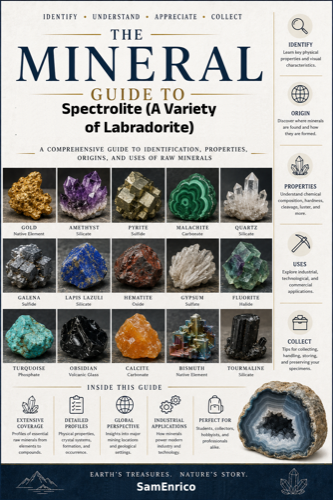 The Mineral Guide to Spectrolite (A Variety of Labradorite)Amato Lupe$11.99