
Scientist Lab Time Blocking Audiobook
Schedules experiments, analysis, and paper writing
Schedules experiments, analysis, and paper writing.
Formats
Free sample
Chapter 1: The Waiting Loop--–- The博士后 stares at the timer on her phone. Fifteen minutes left on the gel run. She opens her laptop – she’ll just answer a few emails, maybe draft two sentences of the discussion section. The timer beeps. She hits snooze, finishes the email.
Another timer beeps – the centrifuge. She runs across the lab. By 4 PM, she has run seven different experiments, answered fourteen emails, written zero complete sentences, and cannot remember a single thing she did before lunch. She feels exhausted, busy, and utterly unproductive.This is not a failure of willpower. This is not procrastination.
This is a structural problem that the scientist has been told to solve with generic productivity advice – “just block your time” – that was never designed for the chaotic, waiting-filled, mode-switching reality of laboratory research. And it is costing her ten to twenty hours every single week.Welcome to the Waiting Loop.THE FUNDAMENTAL MISMATCHMost time management systems assume a linear workday. You sit at a desk. You have a list of tasks. You work on one task until it is complete, then you move to the next.
Interruptions are rare and can be scheduled around. This assumption is so deeply embedded in productivity culture that even scientists, who should know better, try to force their work into this mold.But laboratory research is not linear. It is cyclical, fragmented, and governed by machines, incubation periods, and biological timescales that have nothing to do with your calendar.Consider a typical three-hour experiment. You spend fifteen minutes setting up. Then you wait twenty minutes for a centrifuge.
Then ten minutes of active work. Then a ninety-minute incubation where you must check the temperature every fifteen minutes. Then thirty minutes of data collection. The math: forty-five minutes of hands-on work, one hundred thirty-five minutes of waiting.Conventional time blocking says: during those one hundred thirty-five minutes of waiting, do something else. Write an email.
Draft a paragraph. Run a quick analysis. This is exactly what the postdoc in our opening example did. And it failed spectacularly.Why? Because every time the timer beeps, you are interrupted.
And every interruption carries a cost that most scientists dramatically underestimate.THE COGNITIVE SWITCHING PENALTYNeuroscience research on task switching has been replicated across dozens of studies, and the findings are consistent: switching from one cognitive task to another costs time and accuracy. But the laboratory version of…
This is the end of the free sample. Get the Audiobook to keep going. Buy now
About this book
Details
- Author
- Avalos Alesha
- Publisher
- SamEnrico
- Language
- English
- Genre
- Non-Fiction, Self-Help, Science
- Released
- 2026-06-09
- Pages (approx.)
- 130
- Available as
- eBook, Audiobook

Listen in the VoxFlicks app
Audiobooks and audio dramas wherever you go. Sign in with your SamEnrico account and press play.
More by Avalos Alesha
 Ballistics Trajectory ReconstructionAvalos Alesha$11.99
 The Startup Retirement PlanAvalos Alesha$11.99
 Meeting Block SchedulingAvalos Alesha$11.99
 Logistics and Supply Chain TalentAvalos Alesha$11.99
 Imposter In Leadership GuideAvalos Alesha$11.99
 Deep Work AccountabilityAvalos Alesha$11.99
 Daytime vs Nighttime ListeningAvalos Alesha$11.99
 The Last Whale Song: A Symphony of ExtinctionAvalos Alesha$11.99
 The Tide of Destiny: How the Portuguese Masters of the Seas Unlocked the WorldAvalos Alesha$11.99
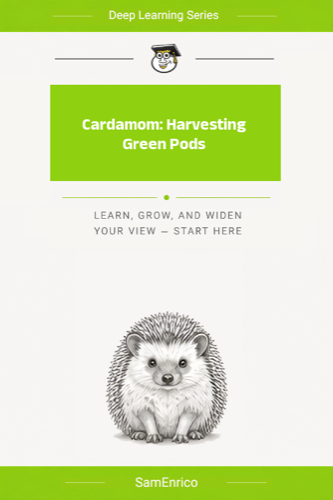 Cardamom: Harvesting Green PodsAvalos Alesha$11.99
 Cooperatives and Donor Funding GuideAvalos Alesha$12.99
 Thai Stock Option Withholding for EmployersAvalos Alesha$12.99
You may also like
 TM Benefits Science GuideOsborn Amina$11.99
 Workplace Stress Reduction for ScientistsMayes Dede$11.99
 Legacy for ScientistsMojica Devin$11.99
 The Science Communication TalkEddy Cathrine$11.99
 Scientific Pattern RecognitionSchindler Royce$11.99
 Public Speaking for ScientistsMesser Deidra$11.99
 Imposter Syndrome for ScientistsTurnbull Tyesha$11.99
 Dream Journaling for ScientistsPurnell Pearlie$11.99
 Creative Habits for ScientistsSykes Gregory$11.99
 Weekly Review for Scientists ManualTurley Digna$11.99
 The Science Student Memory GuideHam Kimberley$11.99
 Mindfulness for SkepticsReeder Mario$11.99