
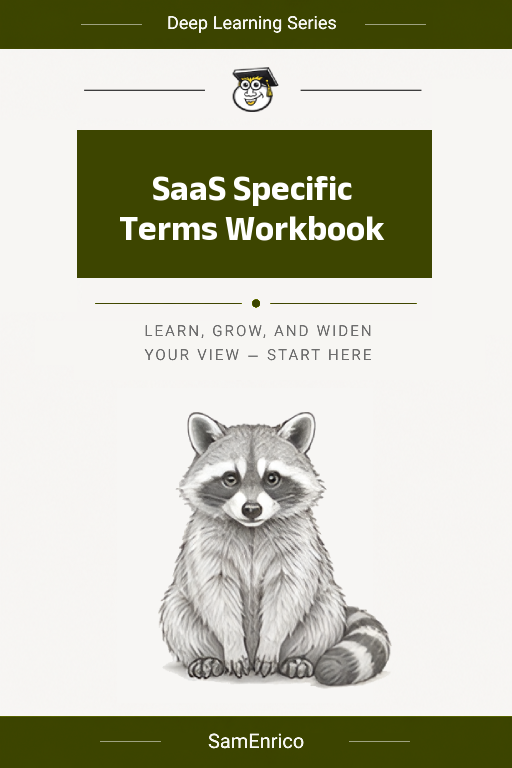
Non-FictionFirst 30 DaysSaaS Law
SaaS Specific Terms Workbook eBook
Draft terms for software as a service including up
Draft terms for software as a service including uptime, support, and feature roadmaps. Address custom instances, data portability, and professional services.
Formats
Free sample
Chapter 1: Drawing the Box...--–- Every Saa S disaster I have ever witnessed began with the same six words: "That was supposed to be included." The customer says it with conviction. The vendor says it with disbelief. And the contract—the one document that was supposed to prevent exactly this moment—sits on the table, its scope section so ambiguous that both sides can point to it and claim victory.I once mediated a dispute between a fast-growing logistics startup and its Saa S vendor over a feature called "real-time route optimization." The vendor had built this feature for a different customer, a multinational shipping company that paid three million dollars annually. The startup, which paid forty thousand dollars annually, demanded access to the same feature. Their contract said the service included "all standard route optimization capabilities." The vendor argued that real-time optimization was a premium add-on, not standard.
The startup argued that "all" meant all. The case settled for an amount that exceeded the startup's annual revenue. No one won. Everyone lost. And the entire fight could have been avoided with a scope section that drew a box around the service instead of leaving it open to interpretation.This chapter is your blueprint for drawing that box.
You will learn to define your Saa S service with surgical precision, distinguishing between what is included, what is explicitly excluded, and what sits in the gray area that lawyers bill by the hour to litigate. You will master the three deployment models—multi-tenant, virtual private instance, and full custom instance—and you will develop a checklist that tells you, before you ever sign a deal, whether a customer's demands are legitimate or performative. You will draft an Acceptable Use Policy that gives you the right to stop abuse without declaring war. And you will build a change control process that turns scope expansion requests from disputes into revenue opportunities.But first, we need to talk about the single most dangerous word in Saa S contracting.The Most Dangerous Word The word is "including." It appears in nearly every scope section. It seems harmless.
It is not.When you write "the service includes modules A, B, and C, including module D," a court will read that list as illustrative, not exhaustive. The word "including" suggests that other, unlisted modules might also be included. This is the opposite of what you want. You want a closed box. You want the customer to know, with absolute certainty, that if a feature is not listed, it is not included.Replace "including" with "only" or "solely." Write "the service includes only the modules listed in Exhibit A." Write "the service consists solely of the features described in Section 1.2." Write "no other features, functions, or capabilities are included." These words are not aggressive.
They are clear. And clarity is the highest form of customer service in contracting.Let me show you the difference. A bad scope section reads: "The Service includes dashboard reporting, user management, and data export, including API access for integration." A good scope section reads: "The Service consists solely of the features listed in Exhibit A. Exhibit A includes dashboard reporting, user management, data export, and API access. No other features, functions, modules, or capabilities are included unless added by a separately executed Statement of Work."The bad version invites argument about what else might be included.
The good version shuts the door. Your job is to write the good version.The Three Deployment Models: Know What You Are Selling Before you can define scope, you must understand the infrastructure on which your service runs. Saa S is not one architectural pattern. It exists on a spectrum from fully shared to fully dedicated. Each model has different legal implications, different pricing structures, and different scope definitions.Multi-Tenant: The Default, The Standard, The Workhorse Multi-tenant architecture means a single instance of your software serves all customers.
Your code runs once. Your database separates customer data by tenant ID. Your infrastructure scales uniformly. This is how Salesforce, Shopify, Zoom, and virtually every successful Saa S company operates. The advantages are enormous: one codebase to maintain, one security model to audit, one update pipeline to manage, and unit economics that improve with every new customer.The legal implication is equally important.
In a multi-tenant environment, you cannot offer custom code for one customer without deploying it to everyone—or maintaining a separate fork of your codebase, which defeats the purpose of multi-tenant. Your scope definition for multi-tenant should state explicitly that the service is provided on a shared infrastructure basis, that all customers receive the same core functionality, and that no custom development is included unless separately contracted.Here is the language:Multi-Tenant Deployment. The Service is provided on a multi-tenant, shared infrastructure basis. All customers of the Service have access to the same core features, functions, and modules. Vendor does not offer custom code modifications, feature forks, or customer-specific versions of the Service in a multi-tenant environment.
Any request for custom development must be implemented as a separately hosted virtual private instance or custom instance, subject to additional fees and a separate SOW.Virtual Private Instance: The Middle Ground Some customers need more isolation than multi-tenant provides but cannot justify the expense of a full custom instance. They might require dedicated compute resources for performance predictability, separate network segmentation for compliance with frameworks like SOC 2 or HIPAA, or the ability to schedule maintenance windows on their own timeline.A virtual private instance (VPI)—sometimes called a "dedicated tenant," "isolated instance," or "single-tenant logical environment"—gives the customer a logically separate environment running on shared hardware. Your code is the same as multi-tenant. Your updates deploy on the same schedule. But the customer gets its own database server, its own application containers, and its own network policies.
The customer cannot see other tenants' data, and other tenants cannot see theirs. The underlying physical infrastructure—servers, storage arrays, hypervisors—remains shared.From a legal perspective, a VPI sits between standard Saa S and a full custom instance. The scope definition should make clear that while the environment is dedicated, the software itself is not customized. The customer receives the same features, updates, and API as every other customer, just running in its own isolated bubble.Here is the language:Virtual Private Instance. If Customer purchases a Virtual Private Instance (VPI) as specified in the Order Form, Vendor shall provide a logically isolated environment within the multi-tenant infrastructure.
VPI includes: (a) a dedicated database schema or separate database instance; (b) dedicated compute resources (CPU and memory) allocated to Customer's environment; (c) network isolation such that Customer's data is inaccessible to other tenants; and (d) the same software version and update schedule as the standard multi-tenant Service. VPI does not include: (i) dedicated physical hardware; (ii) custom code, feature modifications, or customer-specific software versions; (iii) dedicated support personnel; or (iv) control over update timing beyond the standard maintenance windows described in Section [X]. Vendor reserves the right to migrate the VPI to different physical hardware as needed for performance or maintenance, provided that logical isolation is maintained throughout any migration.Custom Instance: The Exception, The Expensive One, The Last Resort…
This is the end of the free sample. Get the eBook to keep going. Buy now
About this book
Details
- Author
- Fishman Wiley
- Publisher
- SamEnrico
- Language
- English
- Genre
- Non-Fiction, First 30 Days, SaaS Law
- Released
- 2026-05-30
- Pages (approx.)
- 141
- Available as
- eBook, Audiobook

Read better in the ZLOADR app
Your eBooks on your phone or tablet. Sign in with your SamEnrico account and start reading.
More by Fishman Wiley
 Tobacco Cessation Strategies That WorkFishman Wiley$11.99
 Dialectical Behavior Therapy SkillsFishman Wiley$11.99
 Choice Overload FixFishman Wiley$11.99
 Workplace Stress and Toxic CultureFishman Wiley$11.99
 The Blood Covenant: The Madness of the Maji-Maji ProphetsFishman Wiley$11.99
 Advanced Analytics for Marketing StrategyFishman Wiley$11.99
 How to Produce Art and Collectible ItemsFishman Wiley$11.99
 A Beginners Guide to Knattleikr (Volume 1)Fishman Wiley$11.99
You may also like
 Hong Kong Handover 1997Dunn Johnnie$11.99
 Zumba For Postnatal Recovery CourseNeal Christian$11.99
 Zumba for BeginnersLadner Nikia$11.99
 YouTube Comment Mining GuideHumes Pandora$12.99
 Worry Box MeditationCarlin Rudy$11.99
 Workplace Stress MeditationNguyen Lynn$11.99
 Workplace Stress and Sleep RepairHawley Ivory$11.99
 Workplace Perfectionism CureDelaney Jeffry$11.99
 Workplace Injustice Anger GuideWallen Isabelle$11.99
 Work Addiction and Burnout LinkGreenwood Ester$11.99
 Women in Yoga and WellnessBeattie Galina$11.99
 Women in Stand Up ComedyChun Evangeline$11.99