
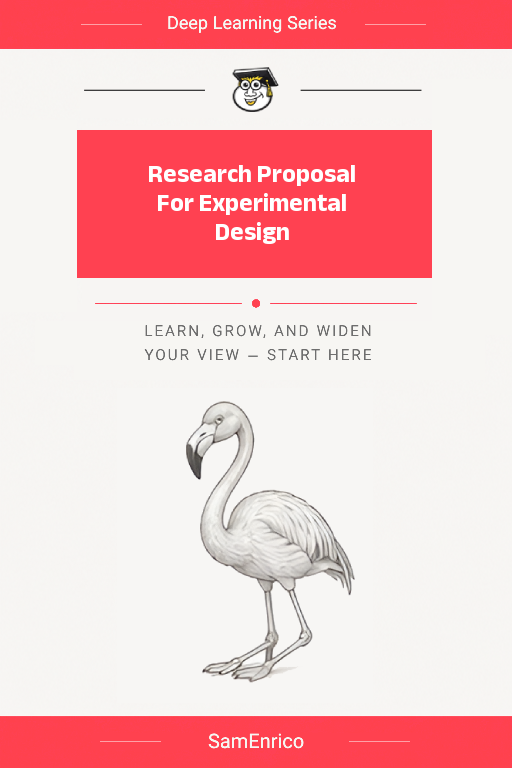
Research Proposal For Experimental Design
Detail randomization blinding and control conditio
by Mears Kaye
Detail randomization blinding and control conditions to show internal validity in STEM proposals.
Formats
About this book
Free sample
Chapter 1: The 92% Problem--Every year, tens of thousands of STEM researchers sit down to write a grant proposal. They have a brilliant idea. They have preliminary data. They have a well-equipped lab and a motivated team. They spend weeks crafting what they believe is a compelling narrative about their hypothesis, their methods, and the potential impact of their work.
They submit. And then, four to eight months later, they receive the rejection letter.The most common reason for that rejection is not what most researchers think. It is not a weak hypothesis. It is not insufficient preliminary data. It is not even a lack of innovation, though those are all valid reasons for rejection.
The most common reason—present in over ninety percent of unfunded proposals according to a 2022 analysis of NIH study section critiques—is a fatal flaw in the experimental design itself. Specifically, a flaw in one of three areas: control conditions, randomization, or blinding.Let me say that again, because it is the single most important sentence in this book. Reviewers do not reject ideas. Reviewers reject designs that cannot support causal conclusions. Your brilliant hypothesis about the relationship between two variables is worthless if your Methods section fails to convince a skeptical reviewer that you can actually test that hypothesis without bias or confounding.I have watched this happen hundreds of times.
A postdoctoral fellow in neurobiology spends six months collecting pilot data showing that a new compound reduces inflammation in a mouse model. The effect looks large. The preliminary data are beautiful. She writes a proposal for a full-scale study, submits to the NIH, and waits. The summary statement comes back.
The reviewers loved the idea. They thought the preliminary data were compelling. They agreed the research was important. But they gave the proposal a low priority score because of a single sentence in the Methods section: "Mice will be randomly assigned to treatment or control groups."That is all it said. No description of how the random sequence was generated.
No description of allocation concealment. No description of block size or stratification. The reviewers concluded—correctly—that the investigator did not understand…
This is the end of the free sample. Get the eBook to keep going. Buy now
Contents
- Chapter 1
- Chapter 2
- Chapter 3
- Chapter 4
- Chapter 5
- Chapter 6
- Chapter 7
- Chapter 8
- Chapter 9
- Chapter 10
- Chapter 11
- Chapter 12
Details
- Author
- Mears Kaye
- Publisher
- SamEnrico
- Language
- English
- Genre
- research, Student's Shortcut
- Released
- 2026-05-29
- Pages (approx.)
- 136
- Available as
- eBook, Audiobook

Read better in the ZLOADR app
Your eBooks on your phone or tablet. Sign in with your SamEnrico account and start reading.
More by Mears Kaye
 The River Letting GoMears Kaye$11.99
 Kinesthetic Trance InductionMears Kaye$11.99
 Senior Tech InvestmentMears Kaye$11.99
 OCD AffirmationsMears Kaye$11.99
 Signs From Deceased PetsMears Kaye$11.99
 Walsh MartyMears Kaye$11.99
 The IBS Elimination DietMears Kaye$11.99
 Commercial Pilot Stress ManualMears Kaye$11.99
 Validation During AngerMears Kaye$11.99
 The Silk and the Storm: How a Forgotten Empress Changed the WorldMears Kaye$11.99
 The Phantom of the Opera House: The Untold Story of the Paris FireMears Kaye$11.99
 The Bone Collector: The Legend of the Adze in Ghanaian FolkloreMears Kaye$11.99
You may also like
 Scientific Research On TM GuideMartens Nathanial$11.99
 Research Proposal Methodology Section MasteryPauley Debroah$11.99
 Research Proposal Appendix CompilationRaines Tyisha$11.99
 Academic Researcher Distraction GuideFord Virgil$11.99
 TM Research and ScienceCovert Nicki$11.99
 Social Anxiety Research ReviewRoberge Cole$11.99
 Research Proposal Significance Section GuideBock Tory$12.99
 Research Proposal Reviewer PsychologyLugo Tawanda$11.99
 Research Proposal Research Questions DesignLara Robbi$11.99
 Research Proposal References and CitationsPatten Shanice$11.99
 Research Proposal Mixed Methods DesignCameron Omega$11.99
 Research Proposal Data Management PlanAnderson Roberto$12.99