
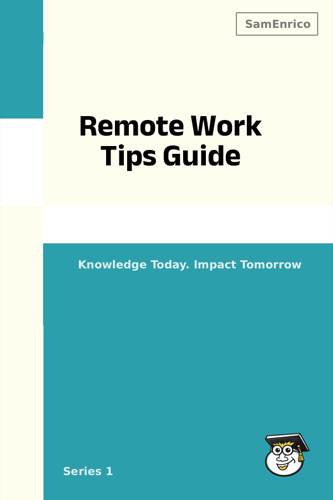
Free sample
Chapter 1: The Great Office Illusion--–- When you picture the perfect employee, what do you see? Most people describe someone at a desk—sitting upright, typing furiously, arriving early, leaving late. Notice what isn't in that image: results, creativity, problem-solving, or any actual measure of value. You see presence. You see proximity.
You see the theater of work, not work itself.This book is going to challenge something you have likely believed your entire professional life: that being seen at work is the same as doing good work. It is not. And the sooner you unlearn this illusion, the more successful, sane, and fulfilled you will become as a remote worker.Let me tell you something that the office real estate industry does not want you to know. The modern open-plan office—that sprawling landscape of shared tables, rolling chairs, and desperate attempts at collaboration—was never designed for productivity. It was designed for cost efficiency.
The first open-plan offices appeared not because research showed they improved work, but because companies realized they could pack more people into less square footage. The walls came down. The cubicles shrank. And somewhere along the way, we convinced ourselves that this chaotic, noisy, interruption-filled environment was somehow the natural habitat of good work.The data tells a very different story. A comprehensive study by researchers at Harvard and Columbia found that open offices reduce face-to-face collaboration by roughly seventy percent.
Let that sink in. The very thing open offices were supposed to encourage—people talking to each other—actually decreased when the walls came down. Why? Because human beings are not machines. When you put people in a fishbowl with constant noise, visual distraction, and the feeling of being watched, they do not collaborate more.
They retreat. They put on headphones. They hide behind monitors. They learn to make themselves small.The office, as it turns out, is one of the greatest productivity drains ever invented.The Commute Tax Before we go further, let me ask you something. How much time do you spend commuting each week?
If you are like the average American worker, the answer is somewhere between four and six hours. That is not a small number. That is half a workday, every single week, spent sitting in traffic, standing on trains, or staring at the back of someone else's head. Over the course of a year, that is two…
This is the end of the free sample. Get the Audiobook to keep going. Buy now
About this book
Details
- Author
- Glory Sharkey
- Publisher
- SamEnrico
- Language
- English
- Genre
- Non-Fiction, Self-Help / Tips
- Released
- 2026-06-08
- Pages (approx.)
- 115
- Available as
- eBook, Audiobook

Listen in the VoxFlicks app
Audiobooks and audio dramas wherever you go. Sign in with your SamEnrico account and press play.
More by Glory Sharkey
 Netflix Autoplay AddictionGlory Sharkey$11.99
 Unanswered QuestionsGlory Sharkey$11.99
 Dog Body Language GuideGlory Sharkey$11.99
 Whoop Strap GuideGlory Sharkey$11.99
 Internet Bill Stress GuideGlory Sharkey$11.99
 Body Scan Anxiety ReducerGlory Sharkey$11.99
 Unidentified Remains Isotope AnalysisGlory Sharkey$11.99
 The Last Queen of AtlantisGlory Sharkey$11.99
 The Healers of the Nile: Secrets of the Ancient Egyptian SurgeonsGlory Sharkey$11.99
 Growing CalamusGlory Sharkey$11.99
 How to Become a Pressure Sealer-and-testerGlory Sharkey$11.99
 US Sales Tax for Foreign LLCsGlory Sharkey$12.99
You may also like
 Scripting TipsGass Lynnette$11.99
 Difficult Conversation TipsButts Antonetta$11.99
 Pattern Recognition TipsMatos Melonie$11.99
 Parent Time Tips GuideHardesty Asuncion$11.99
 Nightmare Tips GuideGates Rossana$11.99
 Anticipatory Grief TipsHamilton Kristy$11.99
 Resilience Tips GuideAvalos Lovella$11.99
 Memory Palace TipsCambell Julianna$11.99Memory Palace TipsCambell Julianna$11.99
 Pain Meditation TipsLiles Hassie$11.99
 Interruption Tips GuideTobin Hobert$11.99
 Habit Tips GuideLister Lekisha$11.99