
Non-FictionBusiness BriefGlobal Talent GuideHR
Remote Onboarding Guide eBook
Integrate new hires effectively without in person
Integrate new hires effectively without in person orientation.
Formats
Free sample
Chapter 1: The Proximity Addiction--The email arrives at 8:47 AM on a Tuesday. Subject line: “Welcome to the team – Orientation Details.” Attached is a calendar invite for a 9 AM Zoom meeting on the new hire’s first day. The meeting is three hours long. The description reads: “HR Orientation + IT Setup + Benefits + Culture + Meet the Team.”This new hire, let’s call her Sarah, has just left a stable job. She has signed a lease in a new city based on this role.
She has told her friends and family about the exciting opportunity. She is motivated, curious, and slightly terrified.At 9 AM on Day 1, Sarah joins the Zoom link. There are forty-seven other faces in the gallery view. The HR generalist’s screen is frozen. The benefits link doesn’t work.
Someone named “Mike_T” types in the chat: “Can anyone hear me?” A minute later: “Never mind, it was my headset.”Sarah spends the next three hours in a state of cognitive paralysis. She learns that the company has five core values, but she cannot remember a single one. She learns that the PTO policy is “flexible,” but not what that means in practice. She learns that IT will “get to her laptop access by end of day.” By 12:30 PM, her head hurts. She closes her laptop, looks at her empty apartment, and thinks: “What have I done?”This is not an outlier.
This is the standard.And it is failing, catastrophically.The $37 Billion Blind Spot Let us start with a number that should alarm every executive, every team lead, and every HR professional reading this book: approximately twenty percent of new hires leave within their first ninety days. Not because the job was misrepresented. Not because the salary was wrong. Not because they lacked the skills. They leave because the onboarding experience was so disorienting, so isolating, and so demoralizing that they decided the risk of leaving was lower than the cost of staying.Think about what that means.
One in five. In a company that hires one hundred people a year, that is twenty people who walk out the door before they have even received their second paycheck. The cost of replacing a single employee ranges from fifty percent to two hundred percent of their annual salary, depending on role and seniority. For a mid-level individual contributor earning eighty thousand dollars, losing that person in the first ninety days costs the organization somewhere between forty thousand and one hundred sixty thousand dollars, factoring in recruitment, interviewing, training, and lost productivity.Twenty such departures cost between eight hundred thousand and three point two million dollars. Per year.
And that is just the direct cost. The indirect costs—low morale among remaining team members, overwork, missed deadlines, compromised quality—are nearly impossible to quantify but absolutely real.This is the cost of doing onboarding wrong. And most organizations are doing it catastrophically wrong.But the problem is worse than money. The problem is loneliness. A 2023 study of remote workers found that twenty-five percent report feeling lonely on a daily basis.
Not occasionally. Not when something goes wrong. Daily. Loneliness is not a soft emotional problem; it is a hard productivity problem. Lonely employees are less creative, less collaborative, less willing to take risks, and more likely to leave.
Loneliness is the canary in the coal mine of remote work, and most onboarding processes not only ignore the canary—they actively gaslight it.The core argument of this chapter, and indeed this entire book, is that the traditional onboarding model is built on a hidden assumption that no longer holds true. That assumption is proximity.The Proximity Addiction Defined What is the proximity addiction? It is the unspoken belief that people learn culture through osmosis, that they build relationships through hallway encounters, that they absorb processes by sitting next to someone who already knows them. In a physical office, this belief is not entirely unreasonable. When you sit in the same room as a colleague for eight hours a day, you do learn things without formal instruction.
You do overhear customer calls and internal debates. You do pick up the rhythm of the team—when people are stressed, when they are joking, when they are open to interruption.But the proximity addiction becomes a fatal flaw the moment the office disappears. When everyone is remote, there is no osmosis. There are no hallways. There is no accidental learning.
Every piece of information must be deliberately transmitted. Every relationship must be deliberately built. Every process must be deliberately documented.Here is the uncomfortable truth that most organizations refuse to accept: the physical office was never a good onboarding tool. It was simply a cheap one. It offloaded the work of integration onto the ambient environment.
If a new hire failed to learn something, the organization could quietly blame the new hire. “They just didn’t pick it up.” “They weren’t a culture fit.” “They didn’t ask enough questions.”In a remote environment, this excuse evaporates. There is no ambient environment. There is no “just pick it up.” There is only the system you have deliberately built. If a new hire fails to learn something, it is because your system failed to teach it.
If a new hire leaves in the first ninety days, it is because your onboarding process failed to integrate them.This is harsh. It is also liberating. Because it means you are not at the mercy of “vibes” or “chemistry” or “fit.” You are at the mercy of systems. And systems can be designed, measured, and improved.The Asynchronous-First Mindset Let me introduce the single most important concept in this book. I will define it once, here, and then we will spend the remaining eleven chapters showing you how to implement it.
The concept is the asynchronous-first mindset.Here is the definition: Information transfer happens asynchronously, on the new hire’s own schedule, through self-paced, documented materials. Live, synchronous time is reserved exclusively for relationship building, complex problem-solving, and moments of human connection.Read that again. It is the beating heart of everything that follows.Most organizations do the exact opposite. They cram information into live meetings—three-hour Zoom orientations, hour-long benefits webinars, endless “intro to product” slide decks delivered by exhausted presenters. Then they leave relationship building to chance.
“We’ll have a virtual coffee chat sometime.” “You’ll meet your team gradually.”This is backwards. Information does not require two people to be online at the same time. A recorded video works just as well as a live presentation, often better because the new hire can pause, rewind, and watch at one point five times speed. A written document works better than a spoken explanation because the new hire can search, bookmark, and return to it weeks later when they actually need the information.But relationships? Relationships require real-time interaction.
You cannot record a friendship. You cannot watch a video of a team lunch and feel like you belonged. Belonging requires presence, even if that presence is mediated by a screen.The asynchronous-first mindset recognizes this distinction and ruthlessly optimizes for it. Every piece of information—every policy, every process, every product specification—is documented, recorded, and made…
This is the end of the free sample. Get the eBook to keep going. Buy now
About this book
Details
- Author
- Ketchum Milagros
- Publisher
- SamEnrico
- Language
- English
- Genre
- Non-Fiction, Business Brief, Global Talent Guide, HR
- Released
- 2026-06-11
- Pages (approx.)
- 142
- Available as
- eBook, Audiobook

Read better in the ZLOADR app
Your eBooks on your phone or tablet. Sign in with your SamEnrico account and start reading.
More by Ketchum Milagros
 The Turkish Affordable Master GuideKetchum Milagros$11.99
 Wellue O2 Ring GuideKetchum Milagros$11.99
 Endometriosis and SexualityKetchum Milagros$11.99
 Assertiveness In Medical Appointments WorkbookKetchum Milagros$11.99
 Saudi Arabian Green GuideKetchum Milagros$11.99
 The Bold Voyages of Henry Hudson: Charting the UnknownKetchum Milagros$11.99
 Logistics AttendantKetchum Milagros$11.99
 How to Become a Lens ExaminerKetchum Milagros$11.99
 Understanding Retrograde AmnesiaKetchum Milagros$17.99
 Cell Phone and Internet GuideKetchum Milagros$12.99
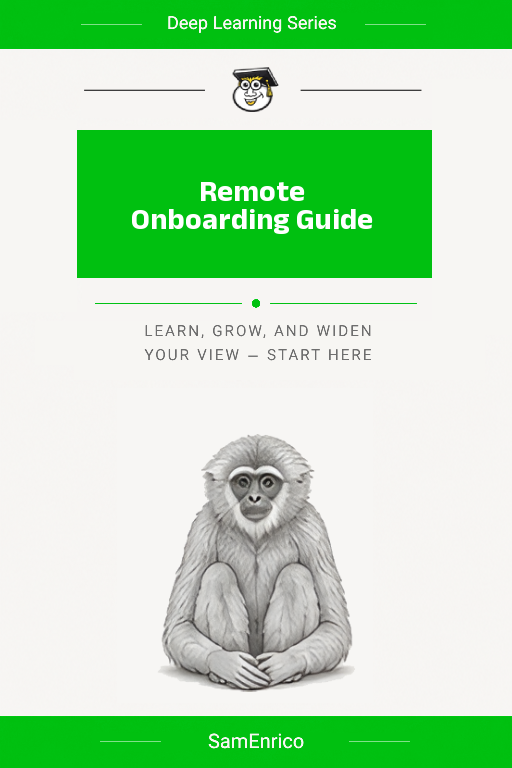 Remote Onboarding GuideKetchum Milagros$12.99
You may also like
 Hong Kong Handover 1997Dunn Johnnie$11.99
 Zumba For Postnatal Recovery CourseNeal Christian$11.99
 Zumba for BeginnersLadner Nikia$11.99
 YouTube Comment Mining GuideHumes Pandora$12.99
 Worry Box MeditationCarlin Rudy$11.99
 Workplace Stress MeditationNguyen Lynn$11.99
 Workplace Stress and Sleep RepairHawley Ivory$11.99
 Workplace Perfectionism CureDelaney Jeffry$11.99
 Workplace Injustice Anger GuideWallen Isabelle$11.99
 Work Addiction and Burnout LinkGreenwood Ester$11.99
 Women in Yoga and WellnessBeattie Galina$11.99
 Women in Stand Up ComedyChun Evangeline$11.99