
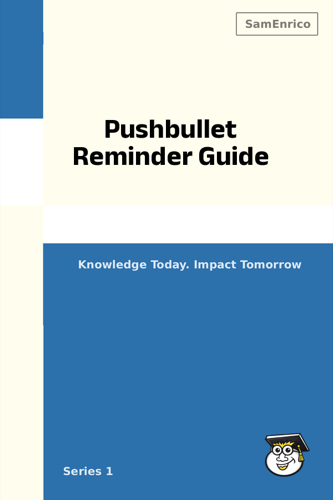
Free sample
Chapter 1: The Attention Trap--–- The ping arrives at 10:47 AM. You glance at your phone. It’s a reminder you set yesterday: “Call Dr. Simmons about prescription refill.” You tell yourself you’ll do it after you finish the email you’re writing. You swipe the notification away.
By 11:30 AM, the call has slipped your mind entirely. At 3:00 PM, you remember again—but now you’re in back-to-back meetings. You swipe again. At 7:00 PM, sitting on your couch, you see the reminder for the third time. This time, the pharmacy is closed.
You set a new reminder for tomorrow morning. The cycle repeats.This is not a failure of willpower. It is not a character flaw. It is not a sign that you are lazy, disorganized, or unmotivated. This is a failure of system design.
And it happens to everyone—not because we are broken, but because the tools we have been given to manage our attention were built for a world that no longer exists.Welcome to the Attention Trap.The Forgetting Curve: Why Your Brain Is Not a Hard Drive The German psychologist Hermann Ebbinghaus published a discovery in 1885 that should be tattooed on the forearm of every productivity author, time management coach, and software developer alive today. He called it the Forgetting Curve, and its implications are as brutal as they are simple.Ebbinghaus taught himself nonsense syllables—meaningless combinations of consonants and vowels like “ZOF” and “KAD”—and tested how long he could remember them. What he found was not a gradual decline in memory, but a catastrophic collapse. Within one hour of learning something new, the average person forgets 50% of it. Within 24 hours, that number climbs to 70%.
Within one week, without reinforcement, you will remember less than 10% of what you originally learned.Here is what this means for your daily life: every task, every idea, every commitment that exists only in your head has a half-life measured in minutes, not days. The meeting reminder you told yourself to remember at 10 AM will, with 70% probability, be forgotten by 10 AM tomorrow. The brilliant idea you had in the shower will, with 90% probability, evaporate before you dry off. The grocery list you mentally recited in the parking lot will, with near certainty, be incomplete by the time you reach the produce aisle.Your brain is not a hard drive. It was never designed to be one.
It was designed to hunt prey, avoid predators, and remember which berries made you sick. In the ancestral environment, information decayed slowly because there was less information. Today, you are exposed to more data in a single morning than a medieval peasant encountered in a lifetime. And yet you are still using the same biological hardware.The productivity industry has spent thirty years telling you to “write things down.” This is not wrong. But it is insufficient.
Writing things down is only the first step. The second step—the step almost everyone skips—is building a system that delivers the right information to the right place at the right time. And that is where almost every reminder system fails.The Myth of the Native Reminder App If you own a smartphone, you have a native reminder app. On i OS, it is called Reminders. On Android, it is called Tasks or Keep.
On both platforms, these apps share a common design philosophy: you type a task, you pick a time, you receive a notification at that time. This seems reasonable. It is also catastrophically flawed.The first problem is time-based rigidity. Life does not happen on a clock. You set a reminder for 3:00 PM to call a client, but at 3:00 PM you are in a meeting.
You swipe it away. You set a reminder for 8:00 AM to take out the trash, but at 8:00 AM you are rushing to get the kids to school. You swipe it away. Time-based reminders assume that your availability is predictable. It is not.
They assume that your attention at 3:00 PM will be the same as your attention at 9:00 AM. It is not. They assume that the urgency of a task is constant across all hours of the day. It is not.The second problem is context blindness. Your native reminder app does not know where you are.
It does not know what device you are using. It does not know whether you are driving, sleeping, or in a movie theater. It simply shouts into the void at the appointed hour, whether you are ready to listen or not. A reminder to buy milk is useless at 2:00 PM when you are at work. It is useful at 5:30 PM when you are walking into the grocery store.
But your phone cannot tell the difference.The third problem is ecosystem siloing. Apple Reminders works beautifully if you own an i Phone, an i Pad, and a Mac. It works terribly if you own an i Phone and a Windows PC. Google Tasks works well if you live inside the Google ecosystem. It works poorly if you use a mix of platforms.
The average knowledge worker today uses at least three devices across at least two operating systems. Your reminder system must work across all of them. Native apps do not.The fourth and most insidious problem is notification fatigue. Your native reminder app is not the only app on your phone. It competes for your attention with email, Slack, Whats App, Instagram, Twitter, Linked In, news alerts, weather alerts, calendar invitations, and the 47 other notifications you receive every single day.
In this environment, a gentle “ding” from your reminders app is background noise. You have been trained—literally conditioned—to dismiss notifications without reading them. Your brain has learned that 90% of notifications are irrelevant. Your native reminders are collateral damage.This is the Attention Trap: you need reminders to function, but the tools you have been given to create them are designed in ways that guarantee they will fail. You are not the problem.
The tools are.Cross-Device Chaos: The Hidden Tax of Switching Let us expand the scope of the problem beyond reminders. Consider a typical day in the life of a modern knowledge worker.You wake up and check your phone. You read three text messages, two emails, and a Slack notification. You get out of bed and open your laptop. The email you read on your phone is now also open on your laptop, but the Slack notification is not—you have to find it again.
You copy a link from a document on your laptop and want to send it to a colleague via SMS. To do this, you either email yourself the link (six steps), or you pick up your phone and manually type it (slow and error-prone), or you use a messaging app that syncs across devices (but your colleague does not use that app). You spend forty-five seconds solving a problem that should take three.Later, you are reading an article on your phone during lunch. You want to save it for later. You copy the link and email it to yourself.
You will never open that email. You know you will not open it. But you do it anyway because you have…
This is the end of the free sample. Get the eBook to keep going. Buy now
About this book
Details
- Author
- Jackson Maureen
- Publisher
- SamEnrico
- Language
- English
- Genre
- Non-Fiction, Self-Help / Cross Platform
- Released
- 2026-06-06
- Pages (approx.)
- 148
- Available as
- eBook, Audiobook

Read better in the ZLOADR app
Your eBooks on your phone or tablet. Sign in with your SamEnrico account and start reading.
More by Jackson Maureen
 Parent Death and Therapist SelectionJackson Maureen$11.99
 Study Mistakes GuideJackson Maureen$11.99
 The Circus Child SurvivorJackson Maureen$11.99
 Doctor Distraction Management GuideJackson Maureen$11.99
 The Quit Smoking Skin FixJackson Maureen$11.99
 Empathic Listening HandbookJackson Maureen$11.99
 Sponsorship VowsJackson Maureen$11.99
 EQ for Networking EventsJackson Maureen$11.99
 The Codebreaker’s Gambit: How a Math Genius Cracked the Enigma Before the WarJackson Maureen$11.99
 The Celestial Architects of Meroë: Unveiling the Secrets of the Kushite SkyJackson Maureen$11.99
 Ultimate Handbook Guide to Kawasaki : (Japan) Travel GuideJackson Maureen$11.99
 Smoke Odor Removal From OfficeJackson Maureen$12.99
You may also like
 Hong Kong Handover 1997Dunn Johnnie$11.99
 Zumba For Postnatal Recovery CourseNeal Christian$11.99
 Zumba for BeginnersLadner Nikia$11.99
 YouTube Comment Mining GuideHumes Pandora$12.99
 Worry Box MeditationCarlin Rudy$11.99
 Workplace Stress MeditationNguyen Lynn$11.99
 Workplace Stress and Sleep RepairHawley Ivory$11.99
 Workplace Perfectionism CureDelaney Jeffry$11.99
 Workplace Injustice Anger GuideWallen Isabelle$11.99
 Work Addiction and Burnout LinkGreenwood Ester$11.99
 Women in Yoga and WellnessBeattie Galina$11.99
 Women in Stand Up ComedyChun Evangeline$11.99