
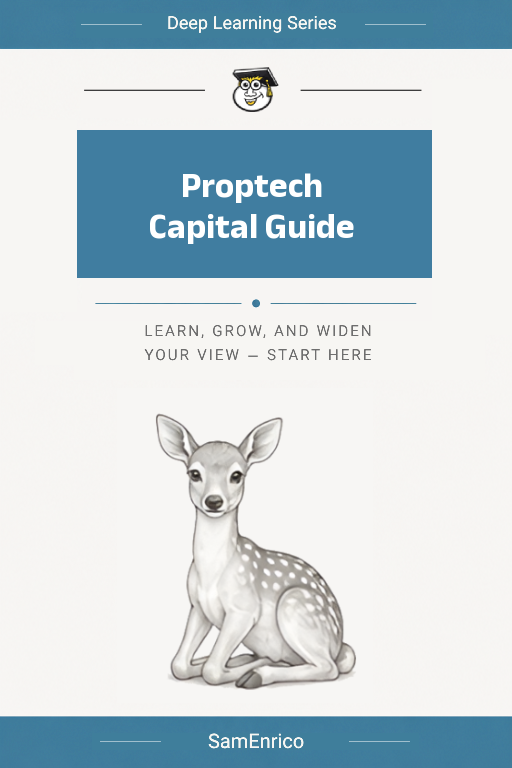
Non-FictionForecast & OutlookPropTech Finance
Proptech Capital Guide Audiobook
Discover property management software, digital mor
by Phan Carmine
Discover property management software, digital mortgages, and smart building platform investment.
Formats
Free sample
Chapter 1: The Fragmentation Dividend--–- In 2010, a mid-sized landlord in Phoenix named Barbara managed 1,200 apartment units across seven properties. Her toolkit consisted of a paper ledger, a fax machine for maintenance requests, a spreadsheet for rent rolls, and a local bank for mortgages. In 2026, that same portfolio would be managed by software that predicts tenant defaults before they happen, sensors that detect water leaks before they flood a unit, and algorithms that refinance debt without a single human underwriter. The physical buildings are nearly identical. The value of the enterprise is not.This is the central thesis of the Proptech Capital Guide: the greatest inefficiency in modern finance is not the stock market, not cryptocurrency, not private equity—it is the built world.
Real estate is the largest asset class on the planet, comprising an estimated $230 trillion in global value, yet it remains one of the least digitized industries relative to its size. A typical commercial real estate transaction still involves PDFs sent via email, signatures collected through docusign and then printed and scanned, underwriting models built in Excel with manual data entry, and due diligence that requires physical file boxes. The average multifamily property manager still uses three disconnected software systems that do not talk to each other. The average mortgage origination still requires fifty-seven days from application to closing.But here is the paradox that creates opportunity: the very fragmentation that makes real estate inefficient is the same fragmentation that generates alpha for investors who understand how to stitch it back together. This book is about that stitching.
It is about discovering value in property management software that automates the mundane, digital mortgages that rewire the flow of capital, and smart building platforms that turn inert concrete into responsive, data-generating assets. It is about moving from "location, location, location" to "integration, integration, integration."The $230 Trillion Question Why does the world's largest asset class remain so stubbornly analog? The answer lies in three structural features of real estate that make it uniquely resistant to disruption—and uniquely ripe for it.First, ownership fragmentation. Unlike the stock market, where a handful of exchanges centralize trading, real estate is owned by millions of individual landlords, small family offices, regional developers, municipal housing authorities, and a small number of large institutions. This fragmentation means no single entity can mandate a technology standard.
A landlord with ten units has no incentive to invest in smart building sensors. A landlord with ten thousand units…
This is the end of the free sample. Get the Audiobook to keep going. Buy now
About this book
Details
- Author
- Phan Carmine
- Publisher
- SamEnrico
- Language
- English
- Genre
- Non-Fiction, Forecast & Outlook, PropTech Finance
- Released
- 2026-06-01
- Pages (approx.)
- 159
- Available as
- eBook, Audiobook

Listen in the VoxFlicks app
Audiobooks and audio dramas wherever you go. Sign in with your SamEnrico account and press play.
More by Phan Carmine
 Supply Shortage Rage GuidePhan Carmine$11.99
 Daylight Saving Kids GuidePhan Carmine$11.99
 Hypnosis Research ReviewPhan Carmine$11.99
 Mentorship for Self EsteemPhan Carmine$11.99
 The Stardew Valley One More Day GuidePhan Carmine$11.99
 Whispers of the Bone Oracle: The Last Seer of DelphiPhan Carmine$11.99
 How to Start a Hobby in Renting moviesPhan Carmine$11.99
 Understanding Midline Developmental Field DefectsPhan Carmine$17.99
 Data Privacy Clause AnalysisPhan Carmine$12.99
 Breakfast ChefPhan Carmine$11.99
You may also like
 Hong Kong Handover 1997Dunn Johnnie$11.99
 Zumba For Postnatal Recovery CourseNeal Christian$11.99
 Zumba for BeginnersLadner Nikia$11.99
 YouTube Comment Mining GuideHumes Pandora$12.99
 Worry Box MeditationCarlin Rudy$11.99
 Workplace Stress MeditationNguyen Lynn$11.99
 Workplace Stress and Sleep RepairHawley Ivory$11.99
 Workplace Perfectionism CureDelaney Jeffry$11.99
 Workplace Injustice Anger GuideWallen Isabelle$11.99
 Work Addiction and Burnout LinkGreenwood Ester$11.99
 Women in Yoga and WellnessBeattie Galina$11.99
 Women in Stand Up ComedyChun Evangeline$11.99