
Non-FictionHealth & WellnessProbiotics
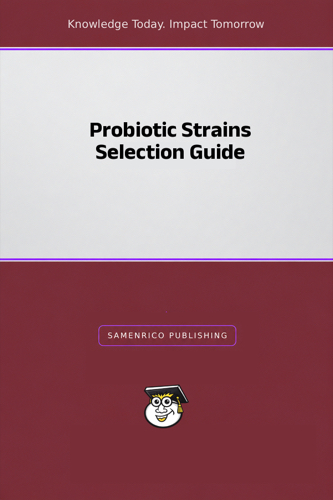
Probiotic Strains Selection Guide eBook
Choose the right bacterial species for your specif
Choose the right bacterial species for your specific health goals and symptoms.
Formats
Free sample
Chapter 1: Beyond Good Bugs--–- The yogurt commercial is a lie. Not a malicious lie, perhaps, but a lie nonetheless. It shows a smiling family around a breakfast table, a cartoon bacterium with a hard hat floating over their bowls, and a reassuring voice promising that “good bacteria” will fix everything from bloating to low energy. The implication is clear: probiotics are simple, friendly, and one-size-fits-all. Just eat the yogurt, and you are done.But if you have ever bought a probiotic that did nothing for you—or worse, made you feel gassy and terrible—you have already discovered the truth.
Probiotics are not simple. They are not one-size-fits-all. And the difference between a probiotic that transforms your digestion and one that is a complete waste of money comes down to a single word that almost no commercial ever mentions: strain.This book exists because most people—including many doctors—do not know how to choose a probiotic. They walk into a health food store, see a wall of refrigerated bottles, and pick the one with the most impressive label or the highest number of bacteria. They take it for two weeks, feel no different, and conclude that probiotics are overhyped.
Or worse, they take the wrong strain for their specific condition, experience bloating or brain fog, and conclude that probiotics are actively harmful.Neither conclusion is correct. The problem is not probiotics. The problem is the lack of a selection guide.This chapter will give you the single most important framework you will need for the rest of this book: the official definition of a probiotic, why most commercial products fail that definition, and why the concept of “good bacteria” is dangerously oversimplified. By the end of this chapter, you will understand why dead bacteria don’t count, why the dose matters more than you think, and why the same bottle of Lactobacillus acidophilus that helps your neighbor might do absolutely nothing for you.The Core Definition: What Makes a Probiotic Real In 2001, a joint panel of the Food and Agriculture Organization of the United Nations (FAO) and the World Health Organization (WHO) did something radical. They sat down to answer a simple question: what actually counts as a probiotic?
The answer they produced has become the gold standard definition used by researchers, regulators, and serious manufacturers around the world.A probiotic is defined as: live microorganisms that, when administered in adequate amounts, confer a health benefit on the host.That sentence looks simple, but every single word matters. Let us break it down.First: live microorganisms. This means the bacteria or yeast in the product must be alive at the time you consume them. Dead bacteria cannot colonize your gut. They cannot produce the metabolic byproducts—short-chain fatty acids, bacteriocins, neurotransmitters—that create health benefits.
They cannot signal your immune system. Dead bacteria are, biologically speaking, just protein. Your body will digest them like any other protein, and you will get no probiotic benefit whatsoever.Here is where the yogurt commercial becomes a lie. Many commercial fermented products, including some yogurts, most shelf-stable kombuchas, and nearly all “probiotic” gummies, have been heat-treated or pasteurized after fermentation. The manufacturers do this to extend shelf life, improve safety, and create a consistent product.
But heat kills bacteria. If the label says “pasteurized after fermentation,” the product contains no live probiotics. The bacteria are dead. You are eating their corpses.Second: adequate amounts. This refers to the dose, measured in colony forming units, or CFUs.
An adequate amount is not a fixed number; it varies depending on the condition you are trying to treat, the specific strain you are using, and whether you are addressing an acute problem or a chronic one. As we will see in later chapters, a maintenance dose for general health might be as low as 1 billion CFU per day, while an acute dose for antibiotic-associated diarrhea might be 50 billion CFU per day. The key point is that a product with only 1 million CFU—common in some cheap gummies and drinks—is almost never adequate for anything except emptying your wallet.Third: health benefit. This must be demonstrated in human studies, not petri dishes, not animal models, not computer simulations. A probiotic manufacturer cannot claim that a strain reduces anxiety just because it produces GABA in a test tube.
They need randomized controlled trials in humans showing that people who took the strain actually had less anxiety. This is a high bar, and many commercial products do not meet it. Throughout this book, every strain recommendation will be backed by human clinical trials, not marketing hype.The final piece of the definition is the word host. That is you. The benefit must happen in your body, not in a laboratory.The Ecosystem Analogy: Your Gut Is a Rainforest To understand why probiotic selection is so specific, you need to abandon the “good versus bad bacteria” framework.
That framework is for children’s cartoons, not adult science.A better analogy is a rainforest. A healthy rainforest contains thousands of species—trees, vines, ferns, fungi, insects, mammals, birds, bacteria in the soil. No single species is purely “good” or “bad.” A vine that helps shade delicate seedlings might also strangle a young tree. A fungus that decomposes dead wood might also attack living roots. The health of the rainforest depends not on eliminating “bad” species but on maintaining balance, diversity, and the right proportions of each species in the right places.Your gut microbiome works the same way.
You have trillions of microorganisms—bacteria, viruses, fungi, archaea—living in your digestive tract. Most of them are not inherently good or bad. Escherichia coli (E. coli), for example, is famous as a food poisoning pathogen. But some strains of E.
coli live harmlessly in every human gut and even produce vitamin K that your body needs. The problem is not the presence of E. coli; the problem is when the wrong strain overgrows in the wrong place.When your gut microbiome loses diversity or shifts out of balance, that condition is called dysbiosis. Dysbiosis has been linked to an astonishing range of health problems: irritable bowel syndrome (IBS), inflammatory bowel disease (Crohn’s and ulcerative colitis), constipation, diarrhea, anxiety, depression, eczema, allergies, obesity, type 2 diabetes, non-alcoholic fatty liver disease, and even Parkinson’s disease. The list grows longer every year as research continues.Here is what most people misunderstand: probiotics do not “repopulate” your gut in the way that reseeding a lawn replaces bare patches.
Most probiotic strains are transient. They pass through your digestive system, survive for a few days to a few weeks, and then disappear if you stop taking them. Their benefit comes from what they do while they are there: lowering p H, producing antimicrobial compounds, competing for adhesion sites, and signaling your immune system. Think of probiotics as temporary workers, not permanent settlers. They show up, do a job, and leave.
That is why dosing and consistency matter so much.The Dead Bacteria Trap: How Marketing Misleads You Let us return to the problem of dead bacteria, because this is where most consumers get cheated.The global probiotic market is worth more than fifty billion dollars. With…
This is the end of the free sample. Get the eBook to keep going. Buy now
About this book
Details
- Author
- Corral Magdalena
- Publisher
- SamEnrico
- Language
- English
- Genre
- Non-Fiction, Health & Wellness, Probiotics
- Released
- 2026-06-10
- Pages (approx.)
- 141
- Available as
- eBook, Audiobook

Read better in the ZLOADR app
Your eBooks on your phone or tablet. Sign in with your SamEnrico account and start reading.
More by Corral Magdalena
 Smoke Free Sleep PrimerCorral Magdalena$11.99
 Catherine the Great Legal Code ReformsCorral Magdalena$11.99
 Podcasts for Calm DrivingCorral Magdalena$11.99
 Weekly Review for Fitness CoachesCorral Magdalena$11.99
 The Great Chocolate War: Hershey vs. Mars, A Bitter FeudCorral Magdalena$11.99
 The Silk Road's Forgotten Queen: How a Woman Outmaneuvered EmpiresCorral Magdalena$11.99
 Hospital PharmacistCorral Magdalena$11.99
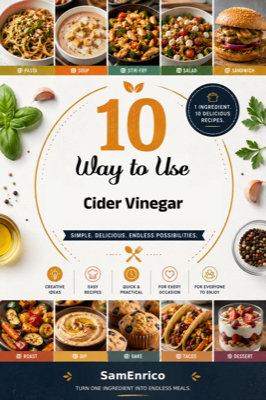 10 Ways to Use Cider Vinegar (Recipe Book)Corral Magdalena$11.99
 Gen X Outdoor Recreation SpendingCorral Magdalena$12.99
 Settlement Speed Secrets for ExportersCorral Magdalena$12.99
 Understanding Basal Ganglia DiseasesCorral Magdalena$17.99
You may also like
 Hong Kong Handover 1997Dunn Johnnie$11.99
 Zumba For Postnatal Recovery CourseNeal Christian$11.99
 Zumba for BeginnersLadner Nikia$11.99
 YouTube Comment Mining GuideHumes Pandora$12.99
 Worry Box MeditationCarlin Rudy$11.99
 Workplace Stress MeditationNguyen Lynn$11.99
 Workplace Stress and Sleep RepairHawley Ivory$11.99
 Workplace Perfectionism CureDelaney Jeffry$11.99
 Workplace Injustice Anger GuideWallen Isabelle$11.99
 Work Addiction and Burnout LinkGreenwood Ester$11.99
 Women in Yoga and WellnessBeattie Galina$11.99
 Women in Stand Up ComedyChun Evangeline$11.99