
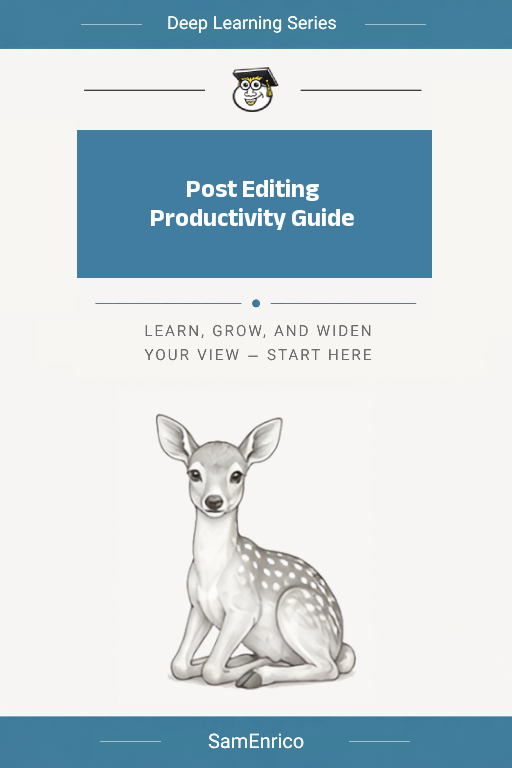
Post Editing Productivity Guide eBook
Train translators to post-edit AI outputs faster u
Train translators to post-edit AI outputs faster using MTPE standards. Implement light and full edit workflows with measurable productivity gains.
Formats
Free sample
Chapter 1: The Blank Page Lie--Most translators believe they are paid to translate. They are not. They are paid to deliver meaning from one language to another—and for decades, the only way to do that was to start from a blank page. That blank page became a badge of honor. It said: I created this.
Every word is mine. But in the age of neural machine translation, that badge has become a ball and chain.If you are reading this book, you have likely experienced the visceral reaction that comes with opening a machine-translated document. Your eyes scan the first sentence. It is awkward. The word order feels foreign.
A technical term is wrong. You feel a flash of irritation—perhaps even offense. How dare this machine presume to do my job? And then you begin. You delete the sentence.
You rewrite it from memory. You move to the next one, delete, rewrite. Two hours later, you have produced a translation that looks exactly as if you had written it from scratch. The machine added nothing. You might even feel a grim satisfaction: See?
The machine cannot replace me.But here is the truth that no one in the translation industry wants to admit: you just wasted two hours.Not because you are a bad translator. You are likely excellent. You wasted two hours because you fell victim to what cognitive psychologists call the blank page bias—the irrational belief that creating from nothing is somehow purer, more authentic, or faster than editing an existing draft. The data says otherwise. Over and over, across every language pair and content domain, editors who suppress their ego and work with the machine output—even bad output—consistently finish 30 to 50 percent faster than those who start from scratch.
The machine did not save you time because you refused to let it.This chapter is about killing that reflex. It is about retraining your brain to see machine translation not as an enemy occupation of your territory, but as a free, flawed, incredibly useful first draft. It is about learning to distinguish between a wrong translation and a non-human translation—and learning to leave the latter alone. And it is about accepting the uncomfortable truth that in the world of post-editing, the best editor is not the one who rewrites the most, but the one who rewrites the least.The Cognitive Trap: Why Your Brain Hates Machine Translation Before we can fix your editing habits, we must understand why they are broken. The resistance to machine translation is not merely professional pride.
It is rooted in several cognitive biases that affect every human being, regardless of skill level.The Effort Justification Bias Psychologists have long known that people value outcomes more highly when they have invested significant effort in producing them. This is why you love a bookshelf you built yourself more than an identical one from a store. It is also why translators instinctively prefer their own sentences to those generated by a machine. Your brain says: I suffered for this sentence. Therefore it is better.
The machine suffered nothing. Therefore its output must be inferior—even when it is objectively correct.This bias causes a measurable productivity loss. In a study of professional translators transitioning to MTPE, researchers found that editors spent an average of 40 percent of their time undoing machine translations that were already acceptable, simply because they did not feel right. They changed "The report was submitted by the manager" to "The manager submitted the report"—a stylistic preference, not a correction. Then they changed "The manager submitted the report" back to something else.
The machine had been fine. The editor was the problem.The Not-Invented-Here Syndrome In technology companies, the "not-invented-here" syndrome describes the reluctance to adopt external solutions because they were not created internally. In translation, this syndrome manifests as the belief that any sentence not crafted by a human is inherently suspect. You would never reject a colleague's suggested translation simply because you did not write it yourself. But you reject the machine's suggestion constantly.Consider this experiment.
Take two identical translations. Tell a translator that Version A came from a neural MT engine and Version B came from a human peer. Then ask them to edit both. Consistently, translators find more "errors" in Version A—even when the sentences are word-for-word identical. The label changes the perception.
You are not editing the text. You are editing the source of the text.The Perfectionism Fallacy Translation training emphasizes precision, elegance, and fidelity. These are virtues. But they become vices when applied to content that does not require them. A support ticket reply does not need to be beautiful.
An internal memo does not need to win literary prizes. Yet trained translators apply the same standard of perfection to everything. The result is over-editing: spending five minutes polishing a sentence that was already 95 percent correct, when the remaining 5 percent would never be noticed by any reader.The perfectionism fallacy is the single largest driver of slow MTPE. It convinces you that every awkward phrase is a personal failure, that every passive voice construction is an insult to your craft, that every missing Oxford comma is a moral crisis. None of these are true.
And until you accept that, you will never edit faster than 800 words per hour.The Blank Page Bias: Why Starting from Zero Is Slower Let us examine the central claim of this chapter more rigorously. Is editing truly faster than translating from scratch? The intuitive answer feels like no. When you translate from scratch, you are in control. The words flow from your brain to your fingers.
When you edit, you have to read the machine's output, compare it to the source, identify errors, and then correct them. That feels like more steps. More steps should mean more time.But intuition is wrong. And we have the data to prove it.The Anchor Effect In his Nobel Prize-winning work on cognitive biases, Daniel Kahneman demonstrated that humans make faster decisions when they have an anchor—a reference point, even a flawed one. When asked to estimate the number of African countries in the United Nations, participants who first spun a wheel of fortune (which landed on a random number) gave estimates statistically influenced by that random number, even though they knew the wheel had no connection to the question.
The anchor worked unconsciously.Translation works the same way. When you face a blank page, you have no anchor. Every word choice, every syntactic decision, every register judgment must be generated from scratch. This is cognitively expensive. When you face a machine-generated sentence—even a bad one—you have an anchor.
You can react to it. You can say "no, not that word" or "yes, that structure works." Reacting is neurologically faster than creating. The machine has done the heavy lifting of generating the first draft, even if it is a draft you would never show a client.The Empirical Evidence In a controlled experiment conducted by the European Language Resources Association, professional translators were given identical texts under two conditions. In Condition A, they translated from scratch using no MT. In Condition B, they post-edited raw…
This is the end of the free sample. Get the eBook to keep going. Buy now
About this book
Details
- Author
- Aleman Otelia
- Publisher
- SamEnrico
- Language
- English
- Genre
- Non-Fiction, AI Operator
- Released
- 2026-05-30
- Pages (approx.)
- 144
- Available as
- eBook, Audiobook

Read better in the ZLOADR app
Your eBooks on your phone or tablet. Sign in with your SamEnrico account and start reading.
More by Aleman Otelia
 Pearl Harbor Survivor AccountAleman Otelia$11.99
 EQ for Conflict ResolutionAleman Otelia$11.99
 Body Scan for Heart HealthAleman Otelia$11.99
 Work Stress Spillover to HomeAleman Otelia$11.99
 The Lion of the Desert: Lawrence of Arabia's Secret WarAleman Otelia$11.99
 How to Start a Nitrate of Soda Importer (wholesale) Business (Beginners Guide)Aleman Otelia$11.99
 How to Produce Boat Wax and ProtectantAleman Otelia$11.99
 Buffer Social Media AutomationAleman Otelia$11.99
You may also like
 Hong Kong Handover 1997Dunn Johnnie$11.99
 Zumba For Postnatal Recovery CourseNeal Christian$11.99
 Zumba for BeginnersLadner Nikia$11.99
 YouTube Comment Mining GuideHumes Pandora$12.99
 Worry Box MeditationCarlin Rudy$11.99
 Workplace Stress MeditationNguyen Lynn$11.99
 Workplace Stress and Sleep RepairHawley Ivory$11.99
 Workplace Perfectionism CureDelaney Jeffry$11.99
 Workplace Injustice Anger GuideWallen Isabelle$11.99
 Work Addiction and Burnout LinkGreenwood Ester$11.99
 Women in Yoga and WellnessBeattie Galina$11.99
 Women in Stand Up ComedyChun Evangeline$11.99