
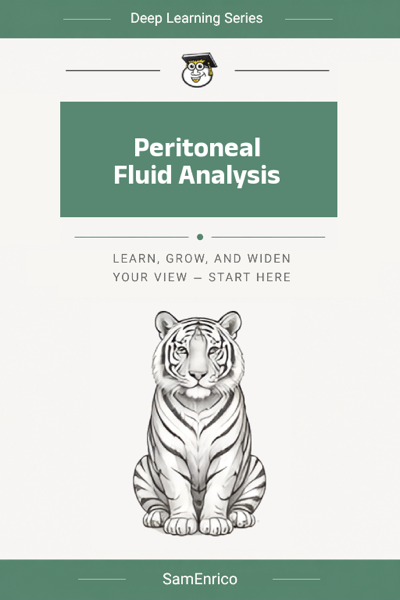
Non-FictionInformativeEducational
Peritoneal Fluid Analysis Audiobook
A Coursebook on Peritoneal Fluid Analysis
A Coursebook on Peritoneal Fluid Analysis
Formats
Free sample
Chapter 1: The Silent Cavity...–- The human abdomen holds a secret. It is a space designed to be empty, a potential void between the visceral and parietal peritoneum that normally contains little more than a whisper of fluid—perhaps 5 to 20 milliliters, just enough to allow the intestines to slide against one another like silk sheets on a polished table. This fluid is invisible to the naked eye, undetectable on physical examination, and completely silent. Yet when this cavity begins to fill, when that whisper becomes a flood, it announces itself with unmistakable force: abdominal distention, respiratory compromise, early satiety, and the ominous bulge of a belly that no longer belongs to its owner. This is ascites.
And the fluid trapped within holds the answers to diagnosis, treatment, and prognosis—if only the clinician and laboratorian know how to listen.The study of peritoneal fluid analysis begins not with a test tube or a microscope, but with the architecture of the cavity itself. To understand why fluid accumulates, why it has a particular color or cell count, and why certain biochemical markers rise while others fall, one must first understand the terrain in which this fluid lives. The peritoneum is not a passive bag. It is a living, metabolically active organ—the largest serous membrane in the human body, with a surface area roughly equal to that of the skin. It is a dynamic interface between the bloodstream, the lymphatic system, and the abdominal viscera, and its behavior determines the composition of every drop of ascitic fluid that reaches the laboratory.This chapter establishes the foundational anatomy and physiology of the peritoneal cavity.
It describes the two layers of the peritoneum, the specialized cells that line its surfaces, the forces that govern fluid movement across its membranes, and the normal composition of the fluid that resides within it. By the end of this chapter, the reader will understand why the healthy peritoneal cavity remains empty and why disease transforms it into a reservoir of diagnostic information. Every subsequent chapter—from the physical examination of fluid to the detection of malignant cells—rests upon the principles established here.The Two Layers: Parietal and Visceral Peritoneum The peritoneal cavity is a closed space in males, and a space that communicates with the fallopian tubes in females (a fact of clinical importance in the spread of pelvic infections and malignancies). It is lined by two continuous layers…
This is the end of the free sample. Get the Audiobook to keep going. Buy now
About this book
Details
- Author
- Mccullough Corinna
- Publisher
- SamEnrico
- Language
- English
- Genre
- Non-Fiction, Informative, Educational
- Released
- 2026-05-09
- Pages (approx.)
- 157
- Available as
- eBook, Audiobook

Listen in the VoxFlicks app
Audiobooks and audio dramas wherever you go. Sign in with your SamEnrico account and press play.
More by Mccullough Corinna
 TM and High Blood PressureMccullough Corinna$11.99
 Appetite Regulation SuggestionMccullough Corinna$11.99
 PCOS Cinnamon Blood Sugar GuideMccullough Corinna$11.99
 The Emotional Validation Scripts HandbookMccullough Corinna$11.99
 Peterson Laci Pregnancy Due Date RealityMccullough Corinna$11.99
 The Hollow Ones: Gilgamesh’s Forgotten WarMccullough Corinna$11.99
 Corning Glass PatentsMccullough Corinna$12.99
 Domain Leasing for Geo TLDsMccullough Corinna$12.99
 How to Become a Spray-machine LoaderMccullough Corinna$11.99
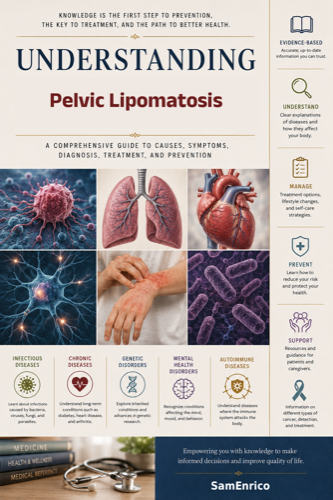 Understanding Pelvic LipomatosisMccullough Corinna$17.99
You may also like
 Hong Kong Handover 1997Dunn Johnnie$11.99
 Zumba For Postnatal Recovery CourseNeal Christian$11.99
 Zumba for BeginnersLadner Nikia$11.99
 YouTube Comment Mining GuideHumes Pandora$12.99
 Worry Box MeditationCarlin Rudy$11.99
 Workplace Stress MeditationNguyen Lynn$11.99
 Workplace Stress and Sleep RepairHawley Ivory$11.99
 Workplace Perfectionism CureDelaney Jeffry$11.99
 Workplace Injustice Anger GuideWallen Isabelle$11.99
 Work Addiction and Burnout LinkGreenwood Ester$11.99
 Women in Yoga and WellnessBeattie Galina$11.99
 Women in Stand Up ComedyChun Evangeline$11.99