
Non-FictionBiographyPrime Minister
Peel Robert eBook
Reveals the prime minister who founded the police.
Reveals the prime minister who founded the police.
Formats
Free sample
Chapter 1: The Labrador’s Inheritance...--–- Robert Peel was born into the roar of machinery. Not the gentle clatter of a print shop or the rhythmic thump of a blacksmith’s hammer, but the ceaseless, bone-vibrating thunder of the world’s first industrial cotton mills. The year was 1788, and the place was Bury, Lancashire—a town that existed in two worlds at once. To the east lay green fields and ancient hedgerows, the England of Chaucer and Shakespeare. To the west stood the mills: brick colossi belching coal smoke into a sky that was never quite blue, their windows glowing orange at night like the eyes of sleeping dragons.
Young Robert grew up with that sound in his blood. He would learn to sleep through it, to think through it, to ignore it as other men ignore the rain. But he would never escape it. The industrial revolution was not a backdrop to his life; it was the furnace in which his character was forged.The Peel family was not old nobility. They possessed no ancient title, no medieval castle, no Norman blood.
What they had was cotton—and the willingness to bend the world to their will. Robert’s father, also named Sir Robert Peel (the 1st Baronet), had started with almost nothing. He was the son of a yeoman farmer who had gambled everything on a carding machine and won. By 1788, the elder Peel owned three massive cotton mills, employed thousands of workers, and had become one of the wealthiest self-made men in Britain. His fortune rested on three pillars: raw cotton imported from slave plantations in the American South and the West Indies; the labor of impoverished men, women, and children who worked fourteen-hour shifts in his factories; and an almost supernatural instinct for political timing.
The elder Peel was a master of the new industrial aristocracy—a class of men who had no right to rule by birth but claimed the right by wealth.Robert Peel’s childhood was a study in contradictions. He lived in a grand manor house called Chamber Hall, surrounded by fine furniture, French wine, and tutors who spoke Latin. But a mile away, children his own age were pulling broken threads from spinning frames in the dark, their fingers shredded by machinery, their lungs filled with cotton dust. He was never allowed to forget that his family’s wealth came from that suffering. His father was not a cruel man—by the standards of the day, he was considered a model employer, building schools and chapels for his workers—but he was a practical man.
The mills had to run. The cotton had to be spun. And if a child’s fingers were mangled in the process, that was the cost of progress. Young Robert absorbed this lesson early: the world ran on trade-offs. Every comfort required a sacrifice somewhere else.The Architecture of Ambition The elder Peel had a plan for his son.
It was not a plan born of love—though he loved Robert well enough—but of calculation. The first baronet understood that the industrial aristocracy would never be accepted by the old landed gentry unless it produced statesmen, not just merchants. A man who made his fortune in cotton could buy an estate, but he could not buy respect. That required a son who could speak in Parliament, quote Cicero in the original Greek, and marry into a noble family. Robert was that son—the chosen vessel for the family’s social ascent.Robert’s education was therefore merciless.
At age seven, he was sent to a boarding school in Bury, where he learned the rudiments of Latin and the first lesson of the Peel family: endure. He was not a naturally gifted student. He did not absorb languages through intuition or charm. But he had what his tutors would later call “the labrador quality”—a stubborn, plodding, relentless determination that wore down any obstacle. If a Latin declension would not stick in his memory, he recited it five hundred times.
If a mathematical proof eluded him, he worked it backward from the answer until he understood every step. He was not brilliant. He was invincible.At ten, he was sent to Harrow, one of England’s most prestigious public schools. Harrow in the 1790s was a brutal place: fagging (younger boys serving as servants for older ones), flogging (corporal punishment for minor infractions), and a casual cruelty that passed for character-building. Robert was not popular.
He was not athletic. He did not write poetry or lead rebellions or charm masters with wit. The other boys called him “the philosopher” behind his back—not as a compliment, but as a mockery. He was too serious, too cautious, too damned diligent. While other boys snuck out at night to steal apples from the headmaster’s orchard, Robert stayed up studying.
While others gambled on cockfights, Robert memorized Thucydides. He was a dull companion and a terrifying competitor—because he never stopped.His one triumph at Harrow was academic. In 1805, he won the school’s prestigious Latin prize, beating boys who had been considered his intellectual superiors. The headmaster recorded that Peel’s success came not from “quickness of parts” but from “a memory that retains everything and a will that yields nothing.” This was the second lesson of the Peel family: genius is overrated. Endurance is everything.The Oxford Years From Harrow, Peel proceeded to Christ Church, Oxford—the grandest college in the most elite university in England.
Christ Church was a palace of learning: vaulted ceilings, stained glass windows, portraits of bishops and statesmen lining the walls. But for Robert, it was merely the next rung on the ladder. He arrived in 1805, determined to prove that a cotton lord’s son could outshine the sons of dukes.He succeeded beyond anyone’s expectations. In 1808, he achieved a double first—the highest possible honors in both classics and mathematics. It was an accomplishment so rare that it made headlines in London newspapers.
The examiners noted that his answers were not flashy or original, but they were complete. He left no question unanswered, no argument unexamined, no loophole unexplored. He had, in essence, memorized the curriculum and then patiently, methodically, regurgitated it in perfect order. It was a performance of pure, relentless competence—and it terrified those who understood what it meant. A man with that much discipline could conquer anything.But Oxford also taught Peel something his father could not have predicted: the limits of inherited power.
He saw the sons of aristocrats coast through examinations on family connections, drunk half the time and lazy the rest. He saw tutors fawn over titled students while ignoring the merely wealthy. He saw a system that rewarded birth over merit—and he began to resent it. That resentment would later flower into a political philosophy: a belief that the state should be run by competent professionals, not entitled amateurs. The police force, the prison system, the civil service—all would be shaped by Peel’s conviction that ability matters more than ancestry.
Oxford gave him the skills; Oxford also gave him the grievance.The Rotten Borough of Cashel In 1809, Robert Peel turned…
This is the end of the free sample. Get the eBook to keep going. Buy now
About this book
Details
- Author
- Schwartz Teresa
- Publisher
- SamEnrico
- Language
- English
- Genre
- Non-Fiction, Biography, Prime Minister
- Released
- 2026-06-05
- Pages (approx.)
- 133
- Available as
- eBook, Audiobook

Read better in the ZLOADR app
Your eBooks on your phone or tablet. Sign in with your SamEnrico account and start reading.
More by Schwartz Teresa
 The Waco Legal LegacySchwartz Teresa$11.99
 Restless Leg Syndrome Sleep Study GuideSchwartz Teresa$11.99
 Hillary Indian Everest TeamSchwartz Teresa$11.99
 NVC For Tweens GuideSchwartz Teresa$11.99
 Cleopatra's Diplomatic Correspondence GuideSchwartz Teresa$11.99
 Food Stockpile Rotation PlanSchwartz Teresa$11.99
 Resentment Release ProtocolSchwartz Teresa$11.99
 The Salt March: Gandhi’s Silent RebellionSchwartz Teresa$11.99
 Silk Roads & Silver Linings: The Untold Story of the First Chinese Immigrant to AmericaSchwartz Teresa$11.99
 Silent Scalpel: The Doctor Who Sold DeathSchwartz Teresa$11.99
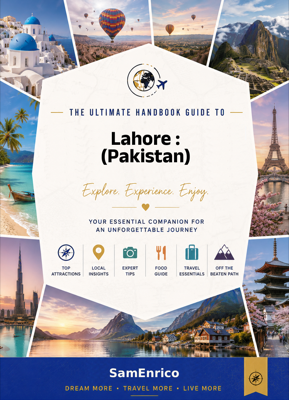 Ultimate Handbook Guide to Lahore : (Pakistan) Travel GuideSchwartz Teresa$11.99
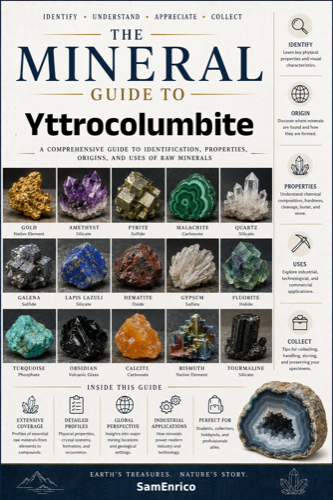 The Mineral Guide to YttrocolumbiteSchwartz Teresa$11.99
You may also like
 Hong Kong Handover 1997Dunn Johnnie$11.99
 Zumba For Postnatal Recovery CourseNeal Christian$11.99
 Zumba for BeginnersLadner Nikia$11.99
 YouTube Comment Mining GuideHumes Pandora$12.99
 Worry Box MeditationCarlin Rudy$11.99
 Workplace Stress MeditationNguyen Lynn$11.99
 Workplace Stress and Sleep RepairHawley Ivory$11.99
 Workplace Perfectionism CureDelaney Jeffry$11.99
 Workplace Injustice Anger GuideWallen Isabelle$11.99
 Work Addiction and Burnout LinkGreenwood Ester$11.99
 Women in Yoga and WellnessBeattie Galina$11.99
 Women in Stand Up ComedyChun Evangeline$11.99